Acura Repair & Service IN North SeaTTLE
AAA-approved auto repair • ASE-certified technicians • Trusted by Seattle-area drivers for more than 30 years
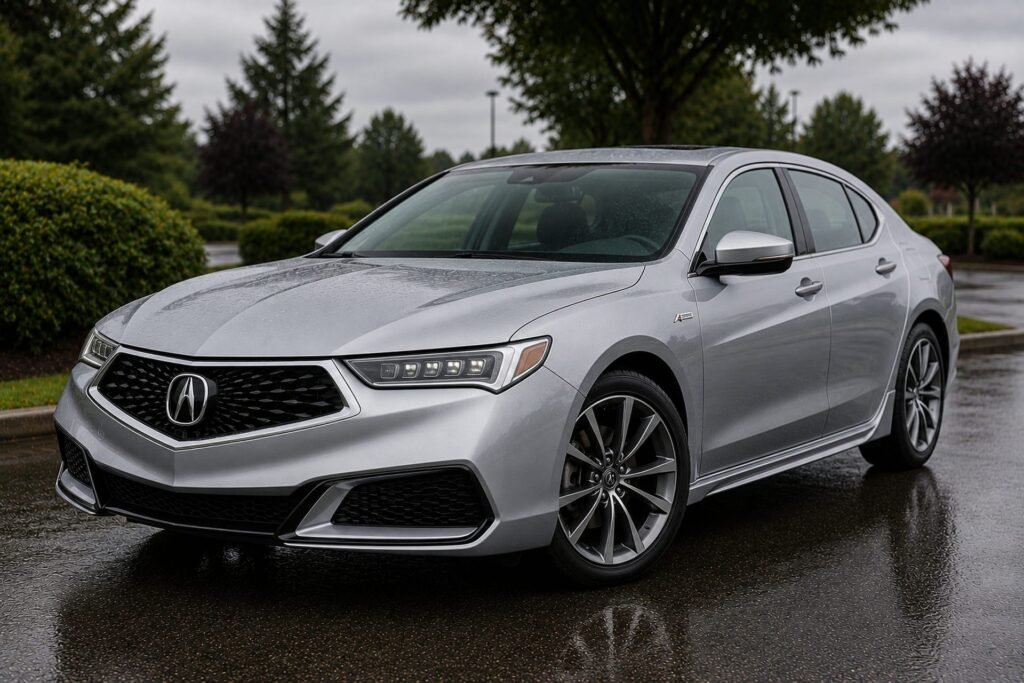

At Chuck’s Auto Repair – North Seattle, we provide professional Acura maintenance, diagnostics, and qualifying repairs for drivers throughout North Seattle.
Acura vehicles combine Honda-engineered powertrains with luxury features, advanced electronics, performance-oriented drivetrains, and model-specific maintenance requirements. The correct service plan for an MDX may be very different from the right plan for a turbocharged RDX, SH-AWD TLX, older TL, hybrid RLX, or newer Integra.
Our ASE-certified technicians use vehicle-specific service information for your Acura’s exact year, model, engine, transmission, and drivetrain. Whether your Acura needs scheduled maintenance, timing belt service, brake repair, check engine light diagnosis, transmission testing, suspension repair, AWD maintenance, or electrical diagnosis, we begin by determining what the vehicle actually needs.
📞 Call (206) 526-1069 or Schedule Acura Service Online.
Acura Models We Service
We provide maintenance, diagnostics, and qualifying repairs for many Acura vehicles from model year 2004 and newer, including:
- Acura MDX
- Acura RDX
- Acura TL
- Acura TLX
- Acura TSX
- Acura ILX
- Acura Integra
- Acura RL
- Acura RLX
- Acura ZDX
- Acura RSX
Routine mechanical service may also be available for Acura hybrid vehicles, including brakes, tires, steering and suspension, wheel bearings, cabin filters, cooling-system components, and 12-volt electrical systems.
High-voltage battery, inverter, electric-drive, and related high-voltage repairs should be confirmed before scheduling.
Acura Experience in Our North Seattle Shop
MDXs, RDXs, TLXs, and TLs are among the most common Acura vehicles we see in our shop. V6 timing belt service, SH-AWD maintenance, transmission complaints, oil leaks, suspension wear, check engine lights, cooling-system repairs, and battery-related concerns are a regular part of our work.
An Acura MDX used for family transportation has different service demands from a turbocharged RDX or performance-focused TLX. Acura vehicles also use several transmission and AWD designs, so the correct fluid and procedure depend on the exact powertrain.
That first-hand familiarity helps us recognize useful patterns, but we still inspect and test every Acura before recommending a repair. Similar warning lights, noises, or vibrations can come from very different systems.
Common Acura Services We Perform
Depending on the vehicle and confirmed findings, Acura service may include:
- Oil and filter service using the correct Acura specification
- Acura Maintenance Minder service
- Manufacturer-scheduled maintenance
- Timing belt and water pump service on applicable V6 engines
- Timing-chain and variable valve timing diagnosis
- Brake inspection and repair
- Check engine light diagnosis
- Spark-plug and ignition-coil service
- Oil-leak and oil-consumption evaluation
- Cooling-system and radiator repair
- Automatic, dual-clutch, and manual-transmission service
- SH-AWD, rear differential, and transfer-unit maintenance
- Turbocharger and boost-control testing
- Battery, starter, and charging-system diagnosis
- Steering and suspension repair
- CV axle and wheel bearing replacement
- Engine and transmission mount service
- Air-conditioning service
- Tire and road trip inspections
- Major repair evaluation
Recommendations are based on the exact Acura model, engine, transmission, drivetrain, mileage, service history, symptoms, and inspection findings.
Acura MDX Service and Repair
The MDX is one of Acura’s most common vehicles and combines a V6 engine, three-row seating, available SH-AWD, advanced electronics, and a relatively heavy body.
MDX service may include timing belt maintenance, brakes, tires, suspension components, engine mounts, cooling-system repair, transmission service, rear differential maintenance, battery testing, and check engine light diagnosis.
Because many MDXs are used for family transportation, road trips, and carrying passengers or cargo, brake wear, tire condition, suspension performance, cooling-system reliability, and drivetrain fluid maintenance deserve regular attention.
A vibration, clunk, warning light, or shifting concern should not automatically be blamed on one common component. Engine mounts, axles, wheel bearings, tires, suspension parts, transmission operation, and engine performance can create overlapping symptoms.
Acura V6 Timing Belt and Water Pump Service
Many Acura V6 engines use a timing belt rather than a timing chain. These engines appear in selected MDX, TL, TLX, RL, RLX, ZDX, and other applications.
The timing belt keeps the crankshaft and camshafts synchronized. Age, mileage, heat, oil contamination, coolant leakage, tensioner wear, and pulley wear may weaken the system over time.
Timing belt service commonly involves evaluating the belt, tensioner, idler pulleys, water pump, accessory belt, coolant, and related seals. The exact repair plan should be matched to the engine, service history, mileage, age, and manufacturer procedure.
A timing belt may fail without a dashboard warning. On applicable interference engines, belt failure can allow internal engine contact and substantial damage.
Because labor access overlaps on many Acura V6 engines, replacing related worn components during the timing belt service may reduce the risk of repeating the same major disassembly later.
Acura SH-AWD Service and Diagnosis
Acura uses the Super Handling All-Wheel Drive, or SH-AWD, name for systems designed to distribute power between the front and rear axles and, on certain models, between the rear wheels.
SH-AWD is used in selected MDX, RDX, TL, TLX, RL, RLX, and ZDX models.
Depending on the system, maintenance may involve rear differential fluid, transfer-unit fluid, leak inspection, axle evaluation, tire measurement, and electronic diagnosis.
Shuddering, binding, warning messages, clunking, fluid leakage, or drivetrain vibration may involve fluid condition, tire mismatch, wheel-speed information, axles, wheel bearings, the rear differential, transfer unit, wiring, or control-system faults.
The correct Acura fluid is important. A rear differential designed for Acura’s torque-vectoring AWD system may not use the same fluid or procedure as a conventional differential.
AWD vehicles can also be sensitive to substantial differences in tire size, tread depth, circumference, or inflation pressure.
Acura Transmission Service and Shift Concerns
Acura has used several transmission designs since 2004, including conventional automatics, five-, six-, nine-, and ten-speed automatics, dual-clutch transmissions, manual transmissions, and hybrid drivetrain systems.
A TL, MDX, ILX, RDX, and newer TLX may have completely different fluid requirements and operating characteristics.
Harsh shifting, delayed engagement, shuddering, slipping, warning messages, abnormal engine-speed behavior, or failure to select a gear may involve fluid condition, pressure-control components, solenoids, valve-body operation, torque-converter concerns, adaptation, wiring, mounts, engine performance, or internal wear.
A transmission fluid service does not repair confirmed mechanical damage. When symptoms are already present, diagnosis should come before routine maintenance.
The exact Acura or Honda fluid specification and filling procedure must be verified. Transmission fluids that appear similar are not automatically interchangeable.
Acura Torque-Converter Shudder and Vibration
Some Acura models may develop a shudder or vibration during light acceleration or steady-speed driving.
A torque-converter clutch concern is one possible cause, but it is not the only possibility.
Similar symptoms may come from:
- Engine misfire under load
- Worn engine or transmission mounts
- Inner CV joint wear
- Tire or wheel problems
- Wheel bearings
- Driveline components
- Transmission fluid condition
- Internal transmission operation
The speed, engine load, gear, temperature, and driving conditions under which the vibration occurs help narrow the cause.
We may compare engine misfire data, transmission information, torque-converter operation, axle condition, mounts, and tire behavior before recommending transmission work.
Acura RDX Turbocharged Engine Service
Acura has used turbocharged engines in different generations of the RDX.
The first-generation RDX used a turbocharged four-cylinder powertrain with a different design from the newer 2.0-liter turbocharged RDX. These vehicles should not be treated as though they use the same engine or boost-control system.
Turbocharged Acura engines depend on correct oil, proper oil level, reliable cooling, healthy ignition components, accurate fuel pressure, sealed charge-air plumbing, and functional boost controls.
Loss of power, hesitation, misfire under acceleration, smoke, unusual turbocharger noise, or underboost and overboost codes may involve an ignition problem, charge-air leak, wastegate concern, bypass valve, fuel-pressure issue, PCV-system fault, sensor, wiring, exhaust restriction, or turbocharger damage.
A boost-related code does not automatically mean the turbocharger must be replaced. We evaluate the ignition, fuel, intake, charge-air, exhaust, and control systems first.
Acura Variable Cylinder Management and Oil Consumption
Certain Acura V6 engines use Variable Cylinder Management, commonly called VCM, to reduce fuel consumption under specific driving conditions.
On some applications, owners may report oil consumption, spark-plug fouling, misfires, vibration, or check engine lights.
These symptoms do not automatically prove that VCM is the sole cause.
Possible contributors may include external oil leakage, PCV-system concerns, piston-ring wear, valve-seal wear, ignition components, fuel injectors, engine mounts, compression loss, or internal engine condition.
Oil consumption should be measured over a known mileage interval. An engine that repeatedly operates with low oil may develop timing-system problems, variable valve timing faults, bearing damage, or reduced oil pressure.
Adding oil restores the level temporarily but does not identify why the oil is disappearing.
Acura Oil Leaks
Acura engines may develop oil leaks from the valve-cover gaskets, timing covers, oil pans, crankshaft or camshaft seals, oil-filter areas, variable valve timing components, spool-valve assemblies, or other sealing surfaces.
Because oil can travel across the engine, transmission, subframe, splash shields, or exhaust, the visible drip location may not identify the original source.
A light seep and an active leak are not the same condition.
We consider:
- Actual oil loss
- Leak location
- Contamination of belts, mounts, or exhaust components
- Repair access
- Vehicle mileage
- Overall condition
before recommending a resealing repair.
Oil reaching a hot exhaust component may create a burning smell or visible smoke even when little oil reaches the ground.
Acura Check Engine Light Diagnosis
An Acura check engine light may be related to an ignition misfire, fuel-delivery concern, air-fuel sensor, oxygen sensor, catalytic converter, evaporative-emissions leak, intake leak, variable valve timing problem, turbocharger-control fault, transmission issue, cooling-system concern, or electrical circuit.
A diagnostic trouble code identifies the system or operating condition detected by the vehicle.
It does not automatically prove which component failed.
For example, a cylinder misfire code may be caused by a spark plug, ignition coil, fuel injector, wiring, vacuum leak, compression loss, valve concern, timing problem, or oil-fouled plug.
Our diagnostic process may include computer scanning, freeze-frame review, live-data analysis, fuel trims, cylinder misfire information, electrical testing, smoke testing, fuel-pressure testing, cooling-system checks, compression testing, and road testing when safe.
The goal is to identify why the fault occurred before parts are recommended.
Acura Maintenance Minder Service
Many Acura vehicles use a Maintenance Minder system that estimates service needs using operating information rather than mileage alone.
The system may display an oil-life percentage, a main service code, and numbered sub-codes related to inspections, fluids, spark plugs, timing belt service, or other maintenance items.
The Maintenance Minder is useful, but it does not physically inspect the vehicle.
It may not identify:
- An oil or coolant leak
- A weak battery
- Worn suspension parts
- Damaged tires
- Low fluid levels
- A developing wheel-bearing noise
- A new vibration or drivability problem
We do not apply one universal 30K, 60K, or 90K package to every Acura. Recommendations are matched to the exact vehicle, Maintenance Minder information, service history, current condition, and manufacturer schedule.
Acura Oil and Filter Service
Acura engines may require specific oil viscosities and performance standards based on the model year, engine, turbocharger, hybrid configuration, and manufacturer requirements.
Using the correct oil supports cold-start lubrication, variable valve timing, timing-chain operation on applicable engines, turbocharger protection, fuel economy, and long-term engine performance.
A proper Acura oil service should include the correct oil specification, correct quantity, quality filter, drain-plug and sealing-washer inspection, oil-level verification, leak inspection, and Maintenance Minder reset when appropriate.
An oil change does not repair an active leak, low oil pressure, timing-system noise, internal engine wear, or excessive oil consumption.
The oil level should still be checked between services, especially on higher-mileage V6 engines or vehicles with known leakage or consumption.
Acura Direct-Injection and Intake Deposit Concerns
Many newer Acura engines use gasoline direct injection.
Because fuel is injected directly into the combustion chamber rather than across the back of the intake valves, oil vapor and combustion residue may accumulate on the valves of certain engines.
When deposits become significant, possible symptoms may include rough cold starts, hesitation, intermittent misfires, reduced performance, or repeated cylinder-specific trouble codes.
Those symptoms do not automatically mean intake cleaning is required.
Spark plugs, ignition coils, injectors, fuel pressure, vacuum leaks, compression loss, valve timing, and sensor faults may produce similar results.
Intake cleaning should be recommended only when the symptoms, diagnostic findings, and inspection support it.
Acura Brake Service
Acura brake systems may include hydraulic brakes, ABS, traction and stability control, electronic parking brakes, brake-assist systems, and regenerative braking on hybrid models.
Squeaking, grinding, vibration, pulling, a soft pedal, warning lights, or increased stopping distance should be inspected promptly.
At Chuck’s Auto Repair – North Seattle, when brake rotors require replacement, we install brand-new brake rotors.
We do not assume every brake-pad service automatically requires rotors. Recommendations are based on measured rotor thickness, wear, damage, heat effects, and braking symptoms.
When replacement is required, new rotors provide a fresh and consistent braking surface, full usable thickness, proper compatibility with new pads, and predictable braking performance.
Certain Acura models also require an electronic parking-brake service procedure before rear brake work is performed.
Acura Steering and Suspension Service
Acura vehicles are designed to provide controlled handling and a quieter ride than many standard passenger vehicles.
Clunking, pulling, loose steering, uneven tire wear, excessive bouncing, vibration, or a harsh ride may involve control arms, bushings, ball joints, tie rods, sway-bar links, struts, shocks, wheel bearings, tires, or alignment.
Some Acura models use electronically controlled dampers or adaptive suspension systems. A warning message or change in ride quality may involve a sensor, damper, wiring, control module, or conventional mechanical wear.
A worn control-arm bushing may affect braking stability and alignment. A wheel bearing or damaged tire may create humming that resembles another drivetrain problem.
We inspect the related system before recommending individual parts.
Acura Engine and Transmission Mounts
Acura engine and transmission mounts help support the powertrain while reducing vibration inside the cabin.
Certain MDX, TL, RDX, and other models may develop vibration, clunking, or excessive engine movement as mounts wear.
Some V6 applications use electronically controlled or vacuum-controlled mounts that change operating characteristics under different engine conditions.
A vibration at idle does not automatically mean the mounts are the only problem.
Ignition misfires, uneven engine operation, exhaust contact, CV axle wear, transmission concerns, or another mechanical issue may create similar symptoms.
We evaluate engine performance and mount condition before recommending replacement.
Acura Battery, Starting, and Electrical Diagnosis
An Acura that will not start does not automatically need a starter.
Possible causes include the battery, terminals, cables, grounds, starter, alternator, fuses, relays, ignition controls, smart key, push-button start system, brake-pedal input, wiring, or module communication.
Low battery voltage may trigger multiple warning lights, disable certain convenience features, or create communication faults.
Testing the battery, charging system, starting circuit, power supplies, grounds, and key-system inputs helps prevent unnecessary parts replacement.
On vehicles with advanced driver-assistance and infotainment systems, stable battery voltage is especially important because a weak battery may cause several seemingly unrelated symptoms.
Acura HandsFreeLink and Battery-Drain Concerns
Certain older Acura models may develop battery-drain concerns involving the HandsFreeLink Bluetooth control unit or another electronic module that does not enter sleep mode correctly.
A battery that repeatedly goes dead does not automatically mean the battery itself is defective.
Possible causes may include:
- A weak battery
- Charging-system problem
- Interior or cargo light
- Accessory installation
- Control module remaining awake
- Wiring fault
- HandsFreeLink component
- Another parasitic electrical draw
Parasitic-draw testing may require allowing the vehicle’s modules to power down and measuring current flow over time.
Replacing the battery without identifying an active draw may result in the same no-start concern returning.
Acura Cooling-System Service
Acura cooling systems may include the radiator, water pump, thermostat, cooling fans, reservoir, heater core, hoses, temperature sensors, oil cooler, and turbocharger cooling circuits on applicable engines.
Coolant loss, overheating, temperature fluctuations, weak heater output, steam, coolant odor, or cooling fans running excessively may be caused by several different concerns.
Overheating does not automatically mean the radiator or water pump has failed.
Testing may include visual inspection, pressure testing, fan-operation checks, temperature-data review, thermostat evaluation, coolant-flow checks, and combustion-gas testing when needed.
Continuing to drive an overheating Acura may cause head gasket, cylinder head, or internal engine damage.
Correct Acura Fluids, Parts, and Procedures
Acura engines, automatic transmissions, dual-clutch units, manual transmissions, SH-AWD systems, rear differentials, cooling systems, brakes, and hybrid drivetrains may require different fluids, parts, and service procedures.
Fluid color does not establish compatibility. Products that appear similar may have different additive, viscosity, and friction requirements.
Repair options may include genuine Acura or Honda parts, original-equipment supplier parts, and quality aftermarket components.
The appropriate choice depends on the component, compatibility, reliability, warranty, availability, vehicle age, and repair goals. We verify the application and explain the recommended option before installation.
Why Choose Chuck’s Auto Repair – North Seattle for Acura Service?
- AAA-approved auto repair facility
- ASE-certified technicians
- Trusted by Seattle-area drivers for more than 30 years
- First-hand experience with MDX, RDX, TLX, TL, and other Acura models
- Diagnosis before parts replacement
- Vehicle-specific Acura service information
- Correct transmission, SH-AWD, differential, and engine fluids
- Timing belt, transmission, brake, suspension, cooling-system, and electrical diagnosis
- Clear explanations before work is performed
- 24-month / 24,000-mile parts and labor warranty
- 12-month / 12,000-mile nationwide warranty coverage
- Convenient North Seattle location
Warranty Protection for Qualifying Acura Repairs
Qualifying Acura repairs are backed by our 24-month / 24,000-mile parts and labor warranty.
The warranty also includes 12-month / 12,000-mile nationwide coverage, providing additional protection if warranty assistance is needed while traveling away from Seattle.
The nationwide 1-800 assistance information is printed on every repair invoice. Customers also receive a warranty keytag for convenient access while traveling.
Warranty coverage depends on the repair performed, parts installed, and applicable terms.
Convenient Acura Service in North Seattle
Chuck’s Auto Repair – North Seattle
9115 Roosevelt Way NE
Seattle, WA 98115
We provide Acura maintenance, diagnostics, and qualifying repairs for drivers throughout:
Maple Leaf • Roosevelt • Northgate • Green Lake • Wedgwood • University District • Ravenna • Lake City • Wallingford • Greenwood
📞 Call (206) 526-1069 to schedule Acura service.
Acura Repair FAQs
Do you service Acura MDX vehicles?
Yes. We provide timing belt service, scheduled maintenance, brakes, suspension repair, transmission service, SH-AWD maintenance, cooling-system work, electrical diagnosis, and qualifying repairs for many MDX models.
Why is my Acura MDX vibrating?
Possible causes include engine mounts, transmission mounts, ignition misfires, CV axles, tires, wheel bearings, suspension components, torque-converter operation, or another drivetrain concern.
Does my Acura need a timing belt?
Many Acura V6 engines use timing belts, while other Acura engines use timing chains. The exact requirement depends on the engine and model year.
Should the water pump be replaced with the Acura timing belt?
It may be appropriate when labor access overlaps, the water pump is driven by the timing belt, its condition supports replacement, or the manufacturer procedure recommends it.
Why is my Acura transmission shuddering?
Possible causes include torque-converter operation, fluid condition, pressure-control concerns, mounts, axles, engine misfires, tires, wheel bearings, or internal transmission wear.
Does my Acura transmission need fluid service?
That depends on the transmission design, mileage, service history, fluid condition, leakage, and vehicle use. The correct Acura fluid and procedure must be verified.
What is Acura SH-AWD?
SH-AWD is Acura’s torque-distributing all-wheel-drive system. Depending on the model, it can vary power between the front and rear axles and between the rear wheels.
Does Acura SH-AWD need fluid service?
Many SH-AWD systems require model-specific rear differential or transfer-unit fluid service. The correct fluid and interval depend on the exact vehicle.
Why is my Acura RDX losing power?
Possible causes include an ignition misfire, fuel-pressure concern, charge-air leak, boost-control problem, sensor fault, exhaust restriction, transmission issue, or turbocharger damage.
Why is my Acura using oil?
Possible causes include external leakage, PCV-system concerns, piston-ring wear, valve-seal wear, turbocharger leakage, or internal engine condition.
Why is my Acura check engine light on?
Possible causes include an ignition misfire, emissions fault, fuel-system concern, intake leak, sensor problem, variable valve timing issue, transmission fault, turbocharger concern, or electrical circuit.
Why does my Acura show several warning lights at once?
Low battery voltage, charging-system faults, wheel-speed sensor problems, wiring, or module-communication concerns may trigger multiple warnings together.
Why does my Acura battery keep going dead?
Possible causes include a weak battery, charging-system problem, interior light, aftermarket accessory, wiring fault, control module, or parasitic electrical draw.
Do you service Acura TLX vehicles?
Yes. Depending on the model and requested repair, service may include scheduled maintenance, brakes, suspension, transmission service, SH-AWD maintenance, turbocharger diagnosis, electrical testing, and cooling-system repair.
Do you service Acura hybrids?
We provide many routine mechanical services for applicable Acura hybrids. High-voltage battery, inverter, and electric-drive work should be confirmed before scheduling.
Do qualifying Acura repairs include a warranty?
Qualifying repairs are backed by our 24-month / 24,000-mile parts and labor warranty, including 12-month / 12,000-mile nationwide coverage.
Schedule Acura Service in North Seattle
If your Acura is due for maintenance, displaying a warning light, leaking oil or coolant, shifting differently, making an unusual noise, or experiencing a brake, suspension, AWD, or electrical concern, schedule an appointment with Chuck’s Auto Repair – North Seattle.
Our ASE-certified technicians will inspect and test the affected systems, explain what they find, and recommend service based on the exact Acura model, engine, transmission, and drivetrain.
📞 Call (206) 526-1069 or Book Acura Service Online.