
Tire Service & tire Replacement in north seattle
AAA-approved auto repair • ASE-certified technicians • Trusted by Seattle-area drivers for more than 30 years
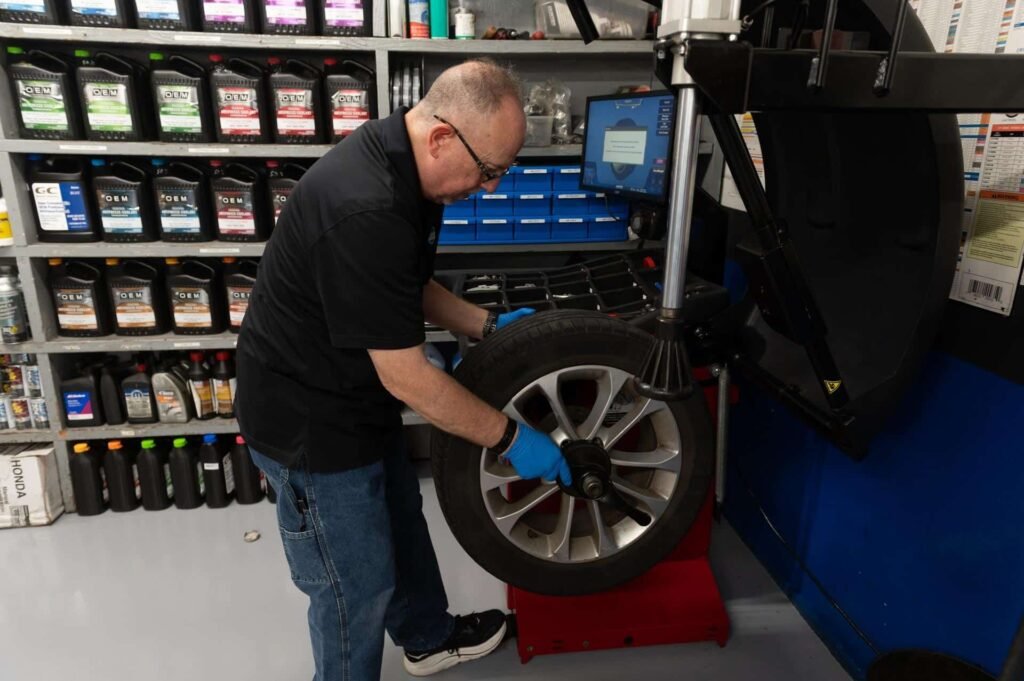
Your tires are the only parts of your vehicle that directly contact the road. Their pressure, tread depth, condition, balance, and compatibility affect braking, steering, traction, ride quality, fuel economy, and overall vehicle control.
At Chuck’s Auto Repair – North Seattle, we provide professional tire inspections, tire-pressure service, puncture evaluation, tire rotation, tire-related diagnosis, and tire service for drivers throughout North Seattle. If your tire-pressure warning light is on, a tire repeatedly loses air, the vehicle vibrates at highway speed, or the tread is wearing unevenly, our ASE-certified technicians can inspect the tires and determine the cause.
A tire concern does not always mean the tire itself must be replaced. Air loss may come from a puncture, valve stem, wheel damage, bead leak, temperature change, or tire-pressure sensor concern. Uneven wear may involve inflation, alignment, suspension wear, wheel balance, tire rotation, or driving conditions.
We inspect the tires, wheels, and related systems before recommending service.
📞 Call (206) 526-1069 or Schedule Tire Service Online.
Why Tire Condition Matters
Tires help your vehicle:
- Accelerate
- Stop
- Turn
- Maintain traction
- Absorb road irregularities
- Support vehicle weight
- Channel water away from the tread
- Maintain stability at highway speed
- Respond to steering input
- Carry passengers and cargo safely
Even properly operating brakes, steering, and suspension systems depend on the tires maintaining contact with the road.
Tire performance may be affected by:
- Air pressure
- Tread depth
- Tread pattern
- Tire age
- Internal damage
- Sidewall damage
- Wheel balance
- Alignment
- Suspension condition
- Vehicle loading
- Tire compatibility
- Road and weather conditions
A tire may look acceptable from a distance while still having low pressure, hidden damage, uneven wear, or insufficient tread.
Common Signs You May Need Tire Service
Your vehicle may need a tire inspection if you notice:
- Tire-pressure warning light
- One tire repeatedly losing air
- Visible puncture
- Nail or screw in the tread
- Tire sidewall damage
- Bulge or bubble in the tire
- Uneven tread wear
- Tread worn more on one edge
- Cupped or scalloped tread
- Vehicle pulling to one side
- Steering-wheel vibration
- Vibration through the seat or floor
- Shaking at highway speed
- Tire noise that has become louder
- Cracking in the rubber
- Tire rubbing
- Vehicle feels unstable in rain
- Reduced traction
- Frequent need to add air
- Wheel or tire damage after hitting a pothole
- Tire that looks lower than the others
- Spare tire with low pressure
- Tire-pressure reading that changes unexpectedly
Some symptoms may involve tires, while others may be caused by the wheels, suspension, steering, brakes, wheel bearings, or drivetrain.
A complete inspection helps identify the actual source.
Our Tire Inspection Process
At Chuck’s Auto Repair – North Seattle, tire concerns begin with a professional inspection.
1. Discuss the Customer’s Concern
We ask:
- Which tire appears to be affected?
- How often does it lose air?
- Is the tire-pressure warning light on?
- When does the vibration occur?
- Has the vehicle recently hit a pothole or curb?
- Has the tire been repaired before?
- Is the vehicle pulling or wandering?
- Is the concern worse at highway speed?
- Are the tires wearing unevenly?
- Were tires or suspension components recently replaced?
2. Check Tire Pressure
We compare actual tire pressure with the vehicle manufacturer’s recommended specification.
Pressure recommendations are commonly listed on the vehicle-information label located near the driver’s door opening.
The maximum pressure molded into the tire sidewall is not normally the vehicle’s recommended everyday operating pressure.
3. Inspect Tread Condition
We inspect for:
- Remaining tread depth
- Uneven wear
- Edge wear
- Center wear
- Cupping
- Feathering
- Flat spots
- Exposed cords
- Embedded objects
- Tread separation
- Heat or impact damage
4. Inspect Tire Sidewalls
We look for:
- Cuts
- Cracking
- Bulges
- Bubbles
- Abrasions
- Punctures
- Exposed cords
- Impact damage
- Deformation
- Signs of running while underinflated
5. Inspect the Wheel and Valve Area
Air loss may come from:
- Valve stem
- Tire-pressure sensor seal
- Wheel corrosion
- Damaged wheel
- Bent rim
- Bead-sealing surface
- Previous repair area
- Puncture
6. Check for Leaks
Leak testing may help identify:
- Tread puncture
- Valve leak
- Bead leak
- Wheel damage
- Previous repair failure
- Small or intermittent air loss
7. Inspect Related Systems When Needed
Uneven wear, pulling, or vibration may require inspection of:
- Steering components
- Suspension components
- Wheel bearings
- Brakes
- Wheel balance
- Alignment-related conditions
- CV axles or drivetrain components
8. Explain the Findings
We explain:
- Whether the tire can remain in service
- Whether a puncture may be repairable
- Whether replacement is recommended
- What is causing the uneven wear
- Whether another vehicle system needs attention
- Whether the tires should be rotated
- Whether wheel balance or alignment evaluation is appropriate
What Tire Service May Include
Depending on the vehicle and inspection findings, tire service may include:
- Tire-pressure inspection
- Tire-pressure adjustment
- Tread-depth measurement
- Tire-condition inspection
- Puncture evaluation
- Tire repair when safe and appropriate
- Tire rotation
- Tire balance evaluation
- Tire-pressure monitoring system diagnosis
- Valve-stem inspection
- Tire-pressure sensor seal inspection
- Wheel inspection
- Bead-leak inspection
- Uneven-wear diagnosis
- Tire-noise diagnosis
- Steering and suspension inspection
- Wheel-bearing inspection
- Road test
- Replacement recommendation when a tire is unsafe or unrepairable
- Post-service verification
The exact service depends on the tire’s condition, damage location, vehicle design, and manufacturer guidance.
Tire Pressure Service
Correct tire pressure helps support:
- Predictable handling
- Even tread wear
- Braking performance
- Fuel economy
- Tire load capacity
- Ride quality
- Tire temperature control
- Proper tire shape
Underinflated Tires
Low pressure may contribute to:
- Excessive heat
- Faster shoulder wear
- Reduced fuel economy
- Sluggish handling
- Increased rolling resistance
- Tire damage
- Reduced load capacity
Overinflated Tires
Excessive pressure may contribute to:
- Harsher ride
- Reduced contact area
- Center tread wear
- Increased sensitivity to impact
- Less predictable traction on some surfaces
Tire pressure changes with temperature. A pressure drop during colder weather does not automatically mean the tire has a puncture, but repeated loss in one tire should be inspected.
What Tire Pressure Should I Use?
Use the vehicle manufacturer’s recommended pressure for normal driving.
The recommended pressure is commonly found on:
- Driver-door information label
- Door jamb
- Fuel-door label on some vehicles
- Owner’s manual
- Vehicle-specific service information
The tire sidewall lists the tire’s maximum pressure and load information. That number is not usually the correct everyday pressure for the vehicle.
Pressure may need adjustment for specific loading, towing, or manufacturer-defined operating conditions.
Why Does One Tire Keep Losing Air?
Repeated air loss may be caused by:
- Nail or screw
- Small tread puncture
- Leaking valve stem
- Tire-pressure sensor seal
- Corrosion on the wheel bead surface
- Bent wheel
- Cracked wheel
- Tire bead damage
- Previous repair concern
- Sidewall damage
- Temperature changes
- Tire damage caused by underinflated driving
A slow leak may be difficult to locate without removing or closely inspecting the wheel and tire.
Adding air repeatedly may keep the vehicle moving temporarily, but it does not correct the leak.
Tire Puncture Repair
Not every punctured tire can be repaired safely.
Repair suitability may depend on:
- Puncture location
- Puncture size
- Angle of the injury
- Remaining tread depth
- Internal tire condition
- Whether the tire was driven while underinflated
- Previous repairs
- Tire construction
- Manufacturer restrictions
- Run-flat design
- Sidewall or shoulder involvement
Punctures located within an approved repairable area of the tread may sometimes be repaired when the tire remains otherwise serviceable.
Damage involving the sidewall, shoulder, exposed cords, structural separation, or severe underinflation generally requires tire replacement.
The tire may need to be removed from the wheel so the interior can be inspected for hidden damage.
Why an External Plug Alone May Not Be Enough
An external plug may stop some leaks temporarily, but it does not allow inspection of the tire’s internal condition.
Removing the tire from the wheel may reveal:
- Inner-liner damage
- Rubber debris
- Heat damage
- Sidewall deterioration
- Belt damage
- Evidence that the tire was driven while flat
- A puncture outside an approved repair area
- Previous repairs
A proper repair should address the puncture channel and seal the tire’s inner liner according to the applicable repair procedure.
A tire should not be repaired simply because the air leak can be stopped.
Its structural condition must also be considered.
Can a Tire with a Nail Be Repaired?
Sometimes.
A nail or screw in the central tread area may be repairable when:
- The puncture is within an approved repair area
- The injury is within allowable size limits
- The tire has adequate tread
- No internal damage is found
- The tire was not driven extensively while underinflated
- No conflicting previous repair is present
- The tire manufacturer permits repair
A puncture near the shoulder or sidewall is generally not treated the same as one in the central tread.
The tire should be inspected before the object is removed.
Sidewall Damage
The tire sidewall flexes during normal driving and is a critical structural area.
Sidewall damage may include:
- Cut
- Puncture
- Bulge
- Bubble
- Exposed cord
- Abrasion
- Cracking
- Impact break
- Damage from driving on a flat tire
Sidewall punctures and structural damage generally cannot be repaired safely.
A bulge or bubble may indicate internal cord damage and should be inspected promptly.
Continuing to drive may increase the risk of sudden tire failure.
Tire Bulges and Bubbles
A bulge commonly appears after the tire strikes:
- Pothole
- Curb
- Road debris
- Sharp pavement edge
The impact may damage the internal cords while leaving the outside rubber partly intact.
Possible signs include:
- Raised bubble on the sidewall
- Localized swelling
- Vibration
- Loss of pressure
- Visible impact mark on the wheel
A tire with a confirmed structural bulge should not remain in normal service.
Tire Tread Depth
Tread helps the tire maintain traction and channel water away from the contact area.
As tread wears, the tire may have less ability to manage:
- Rain
- Standing water
- Snow
- Loose surfaces
- Emergency braking
- Cornering under reduced-traction conditions
Tread depth should be measured across multiple areas because tires may wear unevenly.
A tire may have acceptable tread in one area and insufficient tread on an inner or outer edge.
Replacement decisions should consider:
- Lowest measured tread
- Wear pattern
- Tire damage
- Driving conditions
- Tire age
- Vehicle use
- Manufacturer recommendations
Uneven Tire Wear
Uneven tread wear may indicate a tire, inflation, steering, suspension, balance, or alignment concern.
Wear on Both Outer Edges
Possible causes include:
- Underinflation
- Heavy loading
- Repeated cornering
- Tire construction or use conditions
Wear in the Center
Possible causes include:
- Excessive inflation
- Wheel and tire fitment concerns
- Driving conditions
Wear on One Edge
Possible causes include:
- Alignment concern
- Worn suspension component
- Bent steering or suspension part
- Vehicle loading
- Tire-related condition
Cupping or Scalloped Wear
Possible causes include:
- Worn shocks or struts
- Wheel imbalance
- Suspension wear
- Tire condition
- Wheel-bearing concern
Feathered Wear
Possible causes include:
- Toe alignment concern
- Worn steering components
- Suspension movement
Uneven wear should be diagnosed before installing replacement tires, or the new tires may develop the same pattern.
Tire Rotation
Tire rotation changes tire position to help manage differences in wear.
Front and rear tires may wear differently because of:
- Steering forces
- Braking forces
- Drive-wheel operation
- Vehicle weight distribution
- Suspension design
- Front-wheel, rear-wheel, or all-wheel drive
- Tire construction
Rotation patterns vary depending on:
- Directional tires
- Different front and rear tire sizes
- Full-size spare
- Wheel design
- Manufacturer requirements
- Tire condition
Not every vehicle allows a conventional front-to-rear rotation.
Tires with different front and rear sizes may only be rotated side to side—or may not be rotatable at all—depending on their design.
How Often Should Tires Be Rotated?
Rotation intervals vary by:
- Vehicle manufacturer
- Tire manufacturer
- Drivetrain
- Tire type
- Driving conditions
- Wear pattern
- Service history
A practical rotation schedule may be coordinated with routine maintenance when appropriate.
However, rotation should not be performed blindly if:
- Tires have different sizes
- A directional tire would be installed backward
- Significant uneven wear is present
- Tire damage is found
- Replacement is already required
- Vehicle-specific restrictions apply
The tire and vehicle configuration should be confirmed first.
Tire Balance and Vibration
Wheel and tire imbalance may cause vibration, especially at certain road speeds.
Possible signs include:
- Steering-wheel vibration
- Seat or floor vibration
- Shaking that increases with speed
- Uneven tire wear
- Vibration after tire installation
- Lost wheel weight
However, vibration may also be caused by:
- Bent wheel
- Damaged tire
- Tire separation
- Road-force variation
- Wheel-bearing concern
- CV axle
- Driveshaft
- Suspension wear
- Brake concerns
- Debris inside the wheel
A vehicle should be inspected before assuming balance is the only cause.
Why Does My Steering Wheel Shake at Highway Speed?
Possible causes include:
- Tire imbalance
- Bent wheel
- Out-of-round tire
- Internal tire damage
- Tire separation
- Uneven tread wear
- Loose wheel hardware
- Wheel-bearing wear
- Steering or suspension looseness
- Alignment-related condition
The location of the vibration can provide clues.
A vibration felt mainly through the steering wheel may involve a front wheel or front suspension component.
A vibration felt through the seat may involve a rear tire, wheel, or drivetrain component.
Testing and inspection help identify the source.
Tire Noise
Some tire noise is normal and depends on tread design and road surface.
Unusual or increasing noise may involve:
- Uneven tread wear
- Cupping
- Aggressive tread pattern
- Underinflation
- Overinflation
- Tire damage
- Wheel bearing
- Differential
- Alignment concern
- Tire aging
A humming or roaring sound should not automatically be blamed on the tire.
Wheel-bearing and drivetrain noises may sound similar and should be considered.
Tire-Pressure Monitoring System Service
The tire-pressure monitoring system, or TPMS, alerts the driver when one or more tires may be significantly underinflated.
The system may use sensors mounted inside each wheel.
A warning light may appear because of:
- Low tire pressure
- Temperature-related pressure change
- Tire puncture
- Sensor battery failure
- Damaged sensor
- Sensor seal leak
- Sensor not programmed
- Incorrect wheel or sensor
- Communication concern
- Spare tire sensor on applicable vehicles
The tire-pressure warning should not simply be reset without checking the actual tire pressures.
TPMS Warning Light vs. Flashing TPMS Light
A steady tire-pressure warning commonly indicates that one or more tires may be below the system’s expected pressure.
A warning that flashes before remaining on may indicate a system or sensor fault.
Possible causes include:
- Failed sensor battery
- Damaged sensor
- Missing sensor
- Sensor communication problem
- Programming concern
- Control-system fault
The exact warning behavior varies by vehicle.
The tires and monitoring system should be inspected.
Tire-Pressure Sensor and Valve Concerns
Some TPMS sensors are attached to the valve stem.
Possible concerns include:
- Leaking valve-core
- Cracked valve stem
- Corroded retaining hardware
- Damaged sensor
- Seal failure
- Sensor damaged during previous tire service
- Battery failure inside the sensor
A tire that loses air near the valve area may have a valve or sensor-seal problem rather than a tread puncture.
Sensor replacement may require programming or relearn procedures depending on the vehicle.
Tire Age and Date Codes
Tires age even when tread remains.
A tire’s condition may be affected by:
- Heat
- Sunlight
- Ozone
- Storage
- Climate
- Inflation history
- Vehicle use
- Chemical exposure
- Time
The tire sidewall includes a production code that identifies when the tire was manufactured.
Age alone does not describe the complete condition, but it should be considered along with:
- Cracking
- Tread depth
- Internal condition
- Storage history
- Manufacturer guidance
- Vehicle use
- Spare-tire age
A lightly used older tire may still require replacement because rubber and internal materials deteriorate over time.
Spare Tire Inspection
A spare tire may lose pressure or age even when it has never been used.
When accessible, spare-tire inspection may include:
- Pressure
- Tread
- Cracking
- Tire age
- Valve condition
- Visible damage
- Wheel condition
- Mounting security
The vehicle may instead use:
- Compact temporary spare
- Full-size spare
- Tire-inflation kit
- Run-flat tires
- Air compressor and sealant
- No factory spare
Drivers should know which emergency equipment their vehicle has before a tire problem occurs.
Temporary Spare Tire Use
A compact temporary spare is designed for limited use.
It may have restrictions involving:
- Speed
- Distance
- Vehicle position
- Tire pressure
- AWD compatibility
- Vehicle loading
The owner’s manual and information printed on the spare should be followed.
A temporary spare is not intended to replace a regular tire for long-term driving.
Run-Flat Tires
Run-flat tires are designed to support limited driving after a loss of pressure under specified conditions.
However:
- Distance and speed limits apply
- Damage may still occur
- Repairability varies
- The tire may require replacement
- TPMS operation is especially important
- The driver may not immediately feel that pressure is low
A run-flat tire should be inspected after operating with reduced pressure.
Its ability to continue moving does not mean it remains undamaged.
Matching Tires on AWD Vehicles
Many all-wheel-drive systems are sensitive to differences in tire circumference.
Differences may result from:
- Different tire sizes
- Different tread depths
- Different tire models
- Uneven wear
- Incorrect pressure
- One new tire installed with three heavily worn tires
Significant differences may cause the AWD system to continually compensate for wheel-speed variation.
This may place additional stress on:
- Center differential
- Transfer unit
- Clutch packs
- Front or rear differential
- Other AWD components
Allowable differences vary by manufacturer.
Before replacing only one tire on an AWD vehicle, the condition and measurements of all four tires should be considered.
Replacing One Tire vs. Multiple Tires
Whether one tire can be replaced depends on:
- Remaining tread on the other tires
- Vehicle drivetrain
- Tire size
- Tire model availability
- Manufacturer requirements
- Tire condition
- AWD tolerances
- Position of the damaged tire
On some vehicles, one matching tire may be appropriate.
On others, larger tread differences may require replacement of two or more tires or another manufacturer-approved solution.
The recommendation should be based on measurements and vehicle requirements rather than a universal rule.
Directional and Asymmetrical Tires
Some tires have special mounting requirements.
Directional Tires
Directional tires are designed to rotate in one direction.
They commonly have an arrow showing the correct rotation direction.
Asymmetrical Tires
Asymmetrical tires have designated inside and outside sidewalls.
Incorrect installation may affect:
- Water evacuation
- Handling
- Tread performance
- Noise
- Wear
Tire mounting and rotation patterns must account for the tire’s design.
Tire Damage from Potholes and Curbs
A pothole or curb impact may damage:
- Tire sidewall
- Internal tire cords
- Wheel
- Wheel bearing
- Tie rod
- Control arm
- Ball joint
- Strut
- Alignment
- Tire-pressure sensor
Possible signs include:
- Bulge
- Air loss
- Vibration
- Vehicle pull
- Steering wheel no longer centered
- New tire noise
- Bent wheel
- Warning light
- Visible sidewall damage
The tire may appear intact while having internal structural damage.
A hard impact should be inspected when new symptoms appear.
Wheel Damage and Air Leaks
A bent, cracked, or corroded wheel may cause:
- Bead leak
- Vibration
- Repeated pressure loss
- Difficulty balancing the tire
- Tire-sealing concerns
- Steering instability
Wheel damage may result from:
- Pothole impact
- Curb impact
- Collision
- Corrosion
- Improper mounting
- Previous repair
The tire and wheel should both be inspected before assuming the tire is responsible for the leak.
Tires and Wheel Alignment
Wheel alignment describes the position and angles of the wheels relative to the vehicle and road.
Alignment concerns may contribute to:
- One-edge tire wear
- Feathering
- Vehicle pull
- Steering wheel not centered
- Reduced stability
- Rapid tread wear
However, worn or damaged components may prevent the vehicle from holding the correct alignment.
Possible concerns include:
- Tie rods
- Ball joints
- Control arms
- Bushings
- Springs
- Struts
- Bent suspension parts
Steering and suspension wear should be addressed before alignment settings are evaluated or adjusted.
Tires and Suspension Wear
Worn suspension components may affect tire contact and tread wear.
Possible contributors include:
- Worn shocks
- Worn struts
- Weak springs
- Damaged control arms
- Worn bushings
- Ball-joint movement
- Wheel-bearing wear
- Sway-bar concerns
Replacing tires without correcting a significant suspension problem may allow the new tires to wear unevenly.
That is why unusual tread patterns should be investigated.
Tires and Braking Performance
Tires play a direct role in stopping.
Braking performance may be affected by:
- Tread depth
- Tire compound
- Air pressure
- Tire damage
- Road temperature
- Wet pavement
- Snow or ice
- Tire compatibility
- Vehicle loading
New brake pads and rotors cannot overcome a tire that has poor traction or insufficient tread for the conditions.
Brake and tire condition should both be considered when evaluating stopping concerns.
Tire Pressure and Seattle Temperature Changes
Tire pressure naturally changes as outdoor temperature changes.
Drivers may notice the tire-pressure warning during colder mornings even when no puncture is present.
However, only adding air without inspection may overlook:
- Small puncture
- Valve leak
- Wheel corrosion
- Bead leak
- Damaged tire
- Sensor-seal concern
If one tire loses more pressure than the others, it should be checked for a leak.
Wet-Weather Tire Performance
North Seattle drivers regularly encounter wet pavement, standing water, and reduced visibility.
Tires need adequate tread to move water away from the contact area.
Reduced tread depth may increase the risk of:
- Loss of traction
- Longer stopping distance
- Hydroplaning
- Reduced steering response
- Instability in standing water
Pressure, tire condition, speed, water depth, and tread design all influence wet-weather performance.
Tires should be inspected before severe wear reaches the point where traction becomes unreliable.
All-Season, Summer, and Winter Tires
Different tire types are designed for different operating conditions.
All-Season Tires
Designed to provide a balance of performance across a range of conditions.
Summer Tires
Designed for warm-weather traction and handling. Some may lose flexibility in colder temperatures.
Winter Tires
Designed for improved cold-weather, snow, and ice performance.
The best tire type depends on:
- Driving location
- Seasonal conditions
- Vehicle type
- Road use
- Performance needs
- Manufacturer requirements
- Storage and seasonal-change capability
A tire’s category does not eliminate the need for correct pressure, adequate tread, and safe driving for the conditions.
Why Proper Tire Diagnosis Matters
Tire-related symptoms often overlap with other systems.
A pressure loss may involve:
- Puncture
- Valve
- Sensor seal
- Wheel
- Bead
- Temperature
A vibration may involve:
- Tire balance
- Bent wheel
- Tire damage
- Wheel bearing
- CV axle
- Suspension
- Driveshaft
A vehicle pull may involve:
- Tire pressure
- Tire construction
- Alignment
- Brakes
- Steering
- Suspension
Uneven wear may involve:
- Inflation
- Rotation
- Alignment
- Worn suspension
- Wheel balance
- Tire damage
Replacing a tire without identifying the cause may allow the same symptom or wear pattern to continue.
Our approach is to inspect, measure, test, explain, and then recommend the appropriate service.
Can You Drive with a Tire-Pressure Warning Light?
The light means the tire pressures should be checked.
Before continuing a long drive:
- Inspect the tires visually
- Check actual pressure
- Look for a visibly low or damaged tire
- Avoid highway driving if a tire is losing pressure rapidly
- Do not continue driving on a flat tire
- Arrange service when a leak or damage is suspected
A warning caused by cold weather may clear after pressure is corrected and the system is reset or relearned as required.
A warning that returns should be investigated.
When a Tire Should Not Be Driven On
Stop driving or reduce driving when a tire has:
- Very low or no pressure
- Sidewall bulge
- Exposed cords
- Severe cut
- Tread separation
- Rapid air loss
- Major impact damage
- Excessive vibration
- Tire rubbing
- Visible deformation
- Smoke or burning smell
- Wheel damage affecting control
Continuing to drive may damage the tire, wheel, suspension, or body and may increase the risk of tire failure.
Preventing Tire Problems
Not every tire failure can be prevented, but routine care can reduce avoidable damage.
Helpful steps include:
- Check tire pressure regularly
- Use the manufacturer-recommended pressure
- Inspect tires before long trips
- Rotate tires when appropriate
- Address uneven wear
- Repair leaks promptly
- Avoid driving on an underinflated tire
- Inspect the tire after a pothole or curb impact
- Maintain steering and suspension components
- Have vibration diagnosed
- Replace damaged valve stems or sensor seals
- Monitor tire age
- Keep tires properly matched on AWD vehicles
- Avoid exceeding vehicle load limits
- Check the spare tire or inflation equipment
Early inspection may allow a repair before the tire becomes unsafe or unrepairable.
Why Choose Chuck’s Auto Repair – North Seattle?
- AAA-approved auto repair facility
- ASE-certified technicians
- Trusted by Seattle-area drivers for more than 30 years
- Professional tire-pressure and condition inspections
- Puncture and air-leak evaluation
- Tire rotation and tire-related diagnosis
- TPMS warning-light inspection
- Uneven-wear and vibration diagnosis
- Inspection of related steering and suspension components
- Recommendations based on confirmed tire condition
- Clear explanations before service is performed
- 24-month / 24,000-mile parts and labor warranty on qualifying repairs
- 12-month / 12,000-mile nationwide warranty coverage on qualifying repairs
- Convenient North Seattle location
We do not assume every pressure warning requires a sensor or every vibration requires tire replacement.
We inspect the tire, wheel, valve, pressure-monitoring system, and related vehicle components before recommending service.
Warranty Protection for Qualifying Tire-Related Repairs
Qualifying tire-related repairs and installed components may be backed by our 24-month / 24,000-mile parts and labor warranty.
The warranty also includes 12-month / 12,000-mile nationwide coverage for qualifying repairs, providing additional protection if you need warranty assistance while traveling away from Seattle.
The nationwide 1-800 assistance information is printed on every repair invoice. Customers also receive a warranty keytag for convenient access while on the road.
Tire treadwear, road-damage, manufacturer, and supplier coverage may have separate terms depending on the tire or component installed.
Convenient Tire Service in North Seattle
Chuck’s Auto Repair – North Seattle
9115 Roosevelt Way NE
Seattle, WA 98115
We provide tire inspections and tire-related service for drivers throughout:
Maple Leaf • Roosevelt • Northgate • Green Lake • Wedgwood • University District • Ravenna • Lake City • Wallingford • Greenwood
📞 Call (206) 526-1069 to schedule tire service.
Tire Service FAQs
Why does my tire-pressure light keep coming on?
Possible causes include low pressure, temperature changes, a puncture, valve leak, wheel corrosion, sensor-seal leak, or failed tire-pressure sensor.
Can a tire with a nail be repaired?
Sometimes. Repairability depends on the puncture location, size, tire condition, remaining tread, internal damage, prior repairs, and manufacturer guidance.
Can a sidewall puncture be repaired?
Sidewall and shoulder damage generally cannot be repaired safely because those areas flex and are structurally critical.
Why does one tire keep losing air?
Possible causes include a tread puncture, valve-stem leak, TPMS sensor seal, bead leak, damaged wheel, corrosion, or tire damage.
Can cold weather turn on the tire-pressure light?
Yes. Tire pressure decreases as temperature drops. All tires should still be checked because a puncture or leak may also be present.
What tire pressure should I use?
Use the pressure recommended by the vehicle manufacturer, commonly listed on the driver-door information label.
Should I inflate the tires to the number on the sidewall?
Usually not. The sidewall normally lists the tire’s maximum pressure and load information, not the vehicle’s recommended everyday pressure.
How often should tires be rotated?
The interval depends on the vehicle, tire manufacturer, drivetrain, tread wear, and tire design. Directional or different-size tires may have limited rotation options.
Can rotating tires fix uneven wear?
Rotation may help manage future wear, but it cannot restore tread already worn away. The cause of the uneven wear should also be identified.
Why does my steering wheel shake at highway speed?
Possible causes include tire imbalance, bent wheel, damaged tire, uneven wear, wheel-bearing concerns, or steering and suspension problems.
Can a bad tire sound like a wheel bearing?
Yes. Cupped or uneven tires may create humming or roaring noises similar to a worn wheel bearing.
What causes tire cupping?
Possible causes include worn shocks or struts, wheel imbalance, suspension wear, tire condition, or wheel-bearing concerns.
Should all four tires match on an AWD vehicle?
Many AWD systems require closely matched tire size and circumference. Allowable tread-depth differences vary by manufacturer.
Can I replace only one tire on an AWD vehicle?
Sometimes, but all four tires should be measured first. A large tread-depth difference may affect the AWD system.
What does a tire bulge mean?
A bulge may indicate damaged internal cords, often caused by impact. A confirmed structural bulge normally requires tire replacement.
Can I drive with a nail in the tire?
The tire may lose pressure suddenly or develop internal damage. Have it inspected promptly and avoid removing the object before the tire can be checked.
Can driving on a low tire ruin it?
Yes. Underinflated driving can create excessive heat and internal sidewall damage, even when the puncture itself might otherwise have been repairable.
Why does the TPMS light flash before staying on?
This may indicate a sensor or system fault rather than low pressure alone. The warning behavior varies by vehicle.
Does the spare tire need to be checked?
Yes. Spare tires may lose pressure and age while stored. Some vehicles use an inflation kit or run-flat tires instead of a spare.
How long do tires last?
Tire life depends on tread wear, age, pressure, vehicle use, road conditions, maintenance, tire construction, and damage. There is no single mileage that applies to every tire.
Do tire-related repairs include a warranty?
Qualifying repairs may be backed by our 24-month / 24,000-mile parts and labor warranty, including 12-month / 12,000-mile nationwide warranty coverage. Tire and supplier warranties may have separate terms.
Schedule Tire Service in North Seattle
If your tire-pressure warning light is on, a tire keeps losing air, the tread is wearing unevenly, or the vehicle vibrates at highway speed, schedule tire service with Chuck’s Auto Repair – North Seattle.
Our ASE-certified technicians will inspect the tires, wheels, pressure-monitoring system, steering, and suspension as appropriate, explain what they find, and recommend service based on confirmed results.
📞 Call (206) 526-1069 or Book Tire Service Online.