
Wheel Bearing REPAIR IN NORTH SEATTLE
AAA-approved auto repair • ASE-certified technicians • Trusted by Seattle-area drivers for more than 30 years
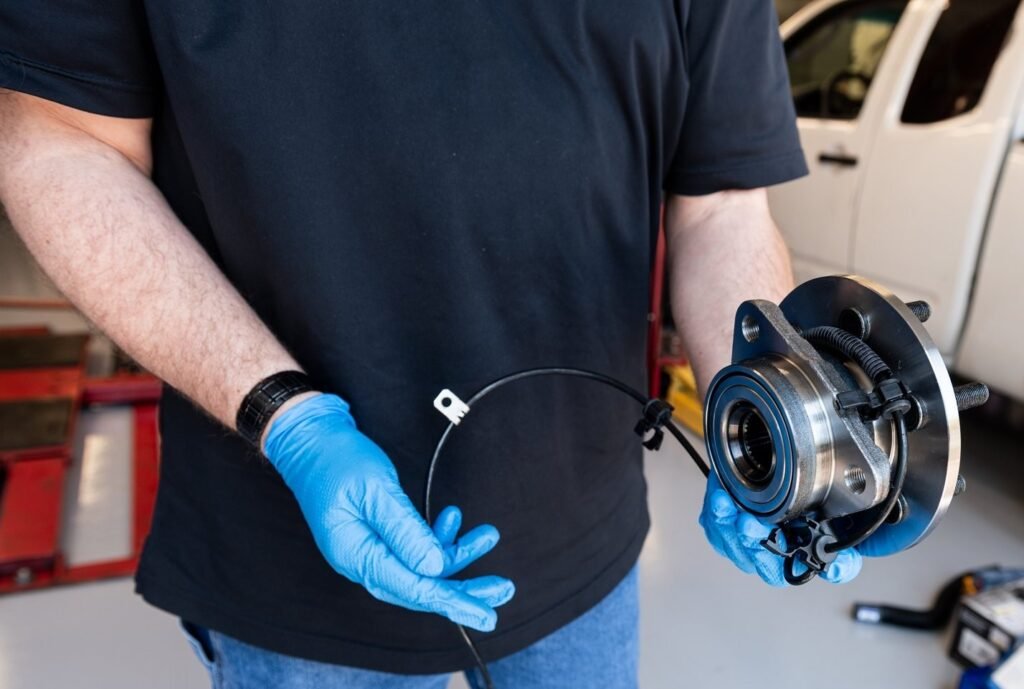
Wheel bearings help your wheels rotate smoothly while supporting vehicle weight and maintaining proper wheel position. When a bearing becomes worn, loose, noisy, or damaged, it may cause humming, growling, vibration, steering changes, uneven tire wear, or problems with the anti-lock braking system.
At Chuck’s Auto Repair – North Seattle, we provide professional wheel bearing inspections, diagnostics, hub assembly service, and qualifying wheel bearing repairs for drivers throughout North Seattle. Our ASE-certified technicians road-test the vehicle when appropriate, inspect the wheel and suspension, measure looseness, and determine whether the concern is coming from a wheel bearing, tire, brake, axle, differential, or another related component.
A humming or grinding noise does not automatically mean a wheel bearing has failed. Similar sounds may come from uneven tire wear, a damaged tire, brake contact, CV axle, differential, transmission, or another rotating component.
We diagnose the source before recommending replacement.
📞 Call (206) 526-1069 or Schedule Wheel Bearing Service Online.
What Is a Wheel Bearing?
A wheel bearing is a precision assembly that allows the wheel hub to rotate with minimal friction while supporting the weight and forces placed on the vehicle.
Depending on the vehicle, the wheel bearing may be:
- Pressed into a steering knuckle
- Integrated into a complete hub assembly
- Adjustable and serviceable
- Sealed and non-serviceable
- Combined with an ABS wheel-speed sensor
- Mounted within the front or rear suspension
- Part of a driven or non-driven wheel assembly
The wheel bearing works with related components such as:
- Wheel hub
- Steering knuckle
- Axle shaft
- CV joint
- Brake rotor
- Brake caliper
- Wheel-speed sensor
- Suspension components
- Steering components
- Seals and retaining hardware
A worn bearing may affect more than noise. It can also affect wheel position, braking, steering feel, tire wear, and electronic safety systems.
What Does a Wheel Bearing Do?
A wheel bearing helps:
- Support vehicle weight
- Allow the wheel to rotate smoothly
- Maintain wheel position
- Reduce rotational friction
- Support steering stability
- Keep the brake rotor and hub aligned
- Provide accurate wheel-speed information on some vehicles
- Help maintain consistent tire contact
- Support predictable handling
Wheel bearings are designed to handle:
- Vehicle weight
- Cornering forces
- Braking forces
- Acceleration forces
- Road impacts
- Heat
- Repeated rotation
- Water and road contamination exposure
Over time, the bearing may wear internally or become damaged by impact, corrosion, loss of lubrication, improper installation, or excessive looseness.
Common Signs of a Bad Wheel Bearing
Your vehicle may need wheel bearing inspection if you notice:
- Humming that increases with speed
- Growling or roaring noise
- Grinding near one wheel
- Noise that changes while turning
- Steering-wheel vibration
- Vibration through the seat or floor
- Loose or unstable steering
- Wheel looseness
- Uneven tire wear
- ABS warning light
- Traction-control warning light
- Stability-control warning
- Clicking or clunking
- Vehicle pulling
- Excessive heat near one wheel
- Brake rotor or caliper contact concerns
- Wheel-speed sensor trouble codes
- Noise after hitting a pothole or curb
- Wheel that does not rotate smoothly
- Repeated alignment concerns
- Handling that feels less precise
These symptoms may involve a wheel bearing, but they can also be caused by tires, wheels, brakes, axles, suspension parts, or drivetrain components.
Testing is needed to identify the source.
What Does a Bad Wheel Bearing Sound Like?
A worn wheel bearing commonly creates a sound described as:
- Humming
- Growling
- Roaring
- Grinding
- Rumbling
- Droning
The noise may:
- Increase with vehicle speed
- Change when the vehicle turns
- Become louder on certain road surfaces
- Sound as though it comes from the opposite side
- Be more noticeable at highway speed
- Continue even when the engine speed changes
- Seem similar to aggressive tire tread noise
The noise is often related to wheel speed rather than engine speed.
However, tire wear and drivetrain components can sound very similar, so the noise should be confirmed before the bearing is replaced.
Why Does Wheel Bearing Noise Change When Turning?
Turning shifts vehicle weight from one side to the other.
That change in load may make a worn bearing:
- Louder
- Quieter
- More noticeable
- Less noticeable
For example, a left turn may place more load on the right-side bearings.
However, this is only one diagnostic clue. Noise may travel through the vehicle structure, and some bearings do not follow a simple left-turn/right-turn pattern.
Other components that may also change noise while turning include:
- Tires
- CV joints
- Differential
- Suspension parts
- Brake components
- Steering components
Road testing and physical inspection help confirm the correct side and source.
Why Does My Vehicle Hum at Highway Speed?
A humming noise at highway speed may be caused by:
- Wheel bearing
- Uneven tire wear
- Cupped tire
- Aggressive tire tread
- Damaged tire
- Wheel imbalance
- Differential
- Transfer case
- Transmission
- Driveshaft
- CV axle
Important clues include whether the noise changes with:
- Vehicle speed
- Steering direction
- Acceleration
- Deceleration
- Road surface
- Tire rotation
- Gear selection
A wheel bearing should not be replaced based on highway noise alone.
Why Is My Steering Wheel Vibrating?
Wheel bearing wear may contribute to vibration, but several other conditions are more common.
Possible causes include:
- Tire imbalance
- Bent wheel
- Tire separation
- Uneven tire wear
- Brake rotor variation
- CV axle concern
- Suspension looseness
- Wheel bearing movement
- Driveshaft issue
- Steering component wear
The timing of the vibration matters.
For example:
- Vibration at a certain speed may involve tires or wheels.
- Vibration while braking may involve brakes or suspension.
- Vibration during acceleration may involve axles or drivetrain.
- Vibration with wheel looseness may involve a bearing, hub, or joint.
We inspect the related systems before recommending repair.
Can a Bad Wheel Bearing Cause Loose Steering?
Yes.
A worn bearing may allow the wheel or hub to move more than intended.
This may contribute to:
- Loose steering feel
- Wandering
- Vehicle pull
- Steering correction
- Uneven tire contact
- Brake rotor movement
- Alignment changes
However, loose steering may also involve:
- Tie rods
- Ball joints
- Control-arm bushings
- Steering rack
- Wheel alignment
- Tires
- Suspension damage
Wheel movement should be measured and the suspension inspected to determine the cause.
Can a Wheel Bearing Cause Uneven Tire Wear?
Yes, especially when bearing looseness allows the wheel position to change.
Possible tire effects include:
- Irregular wear
- Edge wear
- Cupping
- Feathering
- Accelerated tread loss
Uneven tire wear may also result from:
- Incorrect tire pressure
- Wheel alignment
- Worn shocks or struts
- Suspension wear
- Tire imbalance
- Lack of rotation
- Bent components
Replacing the bearing will not restore tire tread already worn away.
The tire may also require rotation, replacement, or alignment evaluation.
Can a Bad Wheel Bearing Turn On the ABS Light?
Yes.
Many modern wheel bearing or hub assemblies include a wheel-speed sensor or magnetic encoder ring used by:
- Anti-lock brakes
- Traction control
- Stability control
- AWD systems
- Electronic parking brake
- Driver-assistance systems
A bearing or hub concern may cause:
- Incorrect wheel-speed signal
- Intermittent sensor reading
- ABS warning light
- Traction-control warning
- Stability-control warning
- Unwanted ABS activation
- AWD warning
- Wheel-speed sensor trouble code
The cause may also involve:
- Failed sensor
- Damaged wiring
- Corroded connector
- Contaminated encoder ring
- Incorrect air gap
- Damaged tone ring
- Low system voltage
- Control-module concern
A wheel-speed code does not automatically mean the wheel bearing or sensor has failed.
The complete circuit and mechanical condition should be tested.
Our Wheel Bearing Diagnostic Process
At Chuck’s Auto Repair – North Seattle, wheel bearing concerns begin with a professional inspection.
1. Discuss the Customer’s Concern
We ask:
- What does the noise sound like?
- At what speed does it begin?
- Does it change when turning?
- Is vibration present?
- Are any warning lights on?
- Did the concern begin after a pothole or curb impact?
- Has the tire or brake system recently been serviced?
- Is the noise constant or intermittent?
- Is it louder when accelerating or coasting?
- Has the vehicle had previous wheel bearing work?
2. Road Test When Appropriate
A road test may help identify:
- Speed-related noise
- Noise changes while turning
- Steering vibration
- Vehicle pull
- Brake-related noise
- Tire-related noise
- Drivetrain noise
- Handling changes
The road test is performed only when the vehicle can be driven safely.
3. Inspect Tires and Wheels
We inspect for:
- Uneven tread wear
- Cupping
- Tire damage
- Tire pressure
- Bent wheel
- Loose wheel hardware
- Tire noise patterns
- Impact damage
Tire noise can closely resemble a worn wheel bearing.
4. Check for Wheel Looseness
We inspect for abnormal movement involving:
- Wheel bearing
- Ball joint
- Tie rod
- Suspension bushing
- Axle
- Hub
- Wheel mounting
Movement at the wheel does not always mean the bearing is responsible.
The source must be isolated.
5. Rotate the Wheel and Listen
When appropriate, we may evaluate:
- Roughness
- Grinding
- Binding
- Noise
- Resistance
- Hub movement
- Brake contact
Brake pads and rotors may create drag or noise during rotation, so findings must be interpreted carefully.
6. Inspect the Hub and Bearing Area
We check accessible components for:
- Excessive movement
- Corrosion
- Damage
- Heat
- Loose hardware
- Damaged seals
- Impact damage
- Previous installation concerns
- Sensor or wiring damage
7. Check Wheel-Speed Sensor Data When Needed
If warning lights are on, testing may include:
- Trouble-code retrieval
- Live wheel-speed comparison
- Sensor signal analysis
- Wiring inspection
- Connector inspection
- Power and ground testing
- Tone ring or encoder inspection
8. Inspect Related Components
We may also inspect:
- CV axle
- Axle nut
- Brake rotor
- Brake caliper
- Steering knuckle
- Suspension joints
- Differential
- Hub mounting surfaces
- Wheel alignment indicators
9. Explain the Findings
We explain:
- Whether the bearing is noisy, loose, or damaged
- Which side is affected
- Whether the hub assembly is involved
- Whether a sensor or wiring problem is present
- Whether related repairs should be considered
- Whether tire or brake concerns were also found
10. Verify the Repair
After approved repairs, we may:
- Confirm correct installation
- Verify axle-nut torque
- Check wheel rotation
- Clear and recheck applicable warning lights
- Confirm wheel-speed data
- Road-test the vehicle
- Inspect for abnormal noise or looseness
What Wheel Bearing Service May Include
Depending on the vehicle and confirmed findings, service may include:
- Wheel bearing inspection
- Hub assembly inspection
- Road testing
- Tire and wheel inspection
- Wheel looseness measurement
- Wheel-speed sensor diagnosis
- ABS trouble-code diagnosis
- Front wheel bearing replacement
- Rear wheel bearing replacement
- Hub assembly replacement
- Pressed bearing replacement
- Bearing seal replacement
- Axle-nut replacement when required
- Snap-ring or retaining-hardware replacement
- Steering-knuckle inspection
- CV axle inspection
- Brake inspection
- Wheel alignment evaluation
- Post-repair road test
- Warning-light verification
The exact repair depends on the vehicle design, bearing style, location, damage, and manufacturer procedures.
Pressed-In Wheel Bearings
Some vehicles use a bearing pressed into the steering knuckle or hub carrier.
Replacement may require:
- Removing the wheel
- Removing brake components
- Removing the axle from the hub
- Removing the knuckle
- Removing retaining hardware
- Pressing out the old bearing
- Inspecting the knuckle and hub
- Pressing in the new bearing
- Reassembling the suspension
- Tightening fasteners to specification
- Checking alignment when appropriate
Improper pressing may damage:
- New bearing
- Wheel hub
- Steering knuckle
- ABS encoder
- Bearing seals
The correct support points and installation method are important.
Bolt-On Hub Assemblies
Many modern vehicles use a complete bolt-on hub and bearing assembly.
The assembly may include:
- Wheel bearing
- Wheel hub
- Mounting flange
- Wheel studs
- ABS sensor
- Magnetic encoder ring
- Electrical connector
A complete hub assembly may be replaced when:
- Bearing is noisy
- Bearing is loose
- Hub is damaged
- Sensor is integrated and failed
- Encoder ring is damaged
- Mounting surface is compromised
- Assembly is non-serviceable
Even bolt-on hubs may be difficult to remove because of corrosion or road exposure.
Serviceable and Adjustable Wheel Bearings
Some vehicles, trailers, and older designs use serviceable tapered roller bearings.
These may require:
- Cleaning
- Inspection
- Repacking with correct grease
- New seals
- Adjustment
- Proper preload or endplay
- Replacement when damaged
Improper adjustment can cause:
- Excessive looseness
- Overheating
- Bearing damage
- Brake rotor movement
- Premature failure
The correct procedure depends on the specific design.
Front vs. Rear Wheel Bearings
Wheel bearings may be used at all four wheel positions.
Front and rear designs may differ.
Front Wheel Bearings
Front bearings may also support:
- Steering movement
- Drive axle forces
- Front brake components
- Greater cornering loads
Rear Wheel Bearings
Rear bearings may be:
- Integrated into a hub
- Pressed into a carrier
- Mounted in a solid axle
- Combined with a rear axle assembly
- Part of an AWD or rear-drive system
The repair process depends on the suspension and drivetrain design.
Wheel Bearing vs. Tire Noise
Tire noise is one of the most common sounds confused with wheel bearing noise.
A tire may become noisy because of:
- Cupping
- Feathering
- Uneven wear
- Aggressive tread pattern
- Underinflation
- Overinflation
- Tire age
- Internal tire damage
- Lack of rotation
Tire noise may:
- Change with road surface
- Continue after a tire rotation
- Become louder at certain speeds
- Sound like a humming bearing
Inspecting and sometimes rotating the tires may help determine whether the noise follows the tire or remains at the same wheel position.
Wheel Bearing vs. Brake Noise
Brake components may create:
- Grinding
- Scraping
- Squealing
- Rhythmic rubbing
- Clicking
- Heat
Possible causes include:
- Worn brake pads
- Damaged brake rotor
- Bent dust shield
- Sticking caliper
- Loose hardware
- Parking-brake concern
- Debris between components
Brake drag may also create heat near the wheel, which can be mistaken for bearing failure.
The brake and bearing should both be inspected.
Wheel Bearing vs. CV Axle Noise
CV axle concerns may cause:
- Clicking during turns
- Vibration during acceleration
- Clunking
- Shudder
- Grease leakage
- Noise under load
A wheel bearing more commonly produces a humming or growling sound related to wheel speed.
However, symptoms can overlap.
The axle, joint, bearing, hub, and related drivetrain components should be evaluated together.
Wheel Bearing vs. Differential Noise
Differential noise may resemble wheel bearing noise.
Possible differential symptoms include:
- Whine during acceleration
- Whine during deceleration
- Humming
- Clunking
- Gear noise
- Fluid leakage
- Noise from the center or rear of the vehicle
Wheel bearing noise may sound as though it comes from the center of the vehicle because sound travels through the body and suspension.
Road testing and drivetrain inspection help separate the sources.
Wheel Bearing vs. Driveshaft or Transfer-Case Noise
On rear-wheel-drive, four-wheel-drive, and all-wheel-drive vehicles, rotating drivetrain components may cause:
- Humming
- Vibration
- Growling
- Clunking
- Speed-related noise
Possible sources include:
- Driveshaft
- Universal joint
- Center support bearing
- Transfer case
- Differential
- CV joint
- Wheel bearing
The conditions under which the symptom changes help guide diagnosis.
What Causes Wheel Bearings to Fail?
Wheel bearings may fail because of:
- Normal wear
- High mileage
- Pothole or curb impact
- Water intrusion
- Corrosion
- Seal failure
- Loss of lubrication
- Excessive vehicle load
- Incorrect axle-nut torque
- Improper installation
- Damaged hub or knuckle
- Misalignment during pressing
- Brake heat
- Collision damage
- Oversized or heavily offset wheels
- Repeated rough-road use
- Defective component
Some bearings fail gradually, while others become noisy or loose soon after an impact or installation problem.
Pothole and Curb Damage
A hard impact may damage:
- Tire
- Wheel
- Wheel bearing
- Hub
- Steering knuckle
- Tie rod
- Ball joint
- Control arm
- Strut
- Wheel alignment
- Axle
Possible signs after impact include:
- New humming
- Vibration
- Vehicle pull
- Bent wheel
- Tire-pressure loss
- Steering wheel no longer centered
- Clunking
- ABS warning
- Wheel looseness
The vehicle should be inspected if handling, noise, or tire pressure changes after a severe impact.
Water and Corrosion Damage
Wheel bearings are designed to remain sealed and lubricated.
Water or road contamination may enter because of:
- Damaged seal
- Corrosion
- Improper installation
- Pressure washing near damaged seals
- Flood exposure
- Repeated deep-water driving
- Physical damage
Contamination may lead to:
- Rust
- Loss of lubrication
- Pitting
- Roughness
- Noise
- Premature failure
Corrosion may also make hub removal more difficult.
Axle-Nut Torque and Bearing Life
On many driven-wheel applications, the axle nut helps establish or maintain proper bearing loading.
Incorrect torque may cause:
- Excessive bearing preload
- Bearing looseness
- Heat
- Noise
- Premature failure
- Hub damage
- ABS signal concerns
- Axle or thread damage
Some axle nuts are one-time-use fasteners and must be replaced.
The correct torque procedure may require:
- Specified torque
- Additional angle tightening
- Vehicle on or off the ground
- New retaining hardware
- Specific staking or locking method
Proper installation is critical.
Can a Wheel Bearing Be Installed Backward?
On some pressed bearing designs, yes.
A bearing may contain a magnetic encoder ring on one side for the ABS sensor.
If installed in the wrong direction, the vehicle may develop:
- ABS warning light
- No wheel-speed signal
- Stability-control fault
- Traction-control fault
- AWD warning
Correct bearing orientation must be confirmed before installation.
Can a New Wheel Bearing Fail Early?
Yes.
Premature failure may result from:
- Incorrect installation
- Hammering through the bearing
- Pressure applied through the wrong race
- Incorrect axle-nut torque
- Damaged hub
- Damaged knuckle
- Contamination
- Corrosion
- Poor-quality part
- Bent component
- Severe impact
- Reused damaged hardware
- Incorrect bearing orientation
The surrounding components should be inspected during replacement.
Installing a new bearing into a damaged hub or knuckle may cause repeat failure.
Should Wheel Bearings Be Replaced in Pairs?
Wheel bearings are not always replaced in pairs.
Unlike some suspension components, one bearing may fail while the bearing on the opposite side remains serviceable.
Pair replacement may be considered when:
- Both sides are noisy
- Both sides have measurable wear
- Both were exposed to the same severe condition
- Vehicle history supports it
- The customer prefers preventive replacement
- Labor or access overlaps in a way that provides practical value
However, replacement should normally be based on condition and diagnosis rather than an automatic rule.
How Long Do Wheel Bearings Last?
There is no single replacement interval.
Wheel bearing life depends on:
- Vehicle design
- Bearing quality
- Road conditions
- Driving habits
- Vehicle weight
- Wheel and tire setup
- Corrosion
- Impact exposure
- Installation quality
- Axle-nut torque
- Water exposure
- Previous repairs
Many wheel bearings operate for a high number of miles without service.
Others fail earlier because of impact, contamination, or installation issues.
Replacement should be based on confirmed wear or damage rather than mileage alone.
Can a Bad Wheel Bearing Overheat?
Yes.
A damaged bearing may create excessive friction and heat.
Possible signs include:
- Hot hub area
- Burning odor
- Discolored components
- Increased noise
- Brake-like smell
- Wheel difficult to rotate
- Grease leakage
- Sensor damage
Heat near a wheel may also come from a sticking brake caliper or parking-brake concern.
The source should be identified before the bearing is blamed.
Can a Bad Wheel Bearing Affect Braking?
Yes.
Bearing looseness or hub movement may affect:
- Brake rotor position
- Pad contact
- Brake-pedal feel
- ABS operation
- Stability-control operation
- Vehicle tracking during braking
Possible symptoms include:
- Brake vibration
- Rotor contact
- ABS activation
- Pulling
- Noise
- Inconsistent braking feel
Brake and bearing components should be inspected together when symptoms overlap.
Can a Bad Wheel Bearing Cause a Vehicle Pull?
It can, especially if there is significant looseness, drag, or hub movement.
However, pulling is more commonly associated with:
- Tire pressure
- Tire construction
- Wheel alignment
- Brake drag
- Suspension wear
- Steering wear
- Road crown
The complete front-end or rear suspension should be inspected before attributing the pull to a bearing.
Can a Wheel Bearing Make the Vehicle Unsafe?
Yes, depending on the severity.
A severely worn bearing may allow:
- Excessive wheel movement
- Loss of steering precision
- Brake rotor movement
- ABS faults
- Tire wear
- Heat
- Hub or axle damage
- Wheel instability
- Separation in extreme cases
Most bearings provide warning through noise or looseness before catastrophic failure, but not every failure follows the same progression.
Prompt inspection is important when new humming, grinding, looseness, or handling changes appear.
Can You Drive with a Bad Wheel Bearing?
That depends on the condition.
Reduce driving or arrange prompt inspection if you notice:
- Loud grinding
- Severe growling
- Wheel looseness
- Steering instability
- ABS or stability warnings with mechanical symptoms
- Excessive heat at one wheel
- Vibration becoming rapidly worse
- Wheel that feels unstable
- Noise after a severe impact
- Brake rotor movement
- Vehicle difficult to control
Continuing to drive may increase damage to:
- Hub
- Axle
- Steering knuckle
- Brake components
- Tire
- ABS sensor
- Suspension parts
When unsure, contact the shop and describe the symptoms before continuing to drive.
Wheel Bearing Replacement and Wheel Alignment
A wheel alignment may or may not be needed after bearing replacement.
It depends on:
- Vehicle design
- Whether the steering knuckle was removed
- Whether strut bolts were disturbed
- Whether control-arm or tie-rod positions changed
- Existing tire wear
- Existing alignment symptoms
- Related suspension repairs
A bolt-on hub may not affect alignment in the same way as a pressed bearing requiring knuckle removal.
We explain whether an alignment check is appropriate for the repair performed.
Wheel Bearing Replacement and Brake Components
Wheel bearing service often requires removing:
- Brake caliper
- Brake rotor
- Parking-brake components on some vehicles
- Brake hardware
- Wheel-speed sensor wiring
During service, related components may be inspected for:
- Brake wear
- Rotor damage
- Caliper condition
- Dust shield contact
- Parking-brake concerns
- Heat damage
- Loose hardware
Additional repairs should be based on condition and explained before being performed.
Wheel Bearing Replacement and CV Axles
On many driven wheels, the CV axle passes through the hub and bearing.
Bearing service may require:
- Removing the axle nut
- Separating the axle from the hub
- Inspecting splines
- Checking the CV joint
- Inspecting the axle seal
- Replacing one-time-use hardware
- Verifying axle engagement
A seized or damaged axle may increase the repair scope.
The axle should not be damaged during hub or bearing removal.
Why Proper Wheel Bearing Diagnosis Matters
Wheel bearing symptoms overlap with many other systems.
Humming may involve:
- Bearing
- Tire
- Differential
- Transfer case
- Transmission
Vibration may involve:
- Tire
- Wheel
- Axle
- Driveshaft
- Suspension
- Brake rotor
Looseness may involve:
- Bearing
- Ball joint
- Tie rod
- Control-arm bushing
- Wheel hardware
ABS warnings may involve:
- Bearing encoder
- Sensor
- Wiring
- Connector
- Control module
Replacing a wheel bearing based only on sound or a trouble code may not correct the problem.
Our approach is to road-test, inspect, measure, scan when needed, confirm, explain, and then repair.
Preventing Wheel Bearing Problems
Not every wheel bearing failure can be prevented, but these steps may reduce avoidable damage:
- Avoid severe pothole and curb impacts
- Maintain correct tire pressure
- Repair bent or damaged wheels
- Address unusual humming or grinding early
- Have wheel looseness inspected
- Use correct axle-nut torque
- Replace one-time-use fasteners when required
- Follow proper pressing procedures
- Avoid contamination during installation
- Repair damaged seals
- Maintain suspension and steering components
- Avoid exceeding vehicle load limits
- Inspect the vehicle after collision or impact
- Have ABS and stability warning lights diagnosed
- Use vehicle-specific parts and procedures
Early diagnosis may prevent damage to the hub, axle, brakes, and suspension.
Why Choose Chuck’s Auto Repair – North Seattle?
- AAA-approved auto repair facility
- ASE-certified technicians
- Trusted by Seattle-area drivers for more than 30 years
- Professional wheel bearing and hub diagnostics
- Road testing and wheel-noise evaluation
- Inspection of tires, brakes, axles, suspension, and related components
- ABS and wheel-speed sensor diagnosis
- Pressed bearing and hub assembly service
- Correct installation and torque procedures
- Testing before parts replacement
- Clear explanations before repairs are performed
- 24-month / 24,000-mile parts and labor warranty
- 12-month / 12,000-mile nationwide warranty coverage
- Convenient North Seattle location
We do not assume every humming or growling noise requires a wheel bearing.
We inspect the tire, wheel, hub, bearing, brakes, axle, suspension, and drivetrain to determine the actual source.
Warranty Protection for Qualifying Wheel Bearing Repairs
Qualifying wheel bearing and hub repairs are backed by our 24-month / 24,000-mile parts and labor warranty.
The warranty also includes 12-month / 12,000-mile nationwide coverage, providing additional protection if you need warranty assistance while traveling away from Seattle.
The nationwide 1-800 assistance information is printed on every repair invoice. Customers also receive a warranty keytag for convenient access while on the road.
Warranty coverage depends on the repair performed, parts installed, and applicable terms.
Convenient Wheel Bearing Repair in North Seattle
Chuck’s Auto Repair – North Seattle
9115 Roosevelt Way NE
Seattle, WA 98115
We provide wheel bearing inspection, hub diagnostics, ABS-related testing, and qualifying repairs for drivers throughout:
Maple Leaf • Roosevelt • Northgate • Green Lake • Wedgwood • University District • Ravenna • Lake City • Wallingford • Greenwood
📞 Call (206) 526-1069 to schedule wheel bearing service.
Wheel Bearing FAQs
What does a bad wheel bearing sound like?
It commonly produces humming, growling, roaring, grinding, or rumbling that increases with vehicle speed.
Does wheel bearing noise change when turning?
It may become louder or quieter as vehicle weight shifts during a turn, but this is only one diagnostic clue.
Can tire noise sound like a bad wheel bearing?
Yes. Cupped, feathered, or aggressive tires may produce a similar humming or roaring sound.
Can a bad wheel bearing cause vibration?
Yes, especially if the bearing is loose or rough. Tires, wheels, axles, brakes, and suspension may also cause vibration.
Can a bad wheel bearing cause loose steering?
Yes. Excessive bearing movement may affect wheel position and steering feel.
Can a bad wheel bearing cause uneven tire wear?
Yes. Bearing looseness may contribute to irregular tire contact and alignment changes.
Can a wheel bearing turn on the ABS light?
Yes. Many hubs contain a wheel-speed sensor or magnetic encoder used by the ABS and stability-control systems.
Does an ABS code mean the wheel bearing is bad?
Not necessarily. The problem may involve the sensor, wiring, connector, encoder ring, control module, or bearing.
Should wheel bearings be replaced in pairs?
Not automatically. Replacement is usually based on the condition of each bearing.
How long do wheel bearings last?
Service life varies by vehicle design, road conditions, impact exposure, corrosion, loads, and installation quality.
Can I drive with a noisy wheel bearing?
The vehicle may remain driveable for a period, but the bearing can worsen. Loud grinding, looseness, heat, or handling changes require prompt attention.
Can a wheel bearing fail suddenly?
Some failures progress gradually, but impact, severe overheating, contamination, or installation problems may lead to faster deterioration.
Can a bad wheel bearing cause the wheel to come off?
Severe failure may allow dangerous wheel movement or separation in extreme cases, though most bearings become noisy or loose first.
Can a wheel bearing cause brake problems?
Yes. Hub movement may affect rotor position, pad contact, ABS operation, and braking stability.
Can a bad wheel bearing cause a vehicle to pull?
It can, but tires, brakes, alignment, and suspension are more common causes.
What causes wheel bearings to fail early?
Possible causes include impact, water intrusion, corrosion, incorrect installation, improper axle-nut torque, damaged hubs, excessive loads, or poor-quality parts.
What is the difference between a wheel bearing and a hub assembly?
A wheel bearing allows rotation. A hub assembly may combine the bearing, wheel mounting flange, studs, sensor, and related components into one unit.
Does wheel bearing replacement require an alignment?
Sometimes. It depends on whether alignment-related suspension components or the steering knuckle were disturbed.
How long does wheel bearing replacement take?
Timing depends on whether the bearing is pressed in or bolt-on, the vehicle design, corrosion, axle access, and related damage.
Do wheel bearing repairs include a warranty?
Qualifying repairs are backed by our 24-month / 24,000-mile parts and labor warranty, including 12-month / 12,000-mile nationwide warranty coverage.
Schedule Wheel Bearing Repair in North Seattle
If your vehicle is humming, growling, grinding, vibrating, showing an ABS warning, or developing wheel looseness, schedule an inspection with Chuck’s Auto Repair – North Seattle.
Our ASE-certified technicians will inspect the wheel bearing, hub, tires, brakes, axles, suspension, and electronic wheel-speed system as needed, explain what they find, and recommend repairs based on confirmed results.
📞 Call (206) 526-1069 or Book Wheel Bearing Service Online.