Professional Engine Diagnostics in North Seattle
AAA-approved auto repair • ASE-certified technicians • Trusted by Seattle-area drivers for more than 30 years
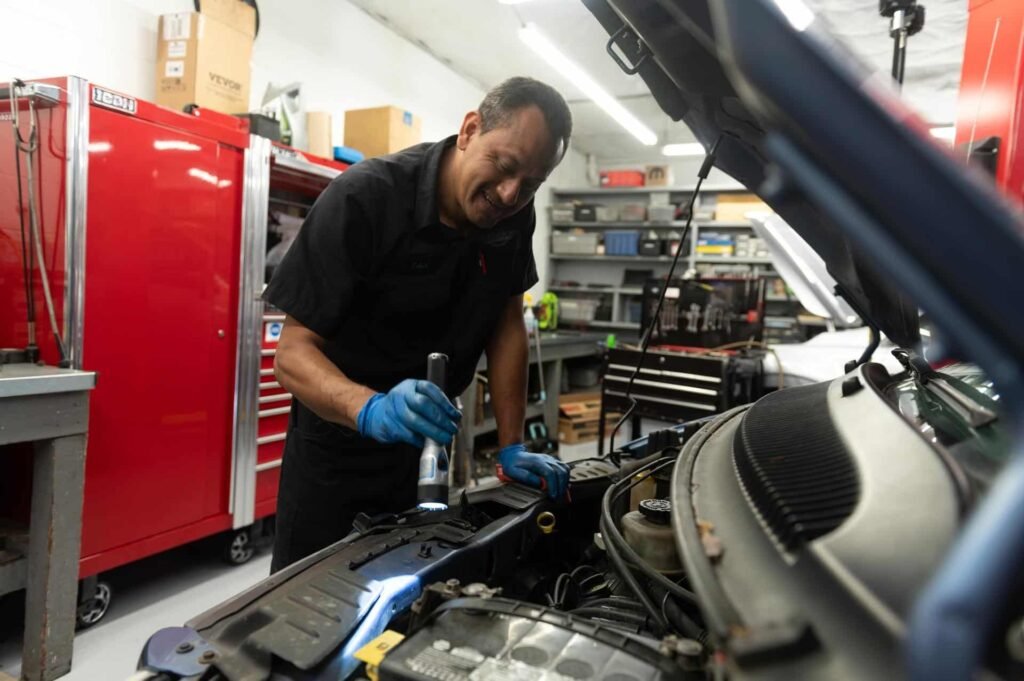
When your engine runs rough, loses power, stalls, hesitates, uses more fuel, makes an unusual noise, or becomes difficult to start, the cause may not be obvious. Modern engines depend on mechanical components, ignition, fuel delivery, airflow, sensors, wiring, computer controls, and exhaust systems working together.
At Chuck’s Auto Repair – North Seattle, we provide professional engine diagnostics and performance testing for drivers throughout North Seattle. Our ASE-certified technicians use vehicle data, hands-on inspection, electrical testing, mechanical testing, and system-specific procedures to identify the source of engine-performance concerns.
Engine diagnosis is more than retrieving a trouble code. A vehicle can have significant drivability problems without turning on the check engine light, and one symptom can have several possible causes. We test the affected systems before recommending repairs.
📞 Call (206) 526-1069 or Schedule Engine Diagnostic Service Online.
What Is Engine Diagnostics?
Engine diagnostics is the process of identifying why an engine is not starting, running, or performing correctly.
Depending on the symptoms, diagnosis may involve evaluating:
- Ignition system
- Fuel-delivery system
- Air-intake system
- Engine sensors
- Electrical circuits
- Computer controls
- Compression
- Engine vacuum
- Valve timing
- Cooling system
- Exhaust system
- Emissions controls
- Internal mechanical condition
The purpose is to move from a general symptom—such as rough running or low power—to a confirmed cause.
A proper diagnosis answers three important questions:
- What is the vehicle doing?
- Which system is responsible?
- What repair is needed to correct it?
Engine Diagnostics vs. Check Engine Light Diagnostics
Engine diagnostics and check engine light diagnostics overlap, but they are not exactly the same service.
Check Engine Light Diagnostics
Check engine light diagnostics begins when the vehicle’s computer has detected a fault and illuminated the warning light.
Testing may focus on:
- Stored trouble codes
- Freeze-frame information
- Live data
- Emissions-related systems
- Electronic circuits
- The system identified by the code
Engine Diagnostics
Engine diagnostics may be needed even when no warning light is on.
Examples include:
- Engine cranks but will not start
- Engine runs rough without storing a code
- Vehicle lacks power
- Fuel economy has dropped
- Engine stalls intermittently
- Mechanical noise is present
- Compression is low
- Engine overheats
- Oil or coolant consumption is suspected
- A symptom occurs only under certain operating conditions
The check engine light provides one source of information. Complete engine diagnosis considers the vehicle’s symptoms, computer data, mechanical condition, and test results together.
Common Signs You May Need Engine Diagnostics
Your vehicle may need engine-performance testing if you notice:
- Engine cranks but will not start
- Engine starts and immediately stalls
- Rough idle
- Engine shaking
- Hesitation
- Surging
- Loss of power
- Poor acceleration
- Hard starting
- Extended cranking
- Intermittent stalling
- Poor fuel economy
- Fuel smell
- Exhaust smell
- Unusual smoke
- Engine knocking, tapping, or rattling
- Overheating
- Oil consumption
- Coolant loss
- Misfiring
- Engine runs differently when cold or warm
- Reduced-power or limp-mode message
- Check engine light
- Flashing check engine light
- Vehicle does not run as smoothly as it used to
Some problems only occur during acceleration, highway driving, cold starts, hot restarts, wet weather, or extended idling.
Describing exactly when the symptom occurs can help guide the diagnostic process.
Why Is My Engine Running Rough?
A rough-running engine may shake, stumble, surge, or idle unevenly.
Possible causes include:
- Worn spark plugs
- Ignition-coil problems
- Fuel-injector concerns
- Vacuum leaks
- Air-intake leaks
- Low fuel pressure
- Sensor faults
- Throttle-body concerns
- Compression loss
- Valve problems
- Engine timing concerns
- Electrical wiring issues
- Exhaust restrictions
- Contaminated fuel
- Internal mechanical wear
A rough idle may have a different cause than rough running during acceleration.
Testing helps determine whether the concern involves ignition, fuel, airflow, electronics, or mechanical engine condition.
Why Is My Vehicle Losing Power?
Loss of power may occur gradually or suddenly.
Possible causes include:
- Ignition misfire
- Fuel-delivery problem
- Restricted air intake
- Exhaust restriction
- Sensor problem
- Low compression
- Incorrect engine timing
- Turbocharger or supercharger concern on applicable vehicles
- Transmission or drivetrain problem
- Electronic throttle concern
- Vehicle entering reduced-power mode
- Overheating protection strategy
- Electrical voltage problem
The engine may feel weak only:
- During acceleration
- At highway speeds
- On hills
- When carrying a load
- When the engine is hot
- When the air conditioning is operating
Reproducing the condition during a road test may help identify the affected system.
Why Is My Engine Hesitating or Surging?
Hesitation may feel like a delay, stumble, or temporary lack of response when the accelerator is pressed.
Surging may feel like the engine speed rises and falls without consistent driver input.
Possible causes include:
- Fuel-pressure concerns
- Fuel-injector problems
- Ignition misfire
- Vacuum leak
- Airflow-sensor concern
- Throttle-body problem
- Accelerator-pedal sensor fault
- Exhaust restriction
- Electrical connection problem
- Transmission or torque-converter concern
- Computer-control issue
Because hesitation and surging can involve several systems, diagnosis should be based on testing rather than replacing parts based on the symptom alone.
Why Does My Engine Stall?
An engine may stall at idle, while slowing down, during acceleration, or after warming up.
Possible causes include:
- Low fuel pressure
- Fuel-pump concern
- Ignition-system failure
- Crankshaft or camshaft sensor fault
- Electrical power interruption
- Vacuum leak
- Throttle-body concern
- Idle-control problem on applicable vehicles
- Charging-system fault
- Engine timing concern
- Internal mechanical problem
- Control-module communication fault
Intermittent stalling can be especially difficult to diagnose because the vehicle may operate normally during part of the inspection.
Information about when and how the engine stalls is important.
Why Is My Engine Hard to Start?
Hard starting may involve:
- Extended cranking
- Multiple start attempts
- Poor cold starts
- Difficult hot restarts
- Starting only with accelerator input
- Starting and immediately stalling
Possible causes include:
- Weak battery or slow cranking speed
- Starter-system concern
- Low fuel pressure
- Fuel pressure bleeding down
- Faulty engine-temperature sensor
- Ignition-system problem
- Injector concern
- Air-intake leak
- Compression loss
- Incorrect valve or ignition timing
- Contaminated fuel
- Electrical or computer-control fault
Hard starting may require testing both the engine-performance systems and the starting or charging system.
Why Is My Engine Misfiring?
A misfire occurs when one or more cylinders do not produce power correctly.
Possible causes include:
- Worn or damaged spark plug
- Failing ignition coil
- Damaged ignition wiring on applicable vehicles
- Fuel-injector problem
- Low fuel pressure
- Vacuum leak
- Compression loss
- Burned valve
- Valve-train concern
- Engine timing problem
- Wiring or connector fault
- Control-module driver concern
- Coolant or oil entering the cylinder
A misfire may cause:
- Rough running
- Engine shaking
- Lack of power
- Poor fuel economy
- Fuel smell
- Flashing check engine light
- Catalytic-converter damage
A cylinder-specific misfire code identifies where the computer detected the problem, but it does not prove which component caused it.
Our Engine Diagnostic Process
At Chuck’s Auto Repair – North Seattle, engine concerns begin with a structured diagnostic process.
1. Discuss the Symptoms
We ask questions such as:
- When did the concern begin?
- Is the problem constant or intermittent?
- Does it happen when the engine is cold or warm?
- Does it occur at idle or under acceleration?
- Is the check engine light on or flashing?
- Has fuel economy changed?
- Has the engine overheated?
- Have recent repairs been performed?
- Are there unusual noises, odors, leaks, or smoke?
Accurate symptom information helps us choose the correct starting point.
2. Perform an Initial Inspection
We may inspect:
- Fluid levels
- Visible leaks
- Belts and hoses
- Air-intake components
- Wiring and connectors
- Vacuum lines
- Battery connections
- Signs of overheating
- Signs of previous repairs
- Unusual mechanical noise
3. Scan Vehicle Computer Systems
When applicable, we check for:
- Stored trouble codes
- Pending codes
- Permanent codes
- Freeze-frame data
- Misfire information
- System readiness status
- Related module faults
A code scan provides direction, but it is not the final diagnosis.
4. Review Live Vehicle Data
Depending on the concern, we may examine:
- Fuel trims
- Oxygen-sensor data
- Airflow readings
- Manifold-pressure data
- Engine temperature
- Throttle position
- Ignition timing
- Misfire counters
- Fuel-pressure data
- Charging voltage
- Camshaft and crankshaft correlation
- Other vehicle-specific information
5. Reproduce the Concern
A road test or operating test may help confirm:
- Loss of power
- Hesitation
- Misfire
- Surging
- Stalling
- Unusual noise
- Temperature-related symptoms
- Problems that occur under load
6. Test the Suspected System
Testing may include:
- Ignition-system testing
- Fuel-pressure testing
- Injector testing
- Smoke testing
- Vacuum testing
- Electrical circuit testing
- Sensor testing
- Compression testing
- Cylinder leak-down testing
- Cooling-system testing
- Exhaust-system testing
- Mechanical timing inspection
7. Confirm the Root Cause
We compare the symptoms, scan information, measurements, and physical findings to determine the source of the problem.
8. Explain the Findings
We explain:
- What system is malfunctioning
- What testing was performed
- What caused the symptom
- Which repair is recommended
- Whether additional concerns were discovered
- What may happen if the problem is not corrected
9. Verify the Repair
After approved repairs are completed, we retest the affected system, confirm proper operation, and road-test the vehicle when appropriate.
Our goal is to correct the cause—not simply clear a warning light or replace a part based on a guess.
Ignition-System Diagnostics
The ignition system creates the spark needed to ignite the air-fuel mixture.
Depending on the vehicle, it may include:
- Spark plugs
- Ignition coils
- Ignition wires
- Control modules
- Crankshaft sensor
- Camshaft sensor
- Related wiring and connectors
Ignition problems may cause:
- Misfire
- Rough idle
- Poor acceleration
- Hard starting
- Stalling
- Flashing check engine light
- Reduced fuel economy
Testing helps determine whether the concern involves the spark plug, ignition coil, electrical control circuit, or another condition affecting combustion.
Fuel-System Diagnostics
The fuel system must deliver the correct amount of fuel at the correct pressure.
Components may include:
- Fuel pump
- Fuel-pressure regulator
- Fuel injectors
- Fuel rail
- Fuel-pressure sensor
- Fuel lines
- Electrical controls
- High-pressure pump on direct-injection engines
Fuel-system concerns may cause:
- Long cranking
- No-start condition
- Hesitation
- Loss of power
- Stalling
- Lean or rich operation
- Poor fuel economy
- Fuel smell
- Misfire
Testing may include fuel-pressure measurements, injector evaluation, electrical testing, and live-data analysis.
Air-Intake and Vacuum-Leak Diagnostics
The engine depends on controlled airflow.
Air-intake concerns may include:
- Cracked intake hose
- Vacuum leak
- Intake-manifold leak
- Mass-airflow sensor concern
- Manifold-pressure sensor concern
- Throttle-body problem
- Damaged vacuum line
- Loose connection
- Restricted air filter
Unmetered air entering the engine can affect fuel control and cause:
- Rough idle
- Lean-condition codes
- Stalling
- Hesitation
- High idle
- Poor fuel economy
Smoke testing may be used to locate leaks that are difficult to see.
Compression Testing
Compression testing helps evaluate the engine’s ability to seal and compress the air-fuel mixture inside each cylinder.
Low compression may be caused by:
- Worn piston rings
- Burned or leaking valves
- Damaged cylinder
- Head-gasket concern
- Incorrect valve timing
- Valve-train damage
- Internal engine wear
Possible symptoms include:
- Misfire
- Rough running
- Hard starting
- Low power
- Oil consumption
- Uneven cranking sound
Compression results are interpreted along with other test findings.
Cylinder Leak-Down Testing
A cylinder leak-down test introduces controlled air pressure into a cylinder to help identify where compression is escaping.
Air may be heard or detected through:
- Intake system
- Exhaust system
- Crankcase
- Cooling system
- Adjacent cylinder
This can help identify concerns involving:
- Intake valves
- Exhaust valves
- Piston rings
- Head gasket
- Cylinder head
- Internal engine components
Leak-down testing may be recommended when compression is low or an internal mechanical problem is suspected.
Engine Vacuum Testing
Engine vacuum can provide information about airflow and mechanical condition.
Vacuum testing may help identify:
- Intake leaks
- Restricted exhaust
- Valve concerns
- Incorrect valve timing
- Internal engine problems
- Unstable idle conditions
Vacuum readings must be interpreted based on engine design, operating conditions, and other test results.
Engine Timing Diagnostics
Correct timing is necessary for valves, pistons, ignition, and fuel injection to operate together.
Timing-related concerns may involve:
- Timing belt
- Timing chain
- Chain guides
- Tensioners
- Camshaft timing components
- Variable valve timing system
- Camshaft or crankshaft sensors
- Mechanical alignment
- Oil-pressure concerns affecting timing controls
Possible symptoms include:
- Rough running
- Misfire
- Hard starting
- Rattling noise
- Loss of power
- Timing-correlation codes
- No-start condition
- Internal engine damage in severe cases
Testing may involve scan data, sensor signals, mechanical inspection, and timing verification.
Engine Noise Diagnostics
Unusual engine noises should be evaluated before assuming the engine requires major repair.
Possible sounds include:
- Ticking
- Tapping
- Knocking
- Rattling
- Squealing
- Grinding
- Hissing
- Popping
Possible sources include:
- Belt-drive components
- Low oil level or pressure
- Valve-train components
- Timing components
- Internal engine bearings
- Exhaust leak
- Fuel injector operation
- Accessory bearings
- Cooling-system components
- Engine mounts
- Detonation or abnormal combustion
The source, frequency, temperature, and operating conditions can help identify the cause.
Exhaust Restriction and Catalytic-Converter Testing
A restricted exhaust system can reduce engine performance.
Possible causes include:
- Internally damaged catalytic converter
- Collapsed exhaust component
- Damaged muffler
- Excessive exhaust restriction
Symptoms may include:
- Loss of power
- Poor acceleration
- Excessive heat
- Stalling
- Reduced fuel economy
- Engine unable to reach normal speed under load
Catalytic-converter concerns should be evaluated along with the underlying engine condition.
Misfires, fuel-mixture problems, oil burning, or coolant entering the exhaust can damage a converter. Correcting the root cause helps reduce the risk of repeat failure.
Cooling-System and Overheating Diagnostics
Engine overheating can be caused by several different concerns.
Possible causes include:
- Low coolant
- Coolant leak
- Thermostat problem
- Water-pump concern
- Radiator restriction
- Cooling-fan failure
- Air trapped in the system
- Damaged hose
- Head-gasket concern
- Combustion gases entering the cooling system
- Sensor or electrical fault
Testing may include:
- Cooling-system pressure test
- Inspection for leaks
- Fan-operation testing
- Temperature-data review
- Thermostat evaluation
- Combustion-gas testing when appropriate
- Coolant-flow evaluation
Continuing to drive an overheating vehicle can cause severe engine damage.
If the temperature gauge enters the hot range, a temperature warning appears, or steam is visible, stop driving when it is safe to do so.
Oil Consumption and Engine-Smoke Diagnostics
Engine smoke or excessive oil consumption may indicate internal or external concerns.
Blue or Gray Smoke
May indicate oil entering the combustion chamber because of:
- Worn piston rings
- Valve-seal concerns
- Turbocharger problem on applicable vehicles
- PCV-system concern
- Oil overfill
White Smoke
Persistent white exhaust smoke may involve:
- Coolant entering the engine
- Head-gasket concern
- Cylinder-head damage
- Other cooling-system problems
Temporary vapor during cold weather may be normal condensation.
Black Smoke
May indicate excessive fuel caused by:
- Fuel-system problem
- Injector concern
- Sensor fault
- Air-intake restriction
- Fuel-control issue
Diagnosis helps determine whether the concern is external leakage, internal consumption, combustion-related, or another operating condition.
No-Start Engine Diagnostics
A no-start condition generally falls into one of two categories.
Engine Does Not Crank
Possible causes include:
- Battery
- Battery cables
- Starter
- Relay
- Ignition switch
- Neutral-safety switch
- Clutch-safety switch
- Security system
- Wiring or control circuit
Engine Cranks but Does Not Start
Possible causes include:
- Fuel-delivery failure
- Ignition-system failure
- Crankshaft or camshaft sensor concern
- Compression loss
- Engine timing problem
- Electrical control fault
- Immobilizer or security concern
- Contaminated fuel
The correct diagnostic approach depends on which type of no-start condition is present.
What Engine Diagnostic Service May Include
Depending on the symptoms and findings, engine diagnostic service may include:
- Customer symptom review
- Visual engine inspection
- Computer-system scan
- Trouble-code analysis
- Freeze-frame review
- Live-data analysis
- Road testing
- Ignition-system testing
- Fuel-pressure testing
- Fuel-injector testing
- Smoke testing
- Vacuum-leak testing
- Electrical circuit testing
- Sensor testing
- Compression testing
- Cylinder leak-down testing
- Engine vacuum testing
- Mechanical timing inspection
- Cooling-system testing
- Exhaust-restriction testing
- Engine-noise inspection
- Post-repair verification
The exact process depends on the vehicle, symptoms, stored information, and results of the initial tests.
Why Proper Engine Diagnosis Matters
Many engine symptoms can be caused by several different systems.
A misfire may involve:
- Ignition
- Fuel
- Airflow
- Wiring
- Compression
- Valve timing
Loss of power may involve:
- Fuel delivery
- Air intake
- Exhaust restriction
- Engine mechanical condition
- Transmission or drivetrain
Hard starting may involve:
- Battery
- Starter
- Fuel pressure
- Sensors
- Ignition
- Compression
Replacing parts based only on a code or symptom can lead to unnecessary expense and may not correct the problem.
Our approach is to gather evidence, test the affected systems, confirm the cause, explain the findings, and then recommend the appropriate repair.
Why Engine Diagnostics Can Take Time
Some engine problems can be confirmed quickly. Others require several stages of testing.
Diagnosis may take longer when:
- The concern is intermittent
- The symptom occurs only when cold or hot
- The problem appears only under load
- Several systems could cause the same symptom
- Previous repairs have altered the vehicle
- Wiring damage is hidden
- The engine must be disassembled for further inspection
- Additional testing is needed after the first fault is corrected
Diagnostic time is used to reduce guesswork and identify the repair most likely to correct the concern.
Why Choose Chuck’s Auto Repair – North Seattle?
- AAA-approved auto repair facility
- ASE-certified technicians
- Trusted by Seattle-area drivers for more than 30 years
- Professional engine-performance diagnostics
- Electronic and mechanical engine testing
- Testing before parts replacement
- Diagnosis of rough running, misfires, stalling, and power loss
- Clear explanations of findings and repair recommendations
- 24-month / 24,000-mile parts and labor warranty
- 12-month / 12,000-mile nationwide warranty coverage
- Convenient North Seattle location
We do not treat a trouble code, noise, or symptom as a complete diagnosis.
We inspect, test, confirm, explain, and then recommend the appropriate repair.
Warranty Protection for Qualifying Engine Repairs
Qualifying repairs are backed by our 24-month / 24,000-mile parts and labor warranty.
The warranty also includes 12-month / 12,000-mile nationwide coverage, providing added protection if you need warranty assistance while traveling away from Seattle.
The nationwide 1-800 assistance information is printed on every repair invoice. Customers also receive a warranty keytag for convenient access while on the road.
Convenient Engine Diagnostics in North Seattle
Chuck’s Auto Repair – North Seattle
9115 Roosevelt Way NE
Seattle, WA 98115
We provide professional engine diagnostics and performance testing for drivers throughout:
Maple Leaf • Roosevelt • Northgate • Green Lake • Wedgwood • University District • Ravenna • Lake City • Wallingford • Greenwood
📞 Call (206) 526-1069 to schedule engine diagnostic service.
Engine Diagnostic FAQs
What is the difference between an engine diagnostic and a code scan?
A code scan retrieves information stored in the vehicle’s computer. Engine diagnostics uses that information along with inspections, measurements, live data, mechanical testing, and electrical testing to determine the actual cause.
Can my engine have a problem without turning on the check engine light?
Yes. Mechanical wear, compression loss, some fuel-delivery concerns, noises, overheating, and intermittent problems may not immediately trigger the check engine light.
Why does my engine run rough but show no trouble codes?
The problem may not meet the computer’s criteria for setting a code. Possible causes include small vacuum leaks, early ignition or fuel concerns, mechanical wear, mounts, or operating conditions the computer does not directly monitor.
Can you diagnose an engine that cranks but will not start?
Yes. Diagnosis may include testing fuel delivery, ignition, engine timing, sensor signals, compression, electrical power, and computer controls.
What causes an engine to lose compression?
Possible causes include worn piston rings, damaged valves, head-gasket failure, incorrect valve timing, cylinder damage, or other internal mechanical concerns.
What does a compression test tell you?
A compression test measures each cylinder’s ability to build pressure. Low or uneven readings may indicate an internal mechanical or timing-related concern.
What is a cylinder leak-down test?
A leak-down test uses controlled air pressure to help determine whether compression is escaping through the intake valves, exhaust valves, piston rings, cooling system, or another location.
Why does my engine stall when I stop?
Possible causes include a vacuum leak, throttle-body concern, fuel-pressure problem, sensor fault, charging-system issue, or another engine-control problem.
Why does my vehicle hesitate when I accelerate?
Hesitation may involve ignition, fuel delivery, airflow, throttle controls, exhaust restriction, sensors, electrical circuits, or transmission operation.
Can bad fuel cause engine-performance problems?
Yes. Contaminated, incorrect, or degraded fuel can contribute to hard starting, misfires, hesitation, stalling, and poor performance.
Can a clogged catalytic converter cause power loss?
Yes. An internally damaged or restricted catalytic converter can limit exhaust flow and reduce engine performance. The condition that caused the converter damage should also be identified.
Can overheating damage the engine?
Yes. Severe or repeated overheating can damage the head gasket, cylinder head, engine block, bearings, seals, and other internal components.
How long does engine diagnostics take?
Timing depends on the symptoms and complexity of the problem. Some concerns can be confirmed during initial testing, while intermittent or internal mechanical problems may require additional diagnostic time.
Will clearing the trouble codes fix the problem?
No. Clearing codes removes stored information and may temporarily turn off the warning light, but it does not repair the condition that caused the code.
Do engine repairs include a warranty?
Qualifying repairs are backed by our 24-month / 24,000-mile parts and labor warranty, including 12-month / 12,000-mile nationwide warranty coverage.
Schedule Engine Diagnostics in North Seattle
If your engine is running rough, losing power, stalling, misfiring, overheating, making an unusual noise, or becoming difficult to start, schedule diagnostic service with Chuck’s Auto Repair – North Seattle.
Our ASE-certified technicians will inspect and test the affected systems, identify the cause, explain the findings, and recommend repairs based on confirmed results.
📞 Call (206) 526-1069 or Book Engine Diagnostic Service Online.