Oil Change Service in North Seattle
AAA-approved auto repair • ASE-certified technicians • Trusted by Seattle-area drivers for more than 30 years
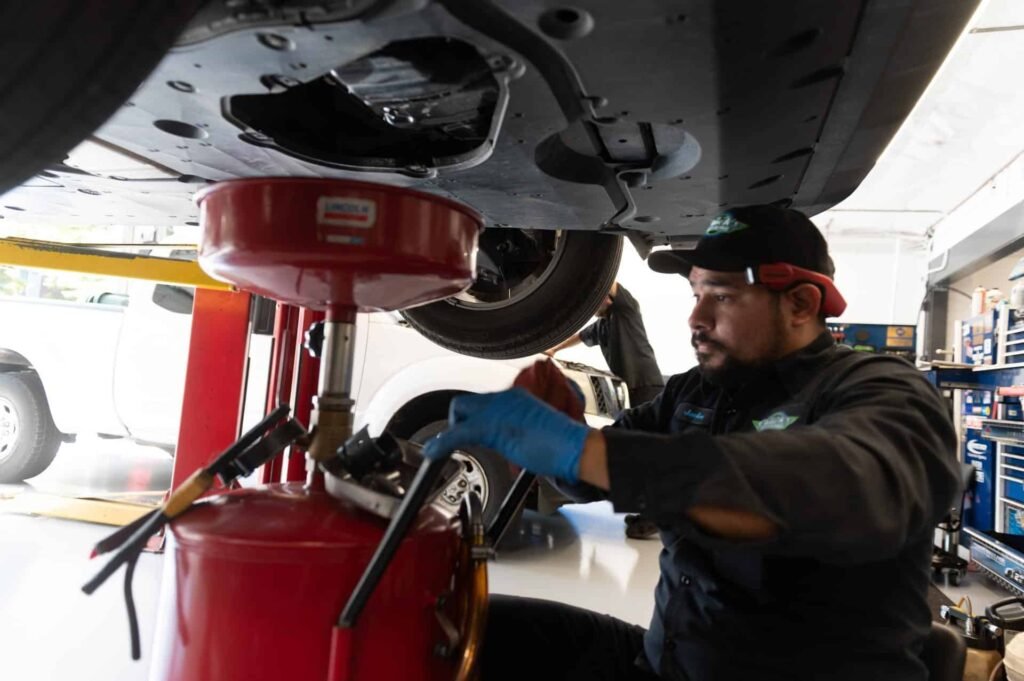
Clean engine oil is essential for protecting the moving parts inside your engine. It reduces friction, helps manage heat, carries contaminants to the oil filter, and supports components that depend on proper oil pressure.
At Chuck’s Auto Repair – North Seattle, we provide professional oil change service for drivers throughout North Seattle. Our ASE-certified technicians use the correct engine-oil viscosity, specification, and filter for your vehicle while checking for leaks, low fluid levels, and visible maintenance concerns.
An oil change should be more than draining the old oil and adding whatever lubricant is available. Modern engines may require specific oil standards for variable valve timing, turbochargers, emissions systems, fuel economy, and long-term engine protection.
We follow the vehicle manufacturer’s requirements rather than using the same oil or mileage interval for every vehicle.
📞 Call (206) 526-1069 or Schedule an Oil Change Online.
Why Engine Oil Is Important
Your engine contains many moving components operating under heat, pressure, and load.
Engine oil helps:
- Lubricate bearings and internal engine surfaces
- Reduce friction between moving parts
- Carry heat away from critical components
- Suspend contaminants
- Protect against corrosion
- Support hydraulic lifters and tensioners
- Operate variable valve timing components
- Maintain oil pressure
- Reduce internal wear
- Help seal the space between piston rings and cylinder walls
As the oil circulates, the oil filter captures many of the particles and contaminants carried through the lubrication system.
Over time, the oil and filter become less effective and must be replaced.
What Happens to Engine Oil Over Time?
Engine oil works in a demanding environment.
During normal operation, it may be exposed to:
- High temperatures
- Combustion byproducts
- Moisture
- Fuel dilution
- Soot
- Dirt
- Metal particles
- Oxidation
- Repeated cold starts
- Short-trip operation
As oil ages, it may:
- Lose protective properties
- Become contaminated
- Change viscosity
- Form deposits
- Provide less effective lubrication
- Contribute to sludge
- Flow less effectively during startup
- Become low because of leakage or consumption
Oil deterioration does not always create an immediate symptom.
That is why oil changes should be completed at the appropriate time and mileage interval rather than waiting for the engine to sound different.
Common Signs Your Vehicle May Need an Oil Change or Inspection
Your vehicle may be due for oil service or related inspection if you notice:
- Oil-change reminder
- Maintenance-required light
- Oil level below the full mark
- Engine oil that has not been changed within the recommended interval
- Unknown oil-change history
- Oil spots beneath the vehicle
- Burning-oil smell
- Blue or gray exhaust smoke
- Engine ticking or rattling
- Reduced fuel economy
- Oil-pressure warning light
- Engine running differently than normal
- Oil visibly leaking around the engine
- Frequent need to add oil
- Oil that appears unusually thick or contaminated
- Check engine light related to oil-controlled components
- Upcoming long-distance travel
Some of these symptoms may indicate more than overdue maintenance.
An oil-pressure warning, heavy leakage, severe engine noise, or rapid oil loss requires immediate attention and should not be treated as a routine oil-change concern.
Our Oil Change Service Process
At Chuck’s Auto Repair – North Seattle, oil service is performed using vehicle-specific information and careful checks.
1. Verify the Correct Oil Requirement
We identify the correct:
- Oil viscosity
- Manufacturer specification
- Oil capacity
- Filter application
- Drain-plug procedure
- Maintenance interval
The correct oil may depend on the engine, model year, climate, turbocharger, emissions system, and manufacturer requirements.
2. Drain the Used Engine Oil
The used oil is drained according to the vehicle’s service procedure.
We also observe the oil for signs of:
- Unusual contamination
- Excessive metal
- Coolant contamination
- Fuel odor
- Abnormal consistency
- Very low oil quantity
Visible oil condition alone cannot identify every engine problem, but unusual findings may indicate that additional inspection is needed.
3. Replace the Oil Filter
The oil filter is replaced with the correct filter for the vehicle.
A proper oil filter must provide:
- Correct fit
- Correct sealing
- Proper flow
- Appropriate filtration
- Correct bypass operation
- Compatibility with the engine’s oil system
4. Inspect the Drain Plug and Sealing Surface
We check the drain plug and related sealing components for:
- Damaged threads
- Worn sealing washer
- Leakage
- Incorrect previous installation
- Damage to the oil pan
5. Refill with the Correct Oil
The engine is filled with oil meeting the correct viscosity and required manufacturer specification.
6. Start the Engine and Check Oil Pressure
After refilling, the engine is started and monitored for proper operation.
We verify that the oil-pressure warning goes out normally.
7. Check for Leaks
We inspect the oil-filter and drain-plug areas for leakage.
8. Verify the Final Oil Level
After the oil has circulated and settled appropriately, we confirm the final level.
9. Reset the Maintenance Reminder When Appropriate
The oil-life or maintenance reminder is reset after the service when the vehicle is equipped with one.
10. Identify Visible Maintenance Concerns
During the service, we may identify visible concerns such as:
- Fluid leaks
- Damaged belts
- Deteriorated hoses
- Low fluid levels
- Battery-terminal corrosion
- Tire concerns
- Worn windshield wipers
- Exterior-light problems
Any additional recommendation should be explained before repair work is performed.
What an Oil Change Service May Include
Depending on the vehicle and approved service, an oil change may include:
- Correct engine oil
- New oil filter
- Drain-plug sealing component when required
- Oil-level verification
- Leak inspection
- Maintenance-reminder reset
- Fluid-level checks
- Visible belt and hose inspection
- Tire-condition observation
- Battery-terminal observation
- Exterior-light observation
- Review of upcoming maintenance needs
- Disposal and recycling of used oil and filter
The exact service depends on the vehicle, manufacturer procedure, and inspection findings.
Using the Correct Engine Oil
Modern engine oil is not selected only by whether it is labeled conventional or synthetic.
Important requirements may include:
- Viscosity grade
- API performance standard
- ILSAC standard
- Manufacturer-specific approval
- Low-ash formulation
- Turbocharger compatibility
- Diesel-engine specification
- Emissions-system compatibility
Examples of viscosity grades include:
- 0W-16
- 0W-20
- 5W-20
- 5W-30
- 0W-40
These are examples only. The correct viscosity depends on the specific engine and manufacturer requirements.
Using oil that does not meet the required specification may affect:
- Oil pressure
- Cold-start lubrication
- Fuel economy
- Variable valve timing
- Turbocharger protection
- Emissions-system operation
- Engine wear
- Manufacturer warranty requirements
We verify the correct oil before performing the service.
Synthetic Oil vs. Conventional Oil
Some vehicles require full synthetic oil or an oil that meets a specific synthetic-based manufacturer standard.
Synthetic oils may provide advantages such as:
- Better cold-temperature flow
- Improved resistance to high-temperature breakdown
- Greater oxidation resistance
- Strong protection in turbocharged engines
- Better performance over longer approved service intervals
However, the correct choice should be based on the vehicle manufacturer’s requirements—not simply a generic claim that one oil is best for every engine.
Older vehicles do not automatically require conventional oil, and newer vehicles do not all use the same synthetic oil.
The specification matters more than the marketing label.
How Often Should You Change Your Oil?
There is no single oil-change interval that applies to every vehicle.
The correct interval may depend on:
- Manufacturer recommendation
- Oil-life monitoring system
- Oil specification
- Engine design
- Mileage
- Time
- Driving conditions
- Vehicle use
- Maintenance history
- Oil consumption
- Turbocharger use
- Hybrid operation
Some manufacturers specify service based on mileage and time. Others use an oil-life monitoring system that calculates the interval based on operating conditions.
An oil change may be due by time even when the vehicle has been driven relatively few miles.
The owner’s manual and vehicle-specific maintenance schedule provide the correct starting point.
Why Short Trips Can Be Hard on Engine Oil
Frequent short trips may prevent the engine and oil from reaching full operating temperature for enough time to evaporate moisture and fuel contamination.
Repeated short-trip driving may contribute to:
- Moisture accumulation
- Fuel dilution
- Sludge formation
- Increased cold-start wear
- Battery discharge
- More frequent engine warm-up cycles
A vehicle driven only a few thousand miles per year may still require regular oil changes because time and operating conditions also matter.
This is especially relevant for vehicles used mainly for short neighborhood trips or stop-and-go Seattle driving.
Oil-Life Monitor vs. Oil Level
An oil-life monitor and oil-level measurement are not the same thing.
Oil-Life Monitor
The oil-life system estimates when an oil change is due based on factors such as:
- Engine operation
- Temperature
- Mileage
- Time
- Driving conditions
- Manufacturer calculations
It generally does not directly measure how much oil is inside the engine.
Oil Level
The oil level shows how much oil is currently in the engine.
A vehicle can have:
- Adequate calculated oil life but a low oil level
- Full oil level but overdue oil
- A normal maintenance reminder while developing an oil leak
Oil level should still be checked between services, especially on vehicles known to consume or leak oil.
Maintenance Reminder vs. Oil-Pressure Warning Light
These dashboard indicators mean very different things.
Oil-Change or Maintenance Reminder
This generally means scheduled service is due soon or overdue.
The vehicle may continue operating normally, but the service should be scheduled.
Red Oil-Pressure Warning Light
This may mean the engine does not have adequate oil pressure.
Possible causes include:
- Very low oil level
- Oil pump concern
- Internal engine wear
- Blocked oil passage
- Incorrect oil
- Faulty oil-pressure sensor
- Electrical problem
- Serious engine damage
If the red oil-pressure warning stays on while the engine is running, shut the engine off as soon as it is safe.
Continuing to drive without proper oil pressure can cause severe engine damage very quickly.
An oil-pressure warning should not be treated as a routine oil-change reminder.
Why Is My Engine Oil Low?
Engine oil may become low because of leakage, consumption, improper filling, or an extended service interval.
Possible causes include:
- Valve-cover gasket leak
- Oil-pan leak
- Timing-cover leak
- Oil-filter housing leak
- Drain-plug leak
- Crankshaft or camshaft seal leak
- Turbocharger oil leak
- Piston-ring wear
- Valve-seal wear
- PCV-system concern
- Internal engine wear
- Normal consumption within manufacturer limits
Adding oil restores the level but does not identify why it became low.
If the engine repeatedly needs oil between services, the leak or consumption should be evaluated.
Engine Oil Leaks
Oil leaks may range from light seepage to rapid fluid loss.
Common leak locations include:
- Valve-cover gasket
- Oil-pan gasket
- Drain plug
- Oil filter
- Oil-filter housing
- Timing cover
- Front or rear crankshaft seal
- Camshaft seal
- Oil-pressure sensor or switch
- Oil cooler
- Turbocharger oil lines
- Vacuum pump on applicable vehicles
Oil may travel across the engine or underbody, making the source difficult to identify without cleaning and inspection.
Oil leaks should be prioritized based on:
- Leak rate
- Oil level
- Location
- Risk of reaching hot exhaust components
- Risk of contaminating belts or other parts
- Potential for engine damage
A small seep may be monitored, while active leakage may require prompt repair.
Why Does My Vehicle Burn Oil?
Oil consumption means engine oil is entering the combustion process or another internal system.
Possible causes include:
- Worn piston rings
- Sticking oil-control rings
- Worn valve seals
- Valve-guide wear
- PCV-system concern
- Turbocharger seal problem
- Cylinder wear
- Incorrect oil viscosity
- Internal engine damage
Possible signs include:
- Low oil level between services
- Blue or gray exhaust smoke
- Oil-fouled spark plugs
- Burning-oil odor
- Catalytic-converter concerns
- Frequent need to add oil
Some engines consume a measurable amount of oil without producing visible smoke.
Tracking how much oil is added over a known mileage interval can help determine the severity of the concern.
What Is Engine Sludge?
Engine sludge is a thick deposit that can form when oil, moisture, fuel, heat, and contaminants combine.
Contributing factors may include:
- Extended oil-change intervals
- Incorrect oil
- Repeated short trips
- Engine running too cold
- Excessive heat
- Poor crankcase ventilation
- Internal coolant contamination
- Heavy engine deposits
- Neglected maintenance
Sludge may restrict:
- Oil passages
- Oil pickup screens
- Variable valve timing components
- Hydraulic tensioners
- Lubrication to bearings and other parts
A routine oil change does not always remove existing heavy sludge.
Aggressive cleaning can also create risks if loosened material blocks oil passages.
When severe sludge is suspected, the engine should be evaluated before recommending a cleaning procedure or major repair.
Oil Changes for Turbocharged Engines
Turbochargers operate at high speed and temperature and depend on clean oil for lubrication and cooling.
Turbocharged engines may be especially sensitive to:
- Incorrect oil
- Low oil level
- Extended oil-change intervals
- Sludge
- Restricted oil supply
- Excessive heat
Using the correct oil specification and maintaining the proper level can help protect:
- Turbocharger bearings
- Oil passages
- Variable valve timing components
- Internal engine parts
A turbocharged engine does not simply require “synthetic oil” in a general sense. It requires oil meeting the specific manufacturer standard for that engine.
Oil Changes for Hybrid Vehicles
Hybrid vehicles still use internal-combustion engines that require oil changes.
Hybrid engine operation may include:
- Frequent starts and stops
- Periods when the engine is off
- Short engine run cycles
- Different warm-up patterns
- Lower annual engine mileage than vehicle mileage may suggest
The manufacturer’s maintenance schedule still applies.
Because the engine may run less often, owners may overlook time-based maintenance even though the oil is aging.
Oil Changes for High-Mileage Vehicles
A high-mileage vehicle may require additional attention during oil service.
Useful considerations include:
- Oil leaks
- Oil consumption
- Engine noise
- Oil-pressure history
- Sludge or deposit history
- Previous oil specification
- Gasket and seal condition
- PCV-system operation
- Maintenance records
High-mileage oil products may contain additive packages intended for older engines, but they are not automatically the correct choice for every high-mileage vehicle.
The oil must still meet the required viscosity and performance specification.
Why the Oil Filter Matters
The oil filter helps remove particles and contaminants from the circulating oil.
A filter must be able to:
- Flow enough oil
- Capture contaminants
- Withstand system pressure
- Seal correctly
- Operate during cold starts
- Use the correct bypass specification
- Remain effective for the intended interval
An incorrect, damaged, or poorly sealed filter may cause:
- Oil leakage
- Restricted flow
- Low oil pressure
- Delayed oil circulation
- Filter failure
- Engine damage in severe cases
Using the correct filter is an important part of the oil service.
Why the Drain Plug and Oil Pan Matter
The oil drain plug seals the opening used to drain engine oil.
Problems may include:
- Damaged threads
- Worn sealing washer
- Incorrect plug
- Over-tightening
- Under-tightening
- Cracked or damaged oil pan
- Previous repair insert
- Active leakage
If damaged threads or sealing surfaces are found, additional repair may be needed to prevent leakage.
The drain plug should be installed according to the vehicle’s required procedure rather than tightened excessively.
Can Changing the Oil Cause an Older Engine to Leak?
Changing the oil does not normally create a new mechanical leak.
However, an older engine may already have:
- Hardened seals
- Worn gaskets
- Heavy deposits
- Previous seepage
- Incorrect oil
- Overfilled oil
- Crankcase-pressure concerns
Fresh oil may make an existing leak easier to notice, but the underlying sealing problem was already present.
A new leak after service should still be inspected to confirm whether it involves the filter, drain plug, oil-fill cap, gasket, or another engine component.
Can an Oil Change Fix Engine Noise?
An oil change may help if the noise is related to:
- Low oil level
- Incorrect oil viscosity
- Deteriorated oil
- Delayed oil-controlled component operation
However, engine noise may also be caused by:
- Low oil pressure
- Internal bearing wear
- Valve-train damage
- Timing-chain wear
- Belt-drive components
- Exhaust leak
- Piston or cylinder damage
- Accessory failure
An oil change should not be used as a substitute for diagnosing serious ticking, knocking, grinding, or rattling.
If the engine has a loud or sudden mechanical noise, it should be inspected before continued driving.
Can an Oil Change Turn Off the Check Engine Light?
Usually not.
The check engine light indicates that the vehicle’s computer detected a fault in a monitored system.
An oil change may help only when the fault is directly related to:
- Low oil level
- Incorrect oil
- Oil-pressure-dependent timing components
- Variable valve timing operation
- Maintenance-related engine performance
Even then, the fault should be diagnosed rather than assuming the oil change will correct it.
A maintenance reminder and check engine light serve different purposes.
Why Proper Oil Change Documentation Matters
Keeping oil-change records can help:
- Track maintenance intervals
- Support vehicle resale value
- Document proper care
- Identify oil-consumption trends
- Review service history
- Support certain warranty claims
- Plan upcoming maintenance
Useful records include:
- Date
- Mileage
- Oil viscosity
- Oil specification
- Filter replacement
- Amount of oil added
- Noted leaks or concerns
Consistent records become especially helpful as the vehicle accumulates mileage.
Oil Changes and Manufacturer Warranty Requirements
Vehicle manufacturers generally require owners to maintain the vehicle according to the published schedule and use fluids meeting the proper specifications.
Important considerations include:
- Correct oil viscosity
- Required oil performance standard
- Correct service interval
- Proper oil level
- Maintenance documentation
- Correct filter application
Independent repair facilities can perform routine maintenance, but the service should follow the manufacturer’s requirements.
We use vehicle-specific information to select the correct oil and filter.
Why Proper Oil Change Service Matters
An oil change is a routine service, but mistakes can create serious problems.
Potential service errors include:
- Incorrect oil viscosity
- Oil not meeting manufacturer specification
- Incorrect oil quantity
- Loose filter
- Double filter gasket
- Damaged drain-plug threads
- Loose drain plug
- Overfilled engine
- Underfilled engine
- Maintenance reminder not reset
- Failure to identify a significant leak
Our approach is to verify the vehicle requirements, perform the service carefully, check the final level, inspect for leaks, and confirm proper operation.
Oil Change Service vs. Engine Diagnosis
An oil change is preventive maintenance.
It does not repair:
- Low compression
- Internal engine damage
- Severe oil consumption
- Low oil pressure
- Heavy sludge
- Engine knocking
- Head gasket failure
- Major oil leaks
- Timing-system failure
If your vehicle has warning lights, severe noise, smoke, rapid oil loss, or performance symptoms, diagnostic testing may be needed in addition to—or before—the oil change.
Preventing Oil-Related Engine Problems
Helpful steps include:
- Follow the manufacturer’s oil-change schedule
- Use the correct oil specification
- Check the oil level between services
- Repair active oil leaks
- Investigate frequent oil additions
- Do not ignore the oil-pressure warning light
- Avoid operating the engine with very low oil
- Replace the oil filter during service
- Maintain the PCV system
- Address overheating
- Keep maintenance records
- Schedule service by time as well as mileage
- Have unusual engine noises inspected
Regular oil service cannot prevent every engine failure, but it is one of the most important steps in protecting engine life.
Why Choose Chuck’s Auto Repair – North Seattle?
- AAA-approved auto repair facility
- ASE-certified technicians
- Trusted by Seattle-area drivers for more than 30 years
- Vehicle-specific oil and filter selection
- Correct manufacturer-required oil specifications
- Oil-level and leak checks
- Maintenance-reminder reset when appropriate
- Clear explanations of visible maintenance concerns
- No universal oil or interval applied to every vehicle
- 24-month / 24,000-mile parts and labor warranty on qualifying repairs
- 12-month / 12,000-mile nationwide warranty coverage on qualifying repairs
- Convenient North Seattle location
We treat oil service as important preventive maintenance—not as a rushed, one-size-fits-all procedure.
Warranty Protection for Qualifying Repairs
Qualifying repairs are backed by our 24-month / 24,000-mile parts and labor warranty.
The warranty also includes 12-month / 12,000-mile nationwide coverage, providing added protection if you need warranty assistance while traveling away from Seattle.
The nationwide 1-800 assistance information is printed on every repair invoice. Customers also receive a warranty keytag for convenient access while on the road.
Warranty coverage depends on the service or repair performed, parts used, and applicable terms.
Convenient Oil Change Service in North Seattle
Chuck’s Auto Repair – North Seattle
9115 Roosevelt Way NE
Seattle, WA 98115
We provide professional oil change and preventive maintenance service for drivers throughout:
Maple Leaf • Roosevelt • Northgate • Green Lake • Wedgwood • University District • Ravenna • Lake City • Wallingford • Greenwood
📞 Call (206) 526-1069 to schedule your oil change.
Oil Change FAQs
How often should I change my oil?
The interval depends on the manufacturer, engine, oil specification, time, mileage, oil-life monitor, and driving conditions. There is no single interval that is correct for every vehicle.
Should I follow the oil-life monitor?
The oil-life monitor is an important guide when used according to the manufacturer’s instructions. You should still check the oil level between services because the monitor may not measure the quantity of oil in the engine.
Does low mileage mean I can skip an annual oil change?
Not necessarily. Oil ages with time and may collect moisture or fuel, especially during frequent short trips. Follow the manufacturer’s time and mileage requirements.
What type of oil does my vehicle need?
The correct oil depends on the engine and manufacturer requirements. We verify the viscosity and required performance specification before service.
Does my vehicle need synthetic oil?
Some vehicles require synthetic oil or a manufacturer specification typically met by synthetic products. The correct choice depends on the vehicle—not a universal rule.
Can I switch from conventional oil to synthetic oil?
Many engines can use synthetic oil if it meets the required viscosity and specification. The vehicle’s requirements and engine condition should be considered.
Why is my oil low before the next oil change?
Possible causes include external leakage, internal oil consumption, PCV-system concerns, turbocharger problems, or normal consumption within the manufacturer’s limits.
How often should I check the oil level?
Checking it regularly and before long trips is a good practice. Vehicles with known oil consumption or leakage should be checked more frequently.
What should I do if the red oil-pressure light comes on?
Safely pull over and shut off the engine as soon as possible. Continuing to run the engine without proper oil pressure may cause severe damage.
Is the maintenance light the same as the oil-pressure light?
No. A maintenance reminder indicates scheduled service. The red oil-pressure warning may indicate inadequate lubrication and requires immediate attention.
Why does my engine oil turn dark?
Oil may darken as it collects contaminants and performs its cleaning function. Color alone does not determine whether the oil is good or bad.
Does dark oil always mean it is overdue?
No. Some oils darken relatively quickly. Service intervals should be based on the manufacturer’s requirements, time, mileage, and operating conditions.
Can you tell whether my engine is damaged by looking at the oil?
Some visible conditions may suggest contamination or metal wear, but engine condition usually requires additional testing.
What does milky oil mean?
Milky oil may indicate moisture or coolant contamination. Small amounts of residue under the oil cap can sometimes result from condensation, but significant contamination should be inspected.
Why does my car smell like burning oil?
Oil may be leaking onto a hot exhaust or engine surface. It may also involve internal oil consumption or oil spilled during previous service. The source should be inspected.
Can an oil leak damage other components?
Yes. Oil may damage belts, hoses, mounts, electrical components, exhaust parts, or the engine itself if the level becomes too low.
Can an oil change fix an oil leak?
No. An oil change replaces the oil and filter but does not repair a leaking gasket, seal, housing, drain plug, or other component.
Can an oil change stop engine ticking?
It may help if the noise is related to low oil or incorrect oil, but ticking may also indicate an internal engine, timing, valve-train, or accessory concern.
Do you replace the oil filter with every oil change?
Yes, the oil filter is replaced as part of a proper oil change service.
Can I drive past the oil-change reminder?
A small delay may not immediately damage the engine, but repeatedly extending the interval increases risk. Schedule service according to the manufacturer’s requirements.
Do qualifying repairs include a warranty?
Qualifying repairs are backed by our 24-month / 24,000-mile parts and labor warranty, including 12-month / 12,000-mile nationwide warranty coverage.
Schedule an Oil Change in North Seattle
Whether your oil-change reminder is on, your vehicle is due by time or mileage, or you are preparing for a long trip, schedule service with Chuck’s Auto Repair – North Seattle.
Our ASE-certified technicians will verify the correct engine oil and filter, complete the service, check the final oil level, inspect for leaks, and reset the maintenance reminder when appropriate.
📞 Call (206) 526-1069 or Book an Oil Change Online.