Radiator service & Repair IN north Seattle
AAA-approved auto repair • ASE-certified technicians • Trusted by Seattle-area drivers for more than 30 years
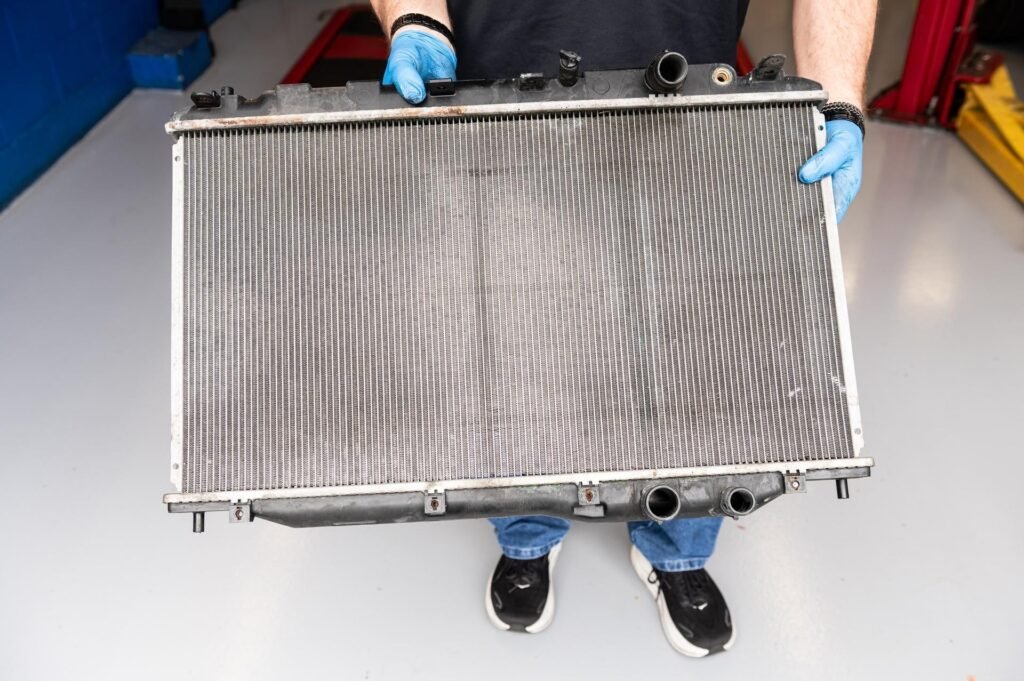
When your temperature gauge climbs, coolant disappears, steam rises from under the hood, or a sweet smell follows the vehicle, the cause may not be obvious. Modern cooling systems depend on the radiator, water pump, thermostat, cooling fans, hoses, sensors, and electronic controls working together to protect the engine.
At Chuck’s Auto Repair – North Seattle, we provide professional radiator and cooling-system diagnosis and repair for drivers throughout North Seattle. Our ASE-certified technicians use pressure testing, temperature data, fan-operation testing, and system-specific procedures to identify the source of cooling-system concerns.
Cooling-system diagnosis is more than topping off the coolant. A vehicle can lose coolant with no visible puddle, and overheating can have several possible causes. We test the system before recommending repairs — because an engine that runs hot for even a short time can suffer serious damage.
📞 Call (206) 526-1069 or Schedule Radiator Service Online.
What Is Radiator Repair?
Radiator repair is the process of identifying and correcting problems that prevent the cooling system from regulating engine temperature.
Depending on the symptoms, diagnosis may involve evaluating:
- Radiator condition and flow
- Radiator cap and pressure seal
- Water pump
- Thermostat
- Cooling fans and fan controls
- Coolant hoses and clamps
- Coolant reservoir or expansion tank
- Heater core
- Coolant condition and level
- Temperature sensors
- Electronic cooling controls
- Head gasket and internal engine sealing
- Transmission-fluid cooler on applicable radiators
The purpose is to move from a general symptom—such as coolant loss or a rising temperature gauge—to a confirmed cause.
A proper cooling-system diagnosis answers three important questions:
- What is the vehicle doing?
- Which component is responsible?
- What repair is needed to correct it?
Radiator Repair vs. Coolant Service
Radiator repair and routine coolant service overlap, but they are not exactly the same service.
Coolant Service
Coolant service is scheduled maintenance for a healthy system:
- Coolant condition and level inspection
- Coolant exchange at manufacturer intervals
- Correct coolant type verification
- System inspection for developing concerns
Radiator Repair
Radiator and cooling-system repair is needed when something is wrong.
Examples include:
- Coolant loss between services
- Overheating or temperature fluctuations
- Visible leaks or coolant odor
- Steam from under the hood
- Weak heater output
- Cooling fans running constantly
- Coolant mixing with oil or transmission fluid
- A low-coolant or temperature warning
A coolant exchange does not repair a leak, a failed water pump, or a stuck thermostat. When symptoms are present, diagnosis should come before routine service.
Common Signs You May Need Radiator or Cooling-System Repair
Your vehicle may need cooling-system diagnosis if you notice:
- Temperature gauge reading higher than normal
- Temperature gauge fluctuating
- Overheating warning light or message
- Coolant level dropping between checks
- Visible coolant beneath the vehicle
- Green, orange, pink, or blue fluid drips
- Sweet smell inside or outside the vehicle
- Steam from under the hood
- White crusty residue on cooling components
- Weak or intermittent heater output
- Heater blowing cold at idle but warm while driving
- Cooling fans running loudly or constantly
- Bubbling sounds after shutting off the engine
- Milky or discolored engine oil
- White exhaust smoke
- Low-coolant warning light
- Repeatedly needing to add coolant
Some cooling problems only appear in traffic, on hills, while towing, with the air conditioning on, or during hot weather.
Describing exactly when the symptom occurs can help guide the diagnostic process.
Why Is My Vehicle Losing Coolant?
Coolant loss may be external, internal, or both — and the puddle location does not always identify the source, because coolant can travel across the engine, splash shields, and underbody before reaching the ground.
Possible external leak sources include:
- Radiator core or tanks
- Radiator cap
- Water pump
- Thermostat housing
- Upper and lower radiator hoses
- Heater hoses
- Coolant reservoir or expansion tank
- Heater core
- Coolant pipes and fittings
- Engine core plugs
- Turbocharger cooling lines on applicable vehicles
Possible internal causes include:
- Head-gasket failure
- Cylinder-head damage
- Internal water-pump leakage on certain engine designs
- Coolant entering the combustion chamber or engine oil
A vehicle losing coolant with no visible leak deserves particular attention — the coolant is going somewhere, and internal loss can damage the engine quickly.
Why Is My Vehicle Overheating?
Overheating does not automatically mean the radiator has failed.
Possible causes include:
- Low coolant from a leak
- Radiator restriction — internal clogging or external debris
- Thermostat stuck closed
- Water-pump failure or worn impeller
- Cooling fan not operating
- Fan clutch failure on applicable vehicles
- Collapsed or damaged hose
- Air trapped in the system after previous service
- Radiator cap not holding pressure
- Head-gasket failure allowing combustion gases into the coolant
- Sensor or electrical fault
- Restricted airflow through the radiator
The conditions matter: overheating only in traffic often points to fan operation, while overheating only at highway speed or under load often points to flow restriction. Testing determines which system is responsible before parts are replaced.
Why Is My Heater Blowing Cold?
Weak heat is a cooling-system symptom, not just a comfort complaint — and in a Seattle winter it is a defrost and visibility problem.
Possible causes include:
- Low coolant level
- Air trapped in the cooling system
- Thermostat stuck open
- Restricted heater core
- Failed heater control valve on applicable vehicles
- Water pump not circulating properly
- Blend-door or climate-control fault
A heater that blows cold at idle but warms while driving classically points to low coolant or weak circulation. Because low coolant also means a leak exists somewhere, weak heat should prompt a cooling-system inspection — not just a climate-control repair.
Why Are My Cooling Fans Running Constantly?
Cooling fans that run loudly, constantly, or immediately at startup may indicate:
- An engine actually running hot
- A temperature-sensor fault reporting false readings
- A stuck fan relay
- Air-conditioning system pressure concerns
- A control-module fault
- A cooling system struggling to shed heat through a restricted radiator
Constant fan operation is the cooling system working overtime. The question is whether the heat is real or the signal is false — and testing answers it.
Can a Radiator Leak Damage My Transmission?
On many vehicles, the automatic-transmission fluid cooler is built into the radiator.
If the internal cooler fails, engine coolant and transmission fluid can mix. Contaminated transmission fluid may appear pink, milky, or like a strawberry milkshake — and it can destroy a transmission quickly.
Possible warning signs include:
- Discolored or milky transmission fluid
- Coolant that appears contaminated
- Transmission slipping or shuddering
- Transmission warning lights
Certain vehicles have documented patterns of this failure. When cross-contamination is suspected, the radiator, both fluids, and the transmission’s operation should be inspected promptly — continued driving multiplies the damage.
Our Cooling-System Diagnostic Process
At Chuck’s Auto Repair – North Seattle, cooling-system concerns begin with a structured diagnostic process.
1. Discuss the Symptoms
We ask questions such as:
- When did the concern begin?
- Does the temperature climb in traffic, on the highway, or both?
- How quickly does the coolant level drop?
- Is there a smell, steam, or visible leak?
- Is the heater output normal?
- Has the vehicle ever fully overheated?
- Has any recent cooling-system work been performed?
2. Perform an Initial Inspection
We may inspect:
- Coolant level and condition
- Visible leaks and residue trails
- Hose condition and clamps
- Radiator condition, fins, and debris
- Water-pump weep hole and bearing play
- Drive belt condition
- Coolant reservoir and cap
- Engine oil condition for coolant contamination
3. Pressure-Test the System
Cooling-system pressure testing pressurizes the system to reveal leaks that only appear under operating pressure — including seeps that leave no puddle. The radiator cap is tested separately, because a cap that cannot hold pressure lowers the coolant’s boiling point and can cause overheating by itself.
4. Review Temperature Data
We may examine:
- Actual coolant temperature versus gauge reading
- Temperature-sensor data
- Thermostat opening behavior
- Fan-activation temperatures
- Warm-up rate
5. Test Fan Operation
Fan testing confirms whether electric fans activate at the correct temperatures and with air-conditioning demand, and whether fan clutches engage properly on applicable vehicles.
6. Evaluate Circulation and Flow
Testing may include thermostat evaluation, water-pump flow assessment, radiator flow evaluation, and temperature comparison across the radiator to identify internal restriction.
7. Test for Combustion Gases When Needed
When internal leakage is suspected, combustion-gas testing detects exhaust gases in the coolant — evidence of a head-gasket or internal engine concern. This test matters because head-gasket repair is major work, and it should be confirmed, not assumed.
8. Explain the Findings
We explain what failed, what testing showed, which repair is recommended, whether related components should be addressed at the same time, and what may happen if the problem is not corrected.
9. Verify the Repair
After approved repairs, we refill the system with the correct coolant, bleed trapped air using the vehicle-specific procedure, verify operating temperature, retest for leaks, and confirm heater output.
Our goal is to correct the cause — not simply top off coolant or replace the most visible part.
Radiator Replacement
When a radiator has failed — leaking tanks, damaged core, internal restriction, or a failed internal transmission cooler — replacement is the reliable repair.
A proper radiator replacement includes:
- The correct radiator for the exact vehicle configuration
- New coolant meeting the manufacturer’s specification
- Inspection of hoses, clamps, and the thermostat while the system is open
- A new radiator cap when appropriate
- Transmission-cooler line inspection on applicable vehicles
- Complete air-bleeding using the vehicle-specific procedure
- Leak and temperature verification
Trapped air after cooling-system work is a common cause of comeback overheating — the bleeding procedure matters as much as the part.
Thermostat and Water-Pump Service
The thermostat and water pump are frequent cooling-system failure points, and both can mimic radiator failure.
A thermostat stuck closed causes rapid overheating; stuck open, it causes slow warm-up, poor heat, and reduced fuel economy. A water pump may leak from its weep hole, develop bearing noise, or lose circulation from a worn impeller — and on certain engine designs, the pump is internal and can leak coolant into the engine oil without any external sign.
On engines where the water pump is driven by the timing belt, replacing the pump during timing-belt service is usually recommended, because the labor overlaps and doing it separately means paying for the same disassembly twice.
Hoses, Clamps, and Plastic Components
Many modern cooling systems use plastic thermostat housings, quick-connect fittings, plastic radiator tanks, and molded hoses. Heat cycles age these components, and failures often appear at the plastic parts first.
Hoses may fail from age, heat, oil contamination, or internal deterioration that is not visible outside. A hose that feels soft, swollen, or crunchy is telling you something. During any cooling-system repair, we inspect the related hoses, clamps, and plastic components — a new radiator connected to a ten-year-old hose is a repair waiting to repeat.
Coolant Type Matters
Coolants are not interchangeable. Manufacturers specify different coolant chemistries, and mixing incompatible types can cause gelling, corrosion, and damage to seals and passages.
Coolant color alone does not determine compatibility — different chemistries can share a color, and the same chemistry can vary in color. We verify the correct specification for the exact vehicle before any refill, and we do not top off with “universal” coolant simply because the label says it fits everything.
What Radiator and Cooling-System Service May Include
Depending on the symptoms and findings, service may include:
- Customer symptom review
- Visual inspection and leak tracing
- Cooling-system pressure testing
- Radiator-cap testing
- Temperature-data review
- Fan-operation testing
- Thermostat evaluation
- Water-pump inspection
- Coolant-flow evaluation
- Combustion-gas testing when needed
- Radiator repair or replacement
- Thermostat replacement
- Water-pump replacement
- Hose and clamp replacement
- Heater-core diagnosis
- Coolant exchange with the correct specification
- System air-bleeding
- Post-repair verification
The exact process depends on the vehicle, symptoms, and results of the initial tests.
Why Proper Cooling-System Diagnosis Matters
Overheating symptoms can be caused by several different components — the radiator, thermostat, water pump, fans, cap, hoses, sensors, or the engine itself.
Replacing the radiator when the thermostat failed, or the water pump when the fan relay failed, costs money and leaves the vehicle overheating. Worse, an engine that continues overheating during the guessing process may suffer head-gasket failure, cylinder-head damage, or complete engine failure.
The stakes are higher on cooling systems than almost any other repair: guessing wrong doesn’t just waste the parts bill — it can cost the engine. Our approach is to test, confirm the cause, explain the findings, and repair once, correctly.
If Your Vehicle Is Overheating Right Now
Continuing to drive an overheating vehicle can cause severe engine damage within minutes.
If the temperature gauge enters the hot range, a temperature warning appears, or steam is visible:
- Pull over and shut off the engine when it is safe to do so
- Do not open the radiator cap while the system is hot — pressurized coolant can cause serious burns
- Call us at (206) 526-1069 — we can help you decide whether the vehicle can be driven in or should be towed
A tow bill is always cheaper than an engine.
Why Choose Chuck’s Auto Repair – North Seattle?
- AAA-approved auto repair facility
- ASE-certified technicians
- Trusted by Seattle-area drivers for more than 30 years
- Professional cooling-system diagnosis and repair
- Pressure testing, fan testing, and combustion-gas testing
- Testing before parts replacement
- Diagnosis of overheating, coolant loss, and weak heat
- Correct manufacturer-specified coolant for every vehicle
- Clear explanations of findings and repair recommendations
- 24-month / 24,000-mile parts and labor warranty
- 12-month / 12,000-mile nationwide warranty coverage
- Convenient North Seattle location
We do not treat a coolant leak, a hot gauge, or a warning light as a complete diagnosis.
We inspect, test, confirm, explain, and then recommend the appropriate repair.
Warranty Protection for Qualifying Radiator Repairs
Qualifying repairs are backed by our 24-month / 24,000-mile parts and labor warranty.
The warranty also includes 12-month / 12,000-mile nationwide coverage, providing added protection if you need warranty assistance while traveling away from Seattle.
The nationwide 1-800 assistance information is printed on every repair invoice. Customers also receive a warranty keytag for convenient access while on the road.
Convenient Radiator Repair in North Seattle
Chuck’s Auto Repair – North Seattle
9115 Roosevelt Way NE
Seattle, WA 98115
We provide professional radiator and cooling-system repair for drivers throughout:
Maple Leaf • Roosevelt • Northgate • Green Lake • Wedgwood • University District • Ravenna • Lake City • Wallingford • Greenwood
📞 Call (206) 526-1069 to schedule radiator service.
Radiator Repair FAQs
Can I drive my car if it is overheating?
You should not. Overheating can cause head-gasket, cylinder-head, and internal engine damage within minutes. Pull over safely, shut the engine off, and call us — a tow is always cheaper than an engine.
Why is my coolant low but there is no puddle?
Coolant may be leaking onto engine components and evaporating, collecting on splash shields, or being consumed internally through a head gasket or internal water pump. A pressure test and inspection identify where it is going.
Does overheating always mean the radiator is bad?
No. The thermostat, water pump, cooling fans, radiator cap, hoses, trapped air, sensors, or a head gasket can each cause overheating. Testing identifies which component failed before parts are replaced.
Why does my car overheat only in traffic?
Overheating at low speed but not on the highway classically points to cooling-fan operation, since airflow through the radiator depends on the fans when the vehicle is not moving. Fan testing confirms it.
Why does my car overheat only on the highway or on hills?
Overheating under load with normal temperatures in town often points to restricted flow a partially clogged radiator, a weak water pump, or a restricted system unable to shed heat at high demand.
Why is my heater blowing cold air?
Low coolant, trapped air, a stuck-open thermostat, a restricted heater core, or weak circulation can all cause poor heat. Because low coolant means a leak exists, weak heat should prompt a cooling-system inspection.
What does a cooling-system pressure test show?
Pressurizing the system reveals leaks that only appear under operating pressure including seeps that never reach the ground. The radiator cap is tested separately, because a weak cap can cause overheating by itself.
What is combustion-gas testing?
A chemical test that detects exhaust gases in the coolant evidence of a head-gasket or internal engine leak. We use it to confirm internal problems before recommending major engine work.
Can a bad radiator ruin my transmission?
On vehicles with the transmission cooler built into the radiator, an internal failure can mix coolant and transmission fluid which can destroy a transmission quickly. Milky or pink fluid should be inspected immediately.
Can I just use stop-leak instead of repairing the leak?
We do not recommend it. Sealer products can restrict the radiator, heater core, and small passages, turning one leak into a system-wide problem. Finding and repairing the actual leak costs less in the end.
Does coolant color tell me which type to use?
No. Color does not determine chemistry, and mixing incompatible coolants can cause gelling and corrosion. We verify the manufacturer’s specification for the exact vehicle before any refill.
Why does my cooling fan run after I shut the engine off?
Many vehicles run fans after shutdown to manage heat often normal. Fans that run excessively, constantly, or at every cold start may indicate a sensor, relay, or temperature concern worth testing.
Should the thermostat be replaced with the radiator?
Often, yes. The thermostat is inexpensive, the system is already open, and a marginal thermostat can undermine the new radiator’s performance. We recommend based on its condition and age.
Why is my coolant reservoir bubbling?
Bubbling may be trapped air working out of the system or combustion gases entering the coolant from a head-gasket concern. Combustion-gas testing distinguishes the harmless cause from the serious one.
Do radiator repairs include a warranty?
Qualifying repairs are backed by our 24-month / 24,000-mile parts and labor warranty, including 12-month / 12,000-mile nationwide warranty coverage.
Schedule Radiator Repair in North Seattle
If your vehicle is losing coolant, running hot, blowing cold air from the heater, showing steam, or displaying a temperature warning, schedule diagnostic service with Chuck’s Auto Repair – North Seattle.
Our ASE-certified technicians will pressure-test and inspect the cooling system, identify the cause, explain the findings, and recommend repairs based on confirmed results.
📞 Call (206) 526-1069 or Book Radiator Service Online.