This Ford F-150 didn’t come in because the driver was chasing an oil leak.
It came in with a check engine light.
But during the vehicle inspection, we found a completely separate problem that deserved attention: the engine oil level was so low it did not register on the dipstick.
Then we looked underneath.
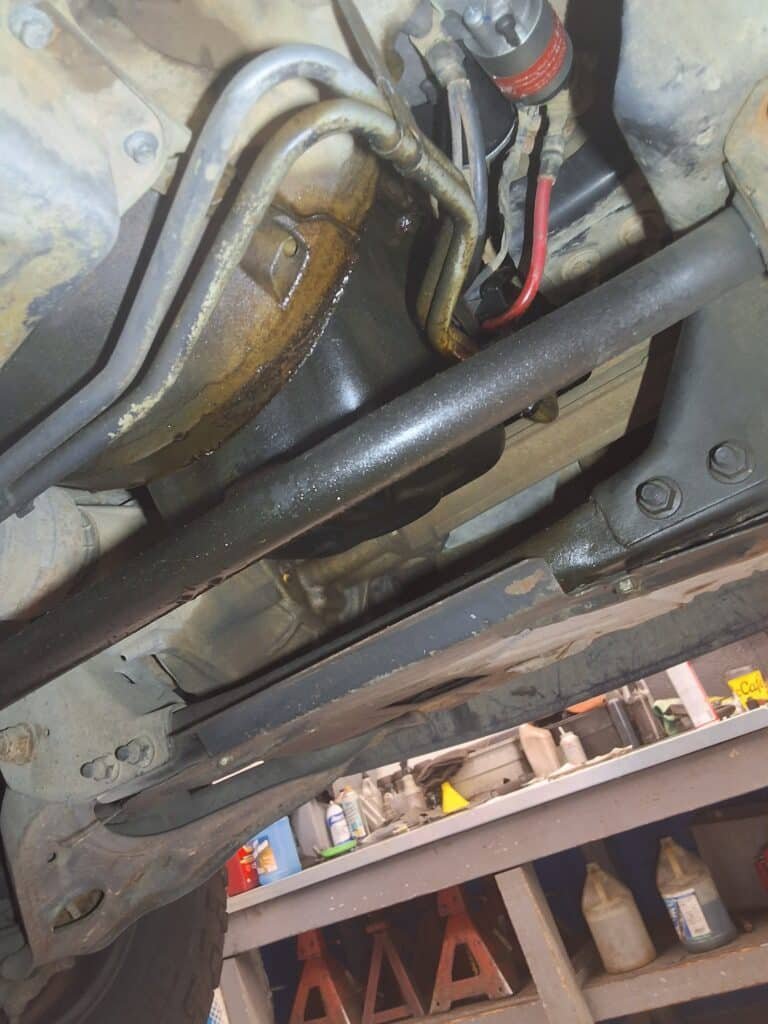
There was visible oil around the lower engine and oil pan area.
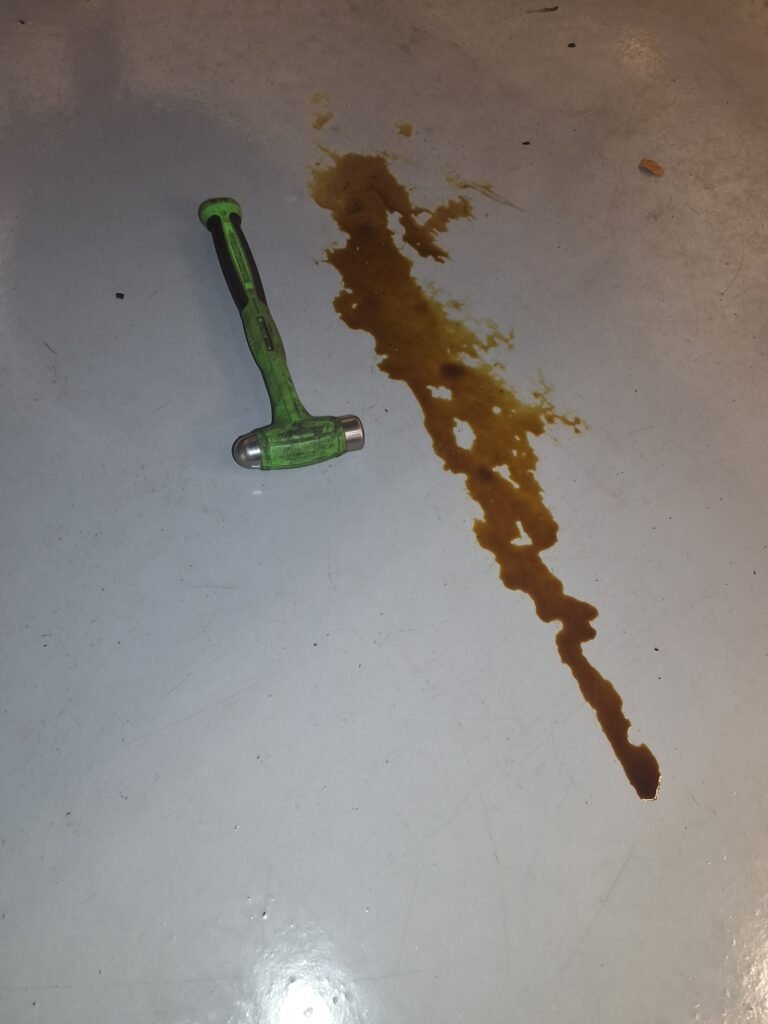
There was also a large trail of oil on the shop floor.
At that point, simply adding oil wasn’t much of an answer. We needed to identify where the oil was going.
The Dipstick Told Us There Was a Problem
This was a 2013 Ford F-150 XL with the 5.0L V8 and about 175,000 miles.
During the under hood portion of the inspection, the oil level didn’t register on the dipstick.
That’s useful information, but it doesn’t tell us why the oil is low.
A low reading can tell you the engine needs oil. It cannot, by itself, tell you whether the oil left through an external leak, was consumed by the engine, or whether more than one issue is involved.
That’s why the next step matters.
Look at the vehicle.
The Oil on the Floor Was Hard to Miss
In this case, there was clear evidence of an external leak.
Enough oil had accumulated underneath the truck to leave a long visible trail across the shop floor.
That is the kind of inspection finding that’s difficult to communicate with a generic statement like:
“Vehicle has an oil leak.”
The picture tells the story much better.
There was oil getting out of the engine.
The question was where.
Looking Underneath Pointed Us Toward the Oil Pan
The underside inspection gave us the next piece of evidence.
Oil was visible around the lower engine and oil pan area.
The inspection identified the engine oil pan gasket area as the source of the external leak.
The approved repair plan called for the oil pan to be repaired or resealed, the residual oil to be cleaned from the area, and the truck to be rechecked for any additional leaks.
That last step matters.
When an engine has been leaking heavily, oil can spread across nearby components while the vehicle is moving. Cleaning the area after a repair makes it much easier to tell whether the repair stopped the leak or whether another leak is present somewhere else.
Low Oil and an Oil Leak Are Two Different Pieces of Information
This distinction is worth making.
“The engine is low on oil” describes the oil level.
“The oil pan area is leaking” describes a condition we found during inspection.
Those two findings can be related, but we still don’t want to jump straight from a dipstick reading to a repair recommendation.
The inspection is what connects the dots.
On this F-150, we had both:
a dipstick that wasn’t registering the engine oil level,
and
visible evidence of a substantial external oil leak.
That gave us something specific to address.
The PCV Valve Was Also Included in the Repair Plan
The approved work also included replacement of the PCV valve.
PCV stands for positive crankcase ventilation.
Its job includes regulating pressure inside the engine crankcase.
That makes the PCV system relevant when we’re thinking about oil leaks and oil consumption.
But there is an important distinction here too.
We are not saying the PCV valve caused this specific oil pan leak.
The inspection identified the oil pan gasket area as the external leak source.
The PCV valve was a separate approved item in the repair plan.
That’s the kind of distinction we want to preserve when talking about a real repair. Several issues can be addressed during the same visit without pretending one caused all the others.
The Check Engine Light Was a Separate Diagnosis
Remember, the truck originally came in because the check engine light had been on.
Testing found the battery terminals were in poor condition.
After the terminals were replaced and the code was cleared, the code did not immediately return, so the recommendation was to continue monitoring the check engine light.
That diagnostic path was separate from the oil leak.
The oil problem was found because the truck received a broader inspection rather than stopping after the original concern was addressed.
That is one of the useful things about looking at the entire vehicle.
A customer may come in because of one warning light, noise or symptom.
The inspection can uncover something completely unrelated that the driver had no reason to know was happening.
Would You Always See an Oil Leak This Large?
Not necessarily.
Some leaks leave obvious spots on the ground.
Others start as dampness around a gasket or seal.
Some oil spreads underneath the vehicle while driving and may not leave the neat puddle someone expects to see in the driveway.
That’s why checking the dipstick still matters.
If your vehicle normally holds a consistent oil level and suddenly starts needing oil between services, that’s information worth paying attention to.
The question isn’t simply:
“Can we add oil?”
The better question is:
“Why is the oil level dropping?”
What Happens After an Oil Leak Repair?
Cleaning is an important part of a repair like this.
If old oil is left covering the underside of the engine, it becomes difficult to tell old residue from fresh leakage.
The repair plan for this F-150 specifically included cleaning away residual oil and checking again for additional leaks.
That’s a much better endpoint than assuming every trace of oil underneath the vehicle came from one gasket.
Repair the confirmed problem.
Clean the area.
Recheck it.
Then see what the vehicle tells you.
One Inspection Finding Can Change the Conversation
A check engine light brought this F-150 into the shop.
The inspection found something the driver might not have been watching for: an engine oil level that didn’t register on the dipstick and a substantial external leak underneath the truck.
That’s why we like having actual inspection evidence.
You can see the oil on the floor.
You can see the oil underneath the engine.
And instead of making a recommendation from mileage alone, we can explain what was actually found on the truck in front of us.
FORD F-150 OIL LEAK FAQ
What does it mean if there is no oil showing on the dipstick?
It means the oil level is below the dipstick’s measurable range. The dipstick reading alone does not explain why the engine is low, so the vehicle should be checked for leaks and other possible causes of oil loss.
Does low oil automatically mean the engine has an oil leak?
No. Low oil is a condition, not a diagnosis. Inspection is needed to determine whether there is an external leak or another reason the oil level has dropped.
Where was this F-150 leaking oil?
The inspection identified heavy oil leakage around the engine oil pan gasket area.
Why clean the engine after repairing an oil leak?
Removing the old oil residue makes it easier to determine whether the repaired area stays dry and whether any additional leaks remain.
Did the PCV valve cause this oil pan leak?
The supplied inspection does not establish that. The oil pan gasket area was identified as the leak source, while PCV valve replacement was a separate approved item in the repair plan.
Should an oil leak be diagnosed before replacing parts?
Yes. The location and severity of oil leakage should be inspected so the repair is based on what is actually leaking rather than an assumption.
FORD F-150 OIL LEAK REPAIR IN NORTH SEATTLE
If you’re seeing oil underneath your truck, noticing the oil level dropping between services, or simply aren’t sure where a leak is coming from, we can inspect it and show you what we find.
Chuck’s Auto Repair – North Seattle
9115 Roosevelt Way NE
Seattle, WA 98115
206-526-1069