Chevrolet (Chevy) Repair & Service IN NORTH SEATTLE
AAA-approved auto repair • ASE-certified technicians • Trusted by Seattle-area drivers for more than 30 years
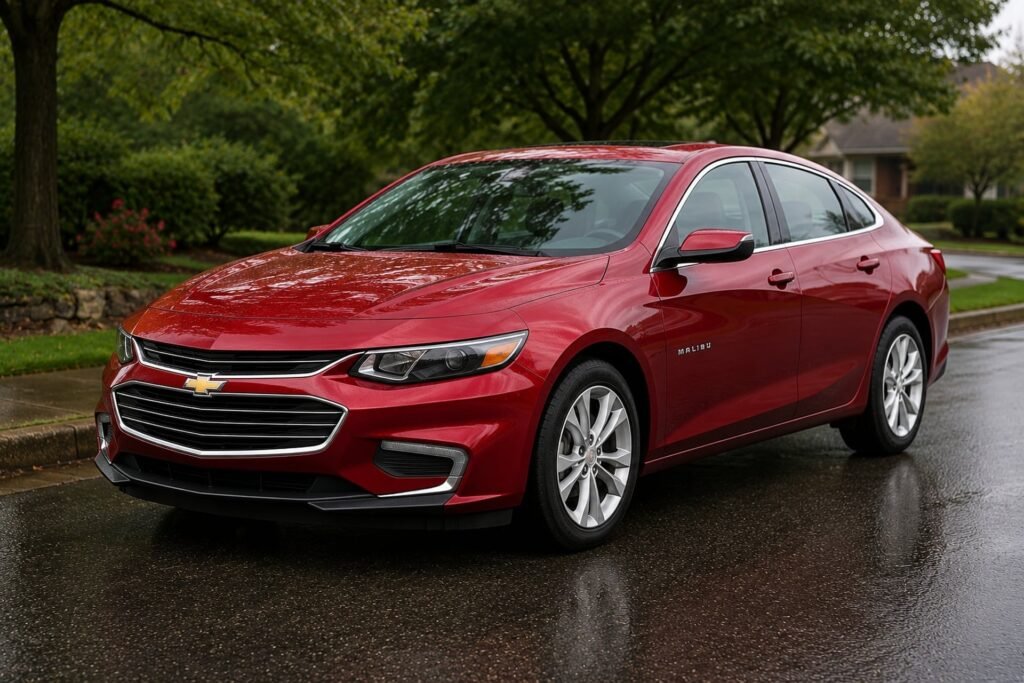
At Chuck’s Auto Repair – North Seattle, we provide professional Chevrolet maintenance, diagnostics, and qualifying repairs for drivers throughout North Seattle.
Chevrolet’s lineup includes compact cars, family crossovers, full-size SUVs, work trucks, performance vehicles, and electric models. The correct repair plan for an Equinox may be very different from the right plan for a Silverado, Traverse, Tahoe, Malibu, Colorado, Corvette, or electric Bolt.
Our ASE-certified technicians use vehicle-specific service information for your Chevrolet’s exact year, model, engine, transmission, drivetrain, and installed equipment. Whether your Chevy needs scheduled maintenance, brake repair, check engine light diagnosis, cooling-system work, transmission testing, four-wheel-drive service, suspension repair, or electrical diagnosis, we begin by identifying what the vehicle actually needs.
📞 Call (206) 526-1069 or Schedule Chevrolet Service Online.
Chevrolet Models We Service
We provide maintenance, diagnostics, and qualifying repairs for many Chevrolet vehicles from model year 2004 and newer, including:
- Chevrolet Silverado 1500
- Chevrolet Silverado 2500 and 3500
- Chevrolet Colorado
- Chevrolet Tahoe
- Chevrolet Suburban
- Chevrolet Trailblazer
- Chevrolet Blazer
- Chevrolet Traverse
- Chevrolet Equinox
- Chevrolet Trax
- Chevrolet Captiva Sport
- Chevrolet Avalanche
- Chevrolet Malibu
- Chevrolet Impala
- Chevrolet Cruze
- Chevrolet Sonic
- Chevrolet Spark
- Chevrolet Cobalt
- Chevrolet HHR
- Chevrolet Monte Carlo
- Chevrolet Camaro
- Chevrolet Corvette
- Chevrolet Express
- Chevrolet City Express
- Chevrolet Bolt EV and Bolt EUV
- Chevrolet Volt
Routine mechanical service may also be available for Chevrolet hybrid and electric vehicles, including brakes, tires, steering and suspension, wheel bearings, cabin filters, cooling-system components, and 12-volt electrical systems.
High-voltage battery, inverter, charging-system, electric-drive, diesel fuel-system, and major emissions repairs should be confirmed before scheduling.
Chevrolet Experience in Our North Seattle Shop
Silverados, Equinoxes, Traverses, Tahoes, Suburbans, Malibus, and Cruzes are among the most common Chevrolet vehicles we see in our shop. Check engine lights, oil leaks, cooling-system failures, V8 valvetrain noise, suspension wear, transmission complaints, and four-wheel-drive concerns are a regular part of our work.
A Silverado used for towing or construction work has different needs from a family-driven Traverse or an Equinox used for Seattle commuting. Chevrolet also uses several engine families, transmission designs, and four-wheel-drive systems, so the correct fluid and diagnostic procedure depend on the exact vehicle.
That first-hand familiarity helps us recognize useful patterns, but every Chevrolet is still inspected and tested before repairs are recommended.
Common Chevrolet Services We Perform
Depending on the vehicle and confirmed findings, Chevrolet service may include:
- Oil and filter service using the correct GM specification
- Manufacturer-scheduled maintenance
- Brake inspection and repair
- Check engine light diagnosis
- AFM and valvetrain noise evaluation
- Spark-plug and ignition-coil service
- Oil-leak and oil-consumption diagnosis
- Cooling-system and water pump repair
- Timing-chain and variable valve timing diagnosis
- Automatic and manual-transmission service
- Transfer-case and differential maintenance
- Four-wheel-drive diagnosis
- Steering and suspension repair
- Wheel bearing and CV axle replacement
- Battery, starter, and charging-system testing
- Air-conditioning service
- Tire and road trip inspections
- Major repair evaluation
Recommendations are based on the exact Chevrolet model, engine, transmission, drivetrain, mileage, service history, vehicle use, symptoms, and inspection findings.
Chevrolet Silverado, Tahoe, and Suburban V8 Service
Silverado, Tahoe, Suburban, Avalanche, and other Chevrolet trucks and SUVs commonly use versions of GM’s V8 engine family.
These engines may include Active Fuel Management, commonly called AFM, or Dynamic Fuel Management on newer applications. These systems reduce the number of active cylinders under certain driving conditions to improve fuel economy.
A ticking noise, misfire, rough running, reduced power, or low oil pressure may involve an ignition problem, fuel injector, exhaust leak, oil-level concern, lifter, camshaft, variable valve timing component, wiring fault, or internal engine wear.
An engine tick does not automatically prove that an AFM lifter has failed.
Diagnosis may involve reviewing misfire counts, oil pressure, cylinder contribution, engine noise location, scan data, ignition performance, and mechanical condition before major engine work is recommended.
AFM Lifter and Camshaft Concerns
Certain Chevrolet V8 engines with cylinder-deactivation systems may develop lifter or camshaft wear.
Possible symptoms include a persistent tick, cylinder-specific misfire, rough idle, loss of power, flashing check engine light, or metal debris in the engine oil.
A failed lifter may stop following the camshaft correctly, and continued operation can damage the cam lobe or create additional internal engine wear.
However, similar symptoms may also come from:
- Spark plugs or ignition coils
- Fuel injectors
- Exhaust manifold leaks
- Low oil level
- Oil-pressure concerns
- Valve springs
- Wiring or control faults
- Compression loss
Because valvetrain repair can require substantial disassembly, the failed cylinder and mechanical cause should be confirmed first.
Chevrolet 5.3L and 6.2L Oil Consumption
Some Chevrolet V8 engines may use oil between services because of external leakage, PCV-system concerns, piston-ring wear, cylinder-deactivation operation, valve-seal wear, or internal engine condition.
Owners may notice a low-oil message, the need to add oil between services, blue or gray exhaust smoke, spark-plug fouling, engine noise, or reduced oil pressure.
Oil consumption should be documented over a known mileage interval. Estimating from memory does not establish how quickly the oil level is changing.
Operating a V8 engine while low on oil may affect the lifters, camshaft, timing components, variable valve timing system, bearings, and oil-pressure-controlled components.
Adding oil protects the engine from operating low, but it does not identify or repair the cause.
Chevrolet Equinox 2.4L Oil-Consumption Concerns
Certain Equinox models equipped with versions of GM’s 2.4-liter four-cylinder engine may develop elevated oil consumption.
Possible causes may include piston-ring wear, PCV-system operation, external leakage, valve-seal wear, or internal engine condition.
A driver may not see smoke or an obvious puddle even while the oil level is dropping. That makes regular level checks especially important.
Low oil may contribute to timing-chain noise, camshaft-position faults, variable valve timing problems, reduced oil pressure, or internal engine damage.
Before major repair is recommended, the oil-consumption rate, external leakage, PCV operation, spark-plug condition, engine noise, and overall mechanical condition should be evaluated.
Chevrolet 3.6L V6 Timing-Chain Concerns
Versions of GM’s 3.6-liter V6 have been used in vehicles such as the Traverse, Camaro, Impala, Malibu, Equinox, and other Chevrolet models.
Some applications may develop timing-chain stretch, guide wear, tensioner concerns, or camshaft-correlation faults.
Possible symptoms include cold-start rattle, check engine lights, timing-related codes, rough running, misfires, reduced power, or extended cranking.
A timing-correlation code does not automatically prove that the chain must be replaced. Low oil, incorrect oil, delayed oil pressure, variable valve timing solenoids, camshaft actuators, sensors, wiring, or mechanical wear may create similar faults.
Because timing-chain service can involve extensive labor, we evaluate the oil system, scan data, camshaft positions, noise pattern, and mechanical condition before recommending repair.
Chevrolet Cruze 1.4L Turbo Service
Many Chevrolet Cruze models use a turbocharged 1.4-liter engine with a compact cooling system, electronic controls, and several plastic housings and connections.
Cruze owners may report coolant odors, repeated low-coolant conditions, rough idle, loss of boost, oil leaks, or check engine lights.
Possible leak and drivability areas may include the water outlet, thermostat housing, coolant reservoir, hoses, turbocharger cooling or oil lines, valve cover, PCV system, intake plumbing, or ignition components.
A Cruze that loses power does not automatically need a turbocharger. A boost leak, PCV fault, ignition misfire, wastegate concern, sensor issue, fuel problem, or exhaust restriction may create similar symptoms.
Pressure testing, smoke testing, scan-data analysis, and inspection of hidden connections help identify the actual cause.
Chevrolet Traverse Family-Vehicle Service
The Traverse combines three-row seating, a V6 engine, advanced electronics, available all-wheel drive, and a relatively heavy body.
Because many Traverses are used for family transportation and road trips, brake wear, tire condition, suspension performance, cooling-system reliability, transmission operation, and battery health deserve regular attention.
A Traverse with a clunk, vibration, humming noise, or warning light may have a wheel bearing, tire, strut, control-arm bushing, CV axle, drivetrain, engine mount, or transmission concern.
Cooling-system leaks, timing-related engine codes, electrical warnings, and transmission complaints should be diagnosed using vehicle-specific procedures rather than assuming one common failure.
Chevrolet Silverado and Colorado Truck Service
Silverado and Colorado trucks may be used for towing, hauling, construction work, mountain driving, or frequent stop-and-go service.
Those conditions may increase demands on:
- Engine oil
- Transmission fluid
- Cooling systems
- Brakes
- Transfer cases
- Differentials
- Driveshafts
- Universal joints
- Wheel bearings
- Suspension components
A clunk during acceleration may involve a driveshaft, slip yoke, universal joint, differential movement, axle, mount, or transfer-case component.
A highway-speed vibration may come from tires, wheels, driveshaft balance, CV axles, wheel bearings, or drivetrain wear.
The complete system should be inspected before a transmission or differential is blamed.
Chevrolet Transmission Shudder and Shift Concerns
Chevrolet has used several automatic transmissions across its cars, crossovers, trucks, and SUVs.
Certain vehicles may develop shuddering, harsh shifting, delayed engagement, slipping, or warning messages. Possible causes include fluid condition, torque-converter clutch operation, valve-body concerns, solenoids, pressure control, adaptation, engine performance, mounts, wiring, or internal wear.
Some owners describe a light-throttle vibration as a transmission shudder, but an ignition misfire, damaged mount, worn axle, tire problem, or driveshaft concern can feel similar.
A fluid service may help maintain a serviceable transmission, but it cannot repair confirmed clutch, torque-converter, valve-body, or internal mechanical damage.
Diagnosis should come before routine service when symptoms are already present.
Chevrolet Four-Wheel-Drive and Transfer-Case Service
Chevrolet trucks and SUVs may use electronically controlled transfer cases, front and rear differentials, driveshafts, wheel-speed sensors, front axle actuators, control modules, and model-specific fluids.
A four-wheel-drive system that will not engage may have a switch, actuator, motor, sensor, wiring, low-voltage problem, fluid concern, or mechanical transfer-case fault.
Binding, clunking, whining, warning messages, or vibration may also involve tires, axles, driveshafts, wheel bearings, differentials, or suspension components.
The correct transfer-case fluid depends on the exact system. Products that appear similar are not automatically interchangeable.
Chevrolet Check Engine Light Diagnosis
A Chevrolet check engine light may be related to an ignition misfire, fuel-delivery concern, oxygen sensor, catalytic converter, evaporative-emissions leak, intake leak, variable valve timing issue, transmission fault, cooling-system concern, turbocharger problem, or electrical circuit.
A diagnostic trouble code identifies the system or operating condition detected by the vehicle.
It does not automatically prove which component failed.
For example, a cylinder misfire may be caused by a spark plug, ignition coil, fuel injector, wiring, vacuum leak, compression loss, valvetrain concern, or mechanical timing problem.
Our diagnostic process may include module scanning, freeze-frame review, live-data analysis, fuel trims, misfire counters, smoke testing, electrical checks, fuel-pressure testing, cooling-system testing, compression testing, and road testing when safe.
The goal is to determine why the fault occurred before parts are recommended.
Chevrolet Scheduled Maintenance
Chevrolet maintenance requirements vary by model, engine, transmission, drivetrain, mileage, time, and vehicle use.
Frequent short trips, heavy Seattle traffic, extended idling, towing, hauling, mountain travel, and repeated cold starts may increase service demands.
Maintenance may include oil and filter service, engine and cabin air filters, spark plugs, brake fluid, coolant, transmission fluid, transfer-case fluid, differential fluid, belts, brakes, tires, battery testing, and suspension inspections.
We do not apply one universal 30K, 60K, or 90K package to every Chevrolet.
Recommendations are matched to the exact vehicle, manufacturer schedule, available service history, and current condition.
Chevrolet Oil and Filter Service
Chevrolet engines may require a specific GM oil standard in addition to the correct viscosity.
The requirement depends on the engine, model year, turbocharger, cylinder-deactivation system, emissions equipment, and operating conditions.
Using the correct oil supports cold-start lubrication, lifter operation, timing-chain performance, variable valve timing, turbocharger protection, and long-term engine life.
A proper Chevrolet oil service should include the correct oil specification, proper quantity, quality filter, drain-plug inspection, oil-level verification, leak inspection, and Oil Life System reset when appropriate.
The Oil Life System estimates service needs, but it does not directly detect low oil level, active leaks, oil consumption, coolant contamination, or internal engine wear.
Chevrolet Brake Service
Chevrolet brake systems may include hydraulic brakes, ABS, traction and stability control, electronic parking brakes, trailer-brake controls, and regenerative braking on electric or hybrid models.
Squeaking, grinding, vibration, pulling, a soft pedal, warning lights, or increased stopping distance should be inspected promptly.
At Chuck’s Auto Repair – North Seattle, when brake rotors require replacement, we install brand-new brake rotors.
We do not assume every brake-pad service automatically requires rotors. Recommendations are based on measured rotor thickness, wear, damage, heat effects, and braking symptoms.
When replacement is needed, new rotors provide a fresh and consistent braking surface, full usable thickness, compatibility with new pads, and predictable braking performance.
Chevrolet Steering and Suspension Service
Chevrolet cars, crossovers, SUVs, vans, and trucks use different steering and suspension designs.
A clunk, pull, loose steering feel, uneven tire wear, vibration, excessive bouncing, or harsh ride may involve shocks, struts, control arms, bushings, ball joints, tie rods, sway-bar links, wheel bearings, tires, or alignment.
Tahoe, Suburban, and other models may also use electronically controlled suspension or air-leveling components. An uneven ride height or suspension warning may involve a compressor, air shock, sensor, wiring, control module, or conventional mechanical wear.
We inspect the complete related system before recommending individual parts.
Chevrolet Battery, Starting, and Electrical Diagnosis
A Chevrolet that will not start does not automatically need a starter.
Possible causes include the battery, terminals, cables, grounds, starter, alternator, fuses, relays, ignition switch, keyless-entry system, push-button start controls, brake-pedal input, wiring, or module communication.
Low voltage can trigger several warning messages at once, disable stop-start operation, or cause modules to communicate incorrectly.
Testing the battery, charging system, starting circuit, power supplies, grounds, and stored faults helps prevent unnecessary replacement of unrelated components.
Chevrolet Hybrid and Electric Vehicle Service
Chevrolet has offered hybrid, plug-in hybrid, and battery-electric vehicles, including the Volt, Bolt EV, Bolt EUV, and newer electric models.
Routine mechanical service may still include brakes, tires, suspension, steering, wheel bearings, cabin filters, air-conditioning, cooling-system components, and the 12-volt battery.
A weak 12-volt battery may trigger warning messages or prevent the vehicle from powering up normally even when the high-voltage battery is charged.
High-voltage battery, inverter, onboard charger, electric-drive, and charging-system repairs require specialized procedures and should be confirmed before scheduling.
Correct Chevrolet Fluids, Parts, and Procedures
Chevrolet engines, transmissions, transfer cases, differentials, cooling systems, brakes, diesel systems, and electric drivetrains may require specific fluids, parts, programming, relearn procedures, and service information.
Fluid color does not prove compatibility. Products that appear similar may have different additive, viscosity, and friction requirements.
Repair options may include genuine GM or ACDelco parts, original-equipment supplier parts, and quality aftermarket components.
The appropriate choice depends on the component, fit, reliability, warranty, availability, vehicle age, use, and repair goals. We verify the application and explain the recommended option before installation.
Why Choose Chuck’s Auto Repair – North Seattle for Chevrolet Service?
- AAA-approved auto repair facility
- ASE-certified technicians
- Trusted by Seattle-area drivers for more than 30 years
- First-hand experience with Silverado, Equinox, Traverse, Tahoe, Suburban, Malibu, and other Chevrolet models
- Diagnosis before parts replacement
- Vehicle-specific Chevrolet service information
- Correct engine, transmission, transfer-case, and differential fluids
- V8 valvetrain, cooling-system, transmission, brake, suspension, and electrical diagnosis
- Clear explanations before work is performed
- 24-month / 24,000-mile parts and labor warranty
- 12-month / 12,000-mile nationwide warranty coverage
- Convenient North Seattle location
Warranty Protection for Qualifying Chevrolet Repairs
Qualifying Chevrolet repairs are backed by our 24-month / 24,000-mile parts and labor warranty.
The warranty also includes 12-month / 12,000-mile nationwide coverage, providing additional protection if warranty assistance is needed while traveling outside Seattle.
The nationwide 1-800 assistance information is printed on every repair invoice. Customers also receive a warranty keytag for convenient access while traveling.
Warranty coverage depends on the repair performed, parts installed, and applicable terms.
Convenient Chevrolet Service in North Seattle
Chuck’s Auto Repair – North Seattle
9115 Roosevelt Way NE
Seattle, WA 98115
We provide Chevrolet maintenance, diagnostics, and qualifying repairs for drivers throughout:
Maple Leaf • Roosevelt • Northgate • Green Lake • Wedgwood • University District • Ravenna • Lake City • Wallingford • Greenwood
📞 Call (206) 526-1069 to schedule Chevrolet service.
Chevrolet Repair FAQs
Do you service Chevrolet Silverado trucks?
Yes. We provide many maintenance, brake, suspension, cooling-system, transmission, transfer-case, differential, electrical, and diagnostic services for applicable Silverado models.
Why is my Chevrolet V8 ticking?
Possible causes include an exhaust leak, ignition problem, low oil, lifter wear, camshaft damage, valve-spring concern, injector noise, or another internal engine issue.
What is Chevrolet AFM?
Active Fuel Management is a cylinder-deactivation system used on certain GM engines to reduce fuel consumption under specific operating conditions.
Does an AFM misfire mean the engine needs replacement?
Not automatically. The cause may involve a lifter, camshaft, ignition coil, spark plug, injector, wiring, compression loss, or another mechanical problem.
Why is my Chevrolet Equinox using oil?
Possible causes include piston-ring wear, PCV-system concerns, valve-seal wear, external leakage, or internal engine condition. Certain 2.4-liter applications developed higher oil-consumption patterns.
Why does my Chevrolet Cruze keep losing coolant?
Possible sources include the water outlet, thermostat housing, reservoir, hoses, radiator, water pump, turbocharger cooling lines, or another connection.
Why is my Chevrolet Traverse timing chain making noise?
Possible causes include low oil, delayed oil pressure, chain wear, tensioner or guide concerns, variable valve timing parts, sensors, or another mechanical source.
Why is my Chevrolet transmission shuddering?
Possible causes include torque-converter operation, fluid condition, valve-body problems, adaptation, mounts, axles, engine misfires, driveshafts, or internal transmission wear.
Does my Chevrolet transmission need fluid service?
That depends on the transmission, mileage, service history, vehicle use, leakage, fluid condition, and existing symptoms.
Why will my Chevrolet not shift into four-wheel drive?
Possible causes include the transfer-case motor, actuator, switch, sensor, wiring, low voltage, fluid concern, or an internal mechanical fault.
Why does my Silverado clunk when accelerating?
Possible causes include driveshaft slip, universal joints, differential movement, engine or transmission mounts, axles, transfer-case parts, or suspension components.
Why are several warning lights on at once?
Low battery voltage, charging-system faults, wheel-speed sensor problems, wiring, or module-communication concerns may trigger multiple warnings together.
What does the Chevrolet Oil Life System measure?
It estimates remaining oil life using operating conditions. It does not directly detect oil level, leaks, contamination, or oil consumption.
Do you service Chevrolet diesel trucks?
Routine maintenance and selected mechanical services may be available. Major diesel fuel-system, emissions, and internal engine work should be confirmed before scheduling.
Do you service Chevrolet Bolt and Volt models?
We provide many routine mechanical services for applicable Bolt and Volt vehicles. High-voltage battery, inverter, charging-system, and electric-drive work should be confirmed before scheduling.
Do qualifying Chevrolet repairs include a warranty?
Qualifying repairs are backed by our 24-month / 24,000-mile parts and labor warranty, including 12-month / 12,000-mile nationwide coverage.
Schedule Chevrolet Service in North Seattle
If your Chevrolet is due for maintenance, using oil, losing coolant, shifting differently, making a ticking or clunking noise, displaying a warning light, or experiencing a brake, suspension, four-wheel-drive, or electrical concern, schedule an appointment with Chuck’s Auto Repair – North Seattle.
Our ASE-certified technicians will inspect and test the affected systems, explain what they find, and recommend service based on the exact Chevrolet model, engine, transmission, and drivetrain.
📞 Call (206) 526-1069 or Book Chevrolet Service Online.