Check Engine Light Diagnostics in North Seattle
AAA-approved auto repair • ASE-certified technicians • Trusted by Seattle-area drivers for more than 30 years
When the check engine light comes on, your vehicle is telling you that its onboard computer has detected a problem. The light may be caused by something relatively minor, or it may warn of an issue that could affect engine performance, fuel economy, emissions, reliability, or catalytic-converter operation.
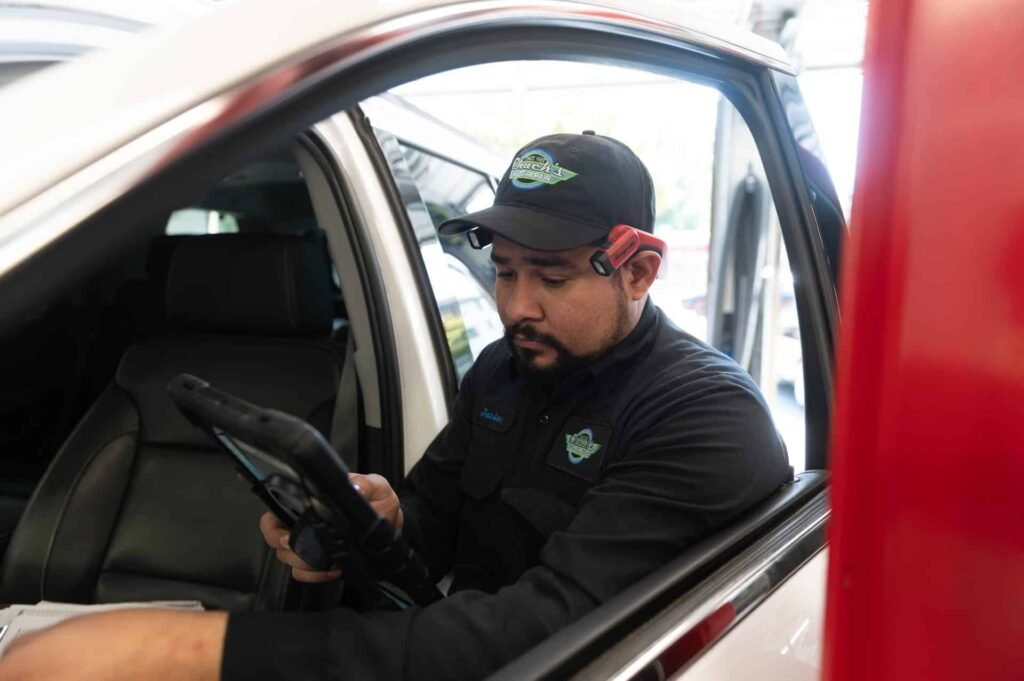
At Chuck’s Auto Repair – North Seattle, we provide professional check engine light diagnostics for drivers throughout North Seattle. Our ASE-certified technicians use scan-tool information, live vehicle data, visual inspections, electrical testing, mechanical testing, and hands-on experience to determine why the warning light appeared.
A trouble code does not automatically identify a failed part. It identifies the system or operating condition that the vehicle detected. We use that information as the starting point for a complete diagnosis before recommending repairs.
📞 Call (206) 526-1069 or Schedule Check Engine Light Diagnostics Online.
What Does the Check Engine Light Mean?
The check engine light—also called the malfunction indicator lamp or MIL—comes on when the vehicle’s computer detects a fault that may affect engine operation, emissions, fuel control, ignition, or another monitored system.
Modern vehicles continuously monitor systems such as:
- Fuel delivery
- Ignition and misfire activity
- Air intake
- Oxygen-sensor operation
- Exhaust and emissions controls
- Engine temperature
- Throttle operation
- Transmission-related data
- Evaporative-emissions system
- Electrical circuits
- Sensor performance
When the computer detects information outside the expected range, it may store a diagnostic trouble code and turn on the check engine light.
That code helps identify where testing should begin, but it does not always tell us exactly which component caused the problem.
Steady Check Engine Light vs. Flashing Check Engine Light
The way the check engine light appears can help indicate how urgently the vehicle should be inspected.
Steady Check Engine Light
A steady light means the vehicle has detected a fault and stored diagnostic information.
The vehicle may:
- Seem to drive normally
- Run slightly rough
- Use more fuel
- Have reduced power
- Produce higher emissions
- Show no noticeable symptoms
A steady light should still be diagnosed. Continuing to drive without understanding the cause may allow a small concern to become more serious.
Flashing Check Engine Light
A flashing check engine light often indicates a severe misfire or another condition that may damage the catalytic converter.
If the light is flashing—especially if the engine is shaking, losing power, or running very poorly—reduce driving and have the vehicle inspected promptly.
If the vehicle is overheating, has very low oil pressure, makes severe mechanical noise, or cannot be driven safely, stop driving and arrange assistance.
Common Reasons a Check Engine Light Comes On
A check engine light can be triggered by many different concerns.
Possible causes include:
- Ignition misfire
- Worn spark plugs
- Ignition-coil problems
- Fuel-injector concerns
- Vacuum leaks
- Air-intake leaks
- Oxygen-sensor faults
- Airflow-sensor concerns
- Throttle-body problems
- Fuel-pressure concerns
- Evaporative-emissions leaks
- Loose, damaged, or incorrect fuel cap
- Catalytic-converter efficiency concerns
- Exhaust leaks
- Engine-temperature sensor faults
- Electrical wiring or connector problems
- Low system voltage
- Timing-related concerns
- Internal mechanical problems
- Transmission or drivetrain faults monitored by the engine computer
Because one trouble code can have several possible causes, professional testing is important before a repair decision is made.
Common Symptoms That May Occur with a Check Engine Light
Your vehicle may need immediate diagnostic attention if the check engine light appears with symptoms such as:
- Rough idling
- Engine shaking
- Stalling
- Hesitation
- Loss of power
- Poor acceleration
- Hard starting
- Extended cranking
- Poor fuel economy
- Fuel smell
- Exhaust smell
- Visible smoke
- Unusual engine noise
- Surging
- Transmission shifting concerns
- Reduced-power message
- Vehicle entering limp mode
- Flashing check engine light
Some vehicles show no obvious symptoms even though a fault is stored.
The absence of symptoms does not mean the warning light should be ignored.
Why a Code Scan Is Not the Same as a Diagnosis
A basic code scan retrieves diagnostic trouble codes stored in the vehicle’s computer.
For example, a code may indicate:
- A misfire on a specific cylinder
- A lean fuel condition
- A sensor signal outside the expected range
- An evaporative-emissions leak
- Catalyst efficiency below the expected threshold
- A circuit fault
The code does not always prove that a particular part has failed.
A sensor-related code may be caused by:
- The sensor itself
- Damaged wiring
- A poor electrical connection
- A vacuum leak
- An exhaust leak
- Low system voltage
- A mechanical engine concern
- Another component affecting the sensor reading
Replacing a part based only on the code can result in unnecessary repairs and leave the original problem unresolved.
At Chuck’s Auto Repair – North Seattle, the code tells us where to begin testing—not which part to replace automatically.
Our Check Engine Light Diagnostic Process
Every warning-light concern begins with a methodical inspection and testing process.
1. Discuss the Symptoms
We ask what you have noticed and when the concern occurs.
Useful information may include:
- Whether the light is steady or flashing
- When the light first appeared
- Whether the vehicle runs differently
- Whether the issue happens when cold or warm
- Whether the concern occurs during acceleration
- Whether recent repairs or maintenance were performed
- Whether fuel economy has changed
- Whether the vehicle has stalled or lost power
2. Scan the Vehicle’s Computer Systems
We connect professional diagnostic equipment and check for:
- Stored trouble codes
- Pending codes
- Permanent codes
- Freeze-frame data
- System status
- Related module information
Freeze-frame data can show operating conditions present when the computer detected the fault.
3. Review Live Data
Live data allows us to observe how sensors and systems are operating while the vehicle is running.
Depending on the concern, we may evaluate:
- Fuel-trim information
- Oxygen-sensor activity
- Airflow readings
- Engine temperature
- Throttle position
- Ignition timing
- Misfire data
- Fuel pressure information
- Charging-system voltage
- Other system-specific data
4. Perform a Visual Inspection
We inspect related components for conditions such as:
- Damaged wiring
- Loose connectors
- Vacuum leaks
- Cracked hoses
- Fluid leaks
- Broken intake components
- Exhaust leaks
- Corrosion
- Physical damage
- Signs of previous repairs
5. Test the Suspected System
Depending on the code and symptoms, testing may include:
- Electrical circuit testing
- Sensor testing
- Ignition-system testing
- Fuel-pressure testing
- Smoke testing for leaks
- Compression testing
- Vacuum testing
- Charging-system testing
- Mechanical inspection
- Road testing
6. Confirm the Cause
Before recommending a repair, we work to confirm which condition or component is causing the fault.
7. Explain the Findings
We explain:
- Which codes were stored
- What the codes mean
- What testing was performed
- What caused the warning light
- What repair is recommended
- Whether related maintenance should also be considered
8. Verify the Repair
After approved repairs are completed, we clear the codes when appropriate, retest the system, and road-test the vehicle when needed.
The goal is not simply to turn off the warning light. The goal is to correct the condition that caused it.
Check Engine Light and Engine Misfires
An engine misfire occurs when one or more cylinders do not produce power correctly.
Possible misfire causes include:
- Worn spark plugs
- Ignition-coil failure
- Fuel-injector problems
- Vacuum leaks
- Low fuel pressure
- Wiring concerns
- Compression loss
- Valve or timing problems
- Internal engine damage
Misfires may cause:
- Engine shaking
- Rough idle
- Loss of power
- Hesitation
- Flashing check engine light
- Increased fuel use
- Catalytic-converter damage
A misfire code identifies which cylinder or pattern was detected, but additional testing is needed to determine why the misfire is occurring.
Check Engine Light and Fuel-System Problems
Fuel-system concerns can affect how much fuel reaches the engine and how accurately the computer controls combustion.
Possible concerns include:
- Low fuel pressure
- Weak fuel pump
- Restricted fuel delivery
- Injector problems
- Fuel-pressure sensor faults
- Air-fuel mixture concerns
- Electrical problems
Symptoms may include:
- Hard starting
- Hesitation
- Stalling
- Poor acceleration
- Lean or rich trouble codes
- Poor fuel economy
- Loss of power
Because fuel problems can resemble ignition, airflow, or mechanical problems, system testing is important.
Check Engine Light and Air-Intake Problems
The engine relies on properly measured airflow.
Air-intake concerns may include:
- Vacuum leaks
- Cracked intake hoses
- Mass-airflow sensor problems
- Throttle-body concerns
- Intake manifold leaks
- Damaged connectors
- Restricted air filter
- Unmetered air entering the engine
These conditions can affect fuel control and cause:
- Rough idle
- Hesitation
- Lean-condition codes
- Poor fuel economy
- Stalling
- Reduced performance
A sensor code may actually be caused by an air leak rather than a failed sensor.
Check Engine Light and Emissions-System Concerns
The vehicle’s computer monitors several emissions-related systems.
A warning light may be related to:
- Oxygen sensors
- Catalytic converter
- Evaporative-emissions system
- Exhaust-gas recirculation system
- Secondary-air system
- Fuel-vapor leaks
- Exhaust leaks
- Sensor wiring
- Control valves
An emissions-related fault may not immediately change how the vehicle drives, but it can still affect fuel economy, emissions, and future inspection readiness.
Proper diagnosis helps distinguish between a failed component and another condition affecting the system.
Check Engine Light and Catalytic-Converter Concerns
The catalytic converter helps reduce harmful exhaust emissions.
Catalytic-converter efficiency codes do not always mean the converter should be replaced immediately.
The underlying cause may involve:
- Engine misfire
- Fuel mixture problem
- Exhaust leak
- Oxygen-sensor concern
- Oil or coolant entering the exhaust
- Internal converter damage
- Long-term engine performance problem
Replacing a catalytic converter without correcting the condition that damaged it can lead to repeat failure.
We inspect related engine and exhaust concerns before recommending converter replacement.
Evaporative-Emissions and Fuel-Cap Warning Lights
The evaporative-emissions system prevents fuel vapors from escaping into the atmosphere.
Possible causes of an evaporative-emissions code include:
- Loose fuel cap
- Damaged fuel cap seal
- Cracked vapor hose
- Purge-valve problem
- Vent-valve concern
- Leak-detection pump fault
- Damaged charcoal canister
- Electrical problem
- Small system leak
A loose fuel cap can trigger a warning light, but not every evaporative-emissions code is caused by the cap.
Leak testing may be needed to locate the source.
Can the Check Engine Light Turn Off by Itself?
Yes. The light may turn off if the vehicle’s computer no longer detects the fault during several drive cycles.
However, the diagnostic information may remain stored.
An intermittent fault can return later, especially if it involves:
- Loose connection
- Temperature-sensitive component
- Small emissions leak
- Intermittent misfire
- Voltage problem
- Wiring concern
If the light turned off but has appeared more than once, diagnostic testing may still be helpful.
What Check Engine Light Service May Include
Depending on the code, symptoms, and test results, service may include:
- Computer-system scan
- Trouble-code analysis
- Freeze-frame data review
- Live-data analysis
- Visual inspection
- Wiring and circuit testing
- Ignition-system testing
- Fuel-system testing
- Smoke testing
- Vacuum-leak testing
- Sensor testing
- Compression testing
- Mechanical engine testing
- Exhaust-system inspection
- Emissions-system diagnosis
- Road testing
- Code clearing after repair
- Post-repair verification
The exact diagnostic process depends on the vehicle and the information stored by the computer.
Why Ignoring a Check Engine Light Can Cost More
A vehicle may continue running with the check engine light on, but the underlying problem may become more serious.
Ignoring the light may contribute to:
- Reduced fuel economy
- Poor engine performance
- Hard starting
- Stalling
- Damage to the catalytic converter
- Increased emissions
- Additional component wear
- Unexpected breakdown
- More expensive repairs
Early diagnosis may help identify a developing concern before it affects additional systems.
Why Choose Chuck’s Auto Repair – North Seattle?
- AAA-approved auto repair facility
- ASE-certified technicians
- Trusted by Seattle-area drivers for more than 30 years
- Professional check engine light diagnostics
- Advanced scan-tool and live-data analysis
- Testing before parts replacement
- Clear explanations of codes and repair recommendations
- 24-month / 24,000-mile parts and labor warranty
- 12-month / 12,000-mile nationwide warranty coverage
- Convenient North Seattle location
We do not treat a trouble code as a complete diagnosis.
We inspect, test, confirm, explain, and then recommend the appropriate repair.
Warranty Protection for Qualifying Repairs
Qualifying repairs are backed by our 24-month / 24,000-mile parts and labor warranty.
The warranty also includes 12-month / 12,000-mile nationwide coverage, providing added protection if you need warranty assistance while traveling away from Seattle.
The nationwide 1-800 assistance information is printed on every repair invoice. Customers also receive a keytag containing the warranty information for easy access while on the road.
Convenient Check Engine Light Diagnostics in North Seattle
Chuck’s Auto Repair – North Seattle
9115 Roosevelt Way NE
Seattle, WA 98115
We provide check engine light diagnostics for drivers throughout:
Maple Leaf • Roosevelt • Northgate • Green Lake • Wedgwood • University District • Ravenna • Lake City • Wallingford • Greenwood
📞 Call (206) 526-1069 to schedule diagnostic service.
Check Engine Light FAQs
Can I keep driving with the check engine light on?
A vehicle may remain driveable with a steady light, but the cause should still be diagnosed. If the light is flashing, the engine is shaking, power is severely reduced, or other warning lights appear, reduce driving and have the vehicle inspected promptly.
What does a flashing check engine light mean?
A flashing light often indicates a severe engine misfire that may damage the catalytic converter. The vehicle should be inspected as soon as possible.
Can a loose fuel cap cause the check engine light?
Yes. A loose or damaged fuel cap can cause an evaporative-emissions leak code. However, other leaks and component faults can create similar codes.
Can you tell what is wrong just by scanning the code?
Not always. The code identifies a system or condition that needs testing. Additional inspection and diagnostic work are usually required to confirm the actual cause.
Why did the parts store tell me I need a sensor?
A parts-store scan may identify a sensor-related code, but the sensor may not be the root cause. Wiring, leaks, voltage problems, exhaust concerns, or mechanical issues can affect sensor readings.
Why is my check engine light on if the car runs normally?
Some faults do not create immediate drivability symptoms. Emissions leaks, sensor performance concerns, and intermittent problems may trigger the light before the driver notices a change.
Why did my check engine light turn off by itself?
The computer may no longer be detecting the fault, but the concern may be intermittent. Stored or permanent diagnostic information may still remain.
Will disconnecting the battery turn off the light?
It may temporarily clear some information, but it does not repair the cause. The light may return, and useful diagnostic data may be lost.
Can a weak battery cause a check engine light?
Low voltage can affect vehicle electronics and may contribute to warning lights or communication faults. The charging system may need testing if voltage concerns are suspected.
Can bad spark plugs cause the check engine light?
Yes. Worn or damaged spark plugs can contribute to misfires, rough running, reduced power, and check engine light activation.
Can a check engine light affect fuel economy?
Yes. Fuel-control, ignition, airflow, sensor, and emissions concerns can reduce fuel economy.
How long does check engine light diagnostics take?
Timing depends on the code and the type of concern. Some problems can be confirmed quickly, while intermittent electrical, emissions, or mechanical faults may require more extensive testing.
Do qualifying repairs include a warranty?
Yes. Qualifying repairs are backed by our 24-month / 24,000-mile parts and labor warranty, including 12-month / 12,000-mile nationwide warranty coverage.
Schedule Check Engine Light Diagnostics in North Seattle
If your check engine light is on, flashing, or returning after being cleared, schedule diagnostic service with Chuck’s Auto Repair – North Seattle.
Our ASE-certified technicians will retrieve the diagnostic information, test the affected system, explain what caused the warning light, and recommend repairs based on confirmed findings.
📞 Call (206) 526-1069 or Book Check Engine Light Diagnostics Online.