A rattling engine gets your attention.
Finding no oil showing on the dipstick gets it even faster.
That is what happened with this 2015 Honda CR-V when it came into Chuck’s Auto Repair – North Seattle.
During the road test, the technician heard a significant internal engine rattle.
The next check was simple.
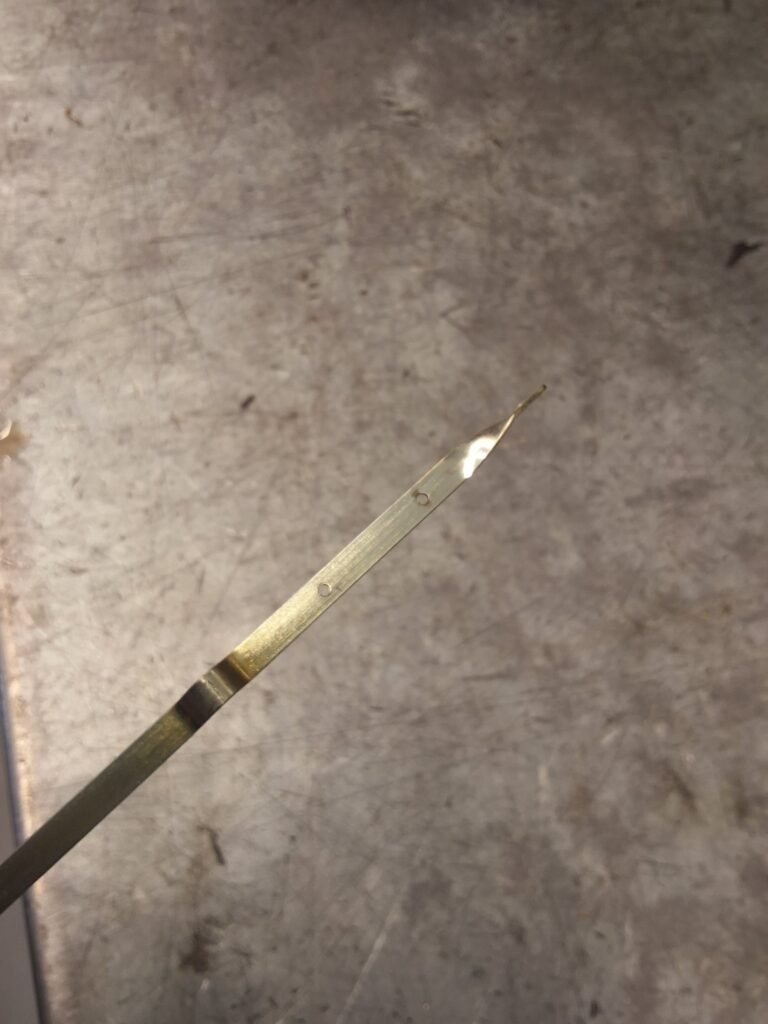
He pulled the dipstick.
There was no oil showing on it.
At only about 72,000 miles, that was something we needed to take seriously.
No Oil Showing on the Dipstick Does Not Tell You Where It Went
When an engine is very low on oil, the first question is obvious:
Where did the oil go?
Sometimes there is a visible leak.
Sometimes there is oil dripping underneath the vehicle.
Sometimes there is residue around a gasket or seal.
That was not what the technician documented on this CR-V.
The inspection did not identify an external oil leak, while the repair notes described a serious oil consumption problem.
That meant the concern was not simply adding oil and forgetting about it.
The oil level would need to be restored, reasonable contributing factors addressed, and the level monitored closely afterward.
Why the Rattle Mattered
Engine oil has an important job.
It lubricates moving parts inside the engine.
When the oil level becomes extremely low, those components may no longer receive the lubrication they need.
The repair notes on this CR-V described the rattle as metal contact inside the engine.
That made the oil level more than a routine maintenance issue.
It needed attention immediately.
The important point for drivers is that the engine does not have to leave a puddle on the driveway before low oil becomes serious.
Oil Consumption Can Happen Without an Obvious Leak
An engine can lose oil externally.
It can also consume oil internally.
Those are different problems.
With this CR-V, the technician did not document an external leak during the inspection.
The repair notes instead identified a major oil consumption concern.
That meant the owner needed to understand something important:
An engine can be losing oil even when there is nothing dripping onto the ground.
The dipstick is what tells you how much oil is actually available to the engine.
The PCV Valve Was One Part of the Repair Plan
The shop replaced the PCV valve.
The PCV system helps regulate pressure inside the crankcase and can influence oil consumption in some situations.
On this CR-V, replacing the PCV valve was intended to help reduce the consumption problem.
It was not presented as a guarantee that the engine would stop using oil.
That distinction matters.
When an engine has already arrived with no oil showing on the dipstick, the responsible next step is not to promise that one small part has permanently solved everything.
The oil level needs to be monitored.
An Induction Service Was Performed Too
The approved work also included an induction service.
That service was performed along with the other engine work during this visit.
Again, we would not treat that as proof that the underlying oil consumption problem was permanently corrected.
The most important follow up is still simple:
Keep checking the oil level.
If the level begins dropping again, that information helps show how quickly the engine is consuming oil and whether more diagnosis is needed.
Why Waiting Until the Next Oil Change Can Be a Problem
Many drivers think about engine oil mainly in terms of oil change intervals.
But an oil change interval and an oil level are not the same thing.
A vehicle can still be months or thousands of miles away from its next scheduled oil change and become dangerously low if the engine is consuming oil.
That is why checking the dipstick can matter between services.
This CR-V is a good example.
The problem was not simply that the oil was old.
The problem was that the engine had reached the shop with no oil registering on the dipstick.
A Low Mileage Vehicle Can Still Need Oil Checks
This CR-V had only about 72,000 miles.
That is another useful reminder.
Mileage alone does not tell you what the oil level is.
A newer or lower mileage vehicle can still develop a condition that causes the oil level to drop between services.
The dipstick does not care what the odometer says.
It tells you what is in the engine right now.
What Should You Do if Your Engine Starts Rattling?
A new engine rattle deserves attention.
If the engine is also low on oil, that makes the situation more urgent.
Turn the engine off when it is safe to do so and check the oil level according to the vehicle manufacturer’s procedure.
If there is little or no oil showing on the dipstick, do not assume everything is fine simply because there is no puddle underneath the vehicle.
The level needs to be corrected, and the reason it dropped should be investigated.
What Happened With This CR-V?
The technician found no oil showing on the dipstick.
The engine was making a significant internal rattle.
No external oil leak was identified during the inspection.
The repair plan included restoring the oil level, replacing the PCV valve and performing an induction service.
The owner was dealing with an oil consumption concern that would need continued attention.
That is the larger lesson from this repair.
You do not need to see oil on the ground for an engine to be running dangerously low.
Sometimes the dipstick tells the story first.
HONDA CR-V OIL CONSUMPTION FAQ
What does it mean if there is no oil showing on the dipstick?
It means the oil level is extremely low and needs immediate attention. The reason for the low level should also be investigated.
Does low oil always mean there is an external leak?
No. An engine can lose oil through an external leak or consume oil internally.
Was this Honda CR-V leaking oil?
The inspection did not document an external oil leak. The repair notes instead described a serious oil consumption concern.
Did replacing the PCV valve fix the oil consumption?
The records do not establish that. The PCV valve was replaced in an effort to help reduce the oil consumption, but continued oil level monitoring was still important.
Why would the engine rattle when the oil level is very low?
The repair notes described internal metal contact when the oil level was extremely low. Engine oil provides lubrication between moving components, so a very low oil level can create serious problems.
Does a CR-V with 72,000 miles still need the oil checked between services?
Yes. Mileage does not guarantee the oil level will remain full between oil changes.
HONDA SERVICE IN NORTH SEATTLE
If your Honda is running differently, making a new engine noise, or using oil between services, we can inspect it and explain what we find.
Chuck’s Auto Repair – North Seattle
9115 Roosevelt Way NE
Seattle, WA 98115
206-526-1069