Subaru CVT Valve Body Repair: Why a Transmission Code Doesn’t Always Mean Replace the Whole CVT
Multiple warning lights come on in your Subaru.
A scan shows a transmission code.
It is understandable for the next thought to be:
“Does this mean I need a whole transmission?”
Not necessarily.
A recent 2014 Subaru XV Crosstrek Hybrid at Chuck’s Auto Repair – North Seattle is a good example of why a transmission fault code should start a diagnostic process rather than automatically end with the largest possible repair.
The owner reported a check engine light and hill start assist warning. After driving for a while, ABS, stability-control and AT oil-temperature lights would also appear.
A code reader had already shown P2763.
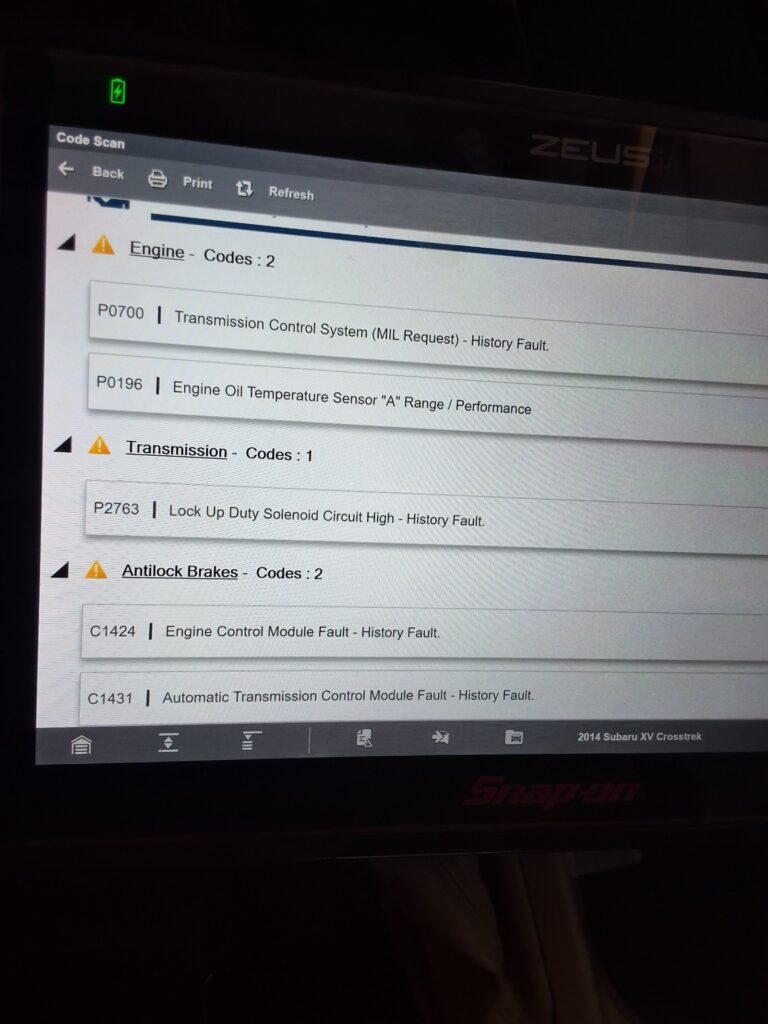
When we checked the vehicle, our scan found several stored faults, including:
P0700 — Transmission Control System
P0196 — Engine Oil Temperature Sensor “A” Range/Performance
P2763 — Lock-Up Duty Solenoid Circuit High
along with related stored faults in the anti-lock brake system.
But seeing those codes did not automatically tell us:
“Replace the entire CVT.”
The next step was determining what those faults meant on this exact Crosstrek Hybrid and what repair made sense.
A Trouble Code Is Information — Not a Complete Diagnosis
This is one of the most important things to understand about modern vehicle diagnostics.
A diagnostic trouble code tells a technician that a computer has detected something outside the expected operating range.
It can tell us which system or circuit deserves attention.
But the code by itself doesn’t necessarily tell us which complete assembly should be replaced.
In this case, P2763 pointed toward the lock-up duty solenoid circuit in the transmission system.
That was an important clue.
It was not permission to skip the rest of the diagnostic process.
The Warning Lights Weren’t Even On During the Test Drive
Here’s another reason this repair is useful to explain.
By the time the technician test-drove the Crosstrek, the engine warning light was not illuminated and no drivability problem was experienced during that test drive.
That did not mean the owner’s concern hadn’t happened.
The scan still showed stored history faults.
Intermittent problems can make diagnosis more complicated because the vehicle may behave differently at the shop than it did when the customer experienced the problem.
That’s why we want both pieces of information:
What did the driver experience?
and
What evidence did the vehicle store?
Neither one should automatically replace the other.
Why Several Warning Lights Can Appear Together
The owner didn’t report only one transmission warning.
There were check engine, hill start assist, ABS, stability control and AT oil-temperature warnings at different points.
That can make the situation look like five unrelated failures.
But modern vehicle systems communicate with each other.
A transmission related fault can result in other vehicle systems recording related faults or displaying warnings.
The important part isn’t counting dashboard lights and replacing a component for every one.
It’s figuring out which faults are primary, which are related, and what testing and vehicle-specific information support the repair.
On this Crosstrek, the transmission related P2763 fault became a major part of that investigation.
Why the Exact Crosstrek Matters
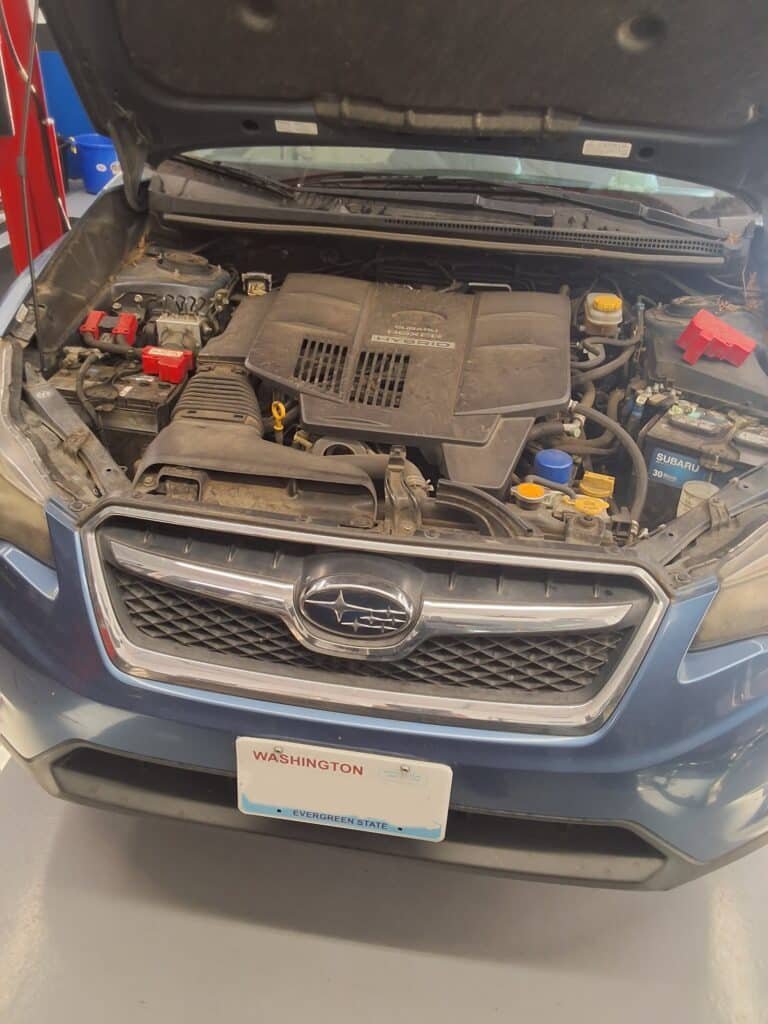
This wasn’t just any Subaru Crosstrek.
It was a 2014 XV Crosstrek Hybrid.
That matters because exact drivetrain configuration matters when diagnosing and repairing a transmission concern.
A repair procedure that applies to one Subaru transmission should not automatically be copied onto every Subaru simply because the vehicles share a badge or model family.
The technician researched technical information for this specific hybrid CVT application before developing the repair recommendation.
That’s the same principle we use throughout modern diagnostics:
Identify the exact vehicle first.
Then apply the information that actually belongs to it.
What Did the Diagnosis Point Toward?
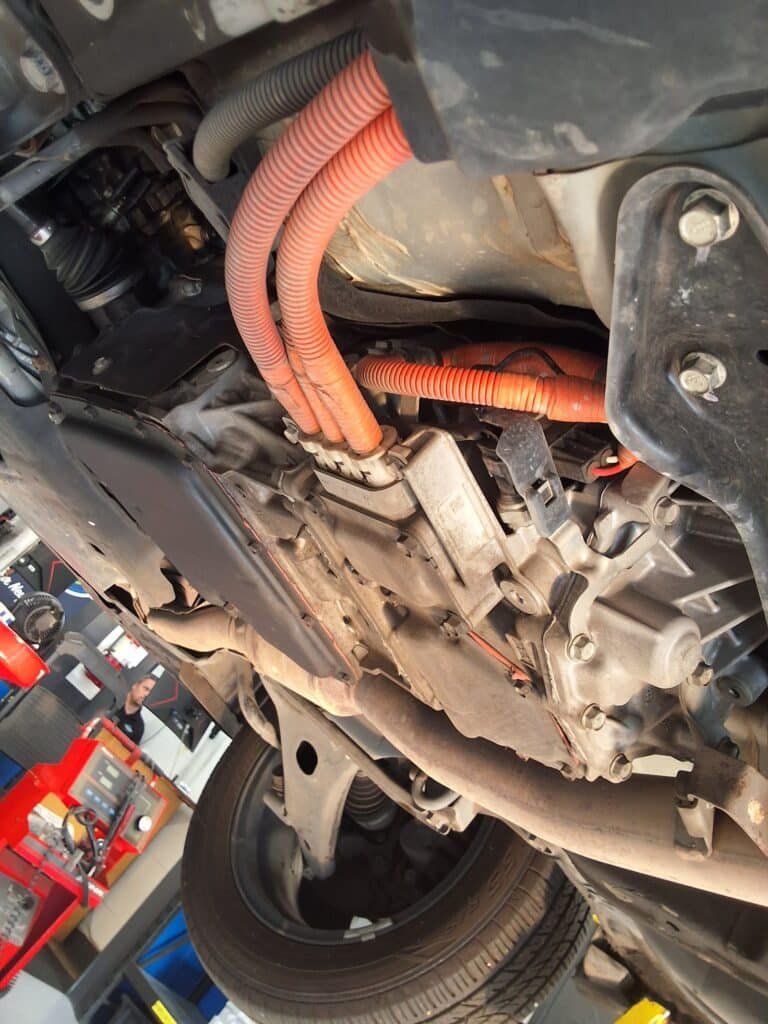
The technician documented additional research related to CVT valve body failure on this vehicle and recommended replacing the CVT valve body, then retesting the vehicle.
That sequencing matters.
The recommendation wasn’t:
“Transmission code present. Install an entire transmission.”
It was:
Address the identified valve body concern, complete the repair procedure, and then verify operation.
A complete CVT assembly remained a possible larger repair if the vehicle ultimately required it.
But that wasn’t automatically where the repair started.
What Is the Customer Lesson Here?
You don’t need to memorize transmission codes.
You don’t need to know the difference between every Subaru CVT.
And you don’t need to decide whether your vehicle needs a valve body or a complete transmission before making an appointment.
That’s the technician’s job to determine.
The useful customer information is much simpler:
Which warning lights came on?
When did they come on?
Did anything change in the way the vehicle drove?
Did you already scan a code?
If you have that information, tell us.
Then we can investigate what applies to the actual vehicle.
Why We Didn’t Turn P2763 Into “You Need a Whole CVT”
This repair is a good example of why a trouble code shouldn’t automatically become a complete-assembly replacement decision.
P2763 was an important fault.
But the technician still needed to consider:
the exact vehicle
the hybrid CVT configuration
the other stored faults
the customer’s symptoms
the test-drive results
and
the applicable technical information
The result was a CVT valve-body repair.
The vehicle did not simply receive an entire replacement transmission because a transmission code appeared.
That’s the distinction this article is really about.
A transmission code tells us where to investigate. It doesn’t automatically tell us to replace the transmission.
What Was Actually Repaired?
The customer approved replacement of the CVT valve body.
The repair procedure included disassembly as needed, reassembly, checking proper operation and road-testing the vehicle after the work.
The repair information also allowed for a relearn procedure if required.
The important takeaway isn’t that every Subaru with P2763 needs a valve body.
It’s that this particular vehicle’s diagnostic process led to a valve body repair before committing to replacement of the entire CVT.
This Wasn’t Simply a “Never Serviced the Transmission” Story
The available vehicle history showed that the transmission fluid had been serviced previously.
That’s useful context.
We should not take this repair and turn it into:
“The valve body failed because nobody changed the CVT fluid.”
The repair record doesn’t establish that.
Maintenance history is one piece of the picture.
Diagnosis is another.
A component or control issue can require repair even when service history exists.
That’s another reason we want actual records and actual testing rather than a story built around assumptions.
Could Another Subaru With P2763 Need a Different Repair?
Yes.
That’s exactly why we’re being careful with this article.
This is one real repair on one 2014 Crosstrek Hybrid.
It does not prove that every Subaru displaying P2763 needs the identical repair.
Another vehicle may have:
a different year,
a different transmission configuration,
different accompanying faults,
different symptoms,
different previous repairs,
or different test results.
The code is a starting point.
The vehicle still needs diagnosis.
Does P2763 Mean My Subaru CVT Is Ruined?
Not automatically.
On this vehicle, P2763 was associated with the lock-up duty solenoid circuit, and the diagnostic process led to replacement of the CVT valve body.
A complete CVT replacement was not automatically performed simply because the code appeared.
Your Subaru still needs its own evaluation.
What If the Warning Light Goes Away Before My Appointment?
Still tell us what happened.
This Crosstrek is a good example.
The warning light wasn’t illuminated during the shop’s test drive, and the technician did not experience a drivability problem at that moment.
But the vehicle had stored history faults.
An intermittent warning can still leave diagnostic information behind.
If possible, note:
which lights appeared
when they appeared
what the vehicle was doing at the time
and
whether the vehicle drove differently
A picture of the dashboard can also be useful if it’s safe to take one while the vehicle is stopped.
Should I Clear the Codes Before Bringing the Vehicle In?
If you’re planning to have the problem diagnosed, it’s generally more useful for the technician to have access to the available fault information than to erase it simply to turn the light off.
You don’t need to repeatedly clear codes before scheduling the vehicle.
Tell us what happened and let the diagnostic process start with the information that’s available.
What If a Parts Store or My Own Scanner Gives Me a Transmission Code?
Bring the code with you.
That’s useful information.
Just remember:
reading a code and diagnosing the vehicle are not the same thing.
A scan may help point us toward the right system.
The repair decision still has to come from the vehicle.
That’s especially important when the possible outcomes range from a targeted component repair to a much larger transmission repair.
Why This Repair Matters for Used Subaru Owners
As Subarus accumulate miles and pass between owners, service history and previous repair information can become incomplete.
This Crosstrek had more than 140,000 miles when it came in.
The useful questions weren’t simply:
“Is it high mileage?”
or
“Do Subaru CVTs have problems?”
The useful questions were:
What is this vehicle doing?
What faults are actually stored?
What service history can we verify?
What does the exact vehicle configuration require us to check?
and
What repair does the evidence support?
That gives the owner a much more useful answer than diagnosing the vehicle from its mileage or reputation alone.
Subaru CVT Valve Body FAQ
What does Subaru code P2763 mean on this Crosstrek?
On the 2014 Subaru XV Crosstrek Hybrid in this article, the scan identified P2763 as Lock-Up Duty Solenoid Circuit High. That information became part of the diagnostic process that led to a CVT valve-body repair.
Does P2763 always mean the valve body needs replacement?
No universal conclusion should be made from this one repair. This vehicle’s diagnosis led to valve body replacement, but another Subaru with the same code still needs its exact year, transmission, symptoms and test results evaluated.
Does a transmission code mean I need a new CVT?
Not automatically. A transmission code identifies a fault the vehicle detected. The technician still has to determine what repair the evidence supports.
Can warning lights disappear before the shop sees the car?
Yes, that can happen. On this Crosstrek, the warning light was not illuminated during the technician’s test drive, but stored history faults were still present.
Was this caused by neglected CVT fluid?
The repair documentation does not establish that. Available history showed previous transmission-fluid service, so we would not attribute the valve-body concern to neglected fluid without evidence.
Why is the hybrid model important?
The exact drivetrain configuration matters when applying diagnostic and repair information. This was a Crosstrek Hybrid, so we don’t assume that every non-hybrid Crosstrek or every Subaru CVT uses the identical repair process.
Subaru CVT Diagnosis and Repair in North Seattle
If your Subaru has a check-engine light, AT oil-temperature warning or a transmission related code, you don’t have to decide whether it needs a valve body or a complete CVT before calling us.
Tell us what the vehicle is doing and what warning lights or codes you’ve seen.
We’ll inspect the vehicle, review the available information and explain what the evidence supports before recommending the repair.
Chuck’s Auto Repair – North Seattle
9115 Roosevelt Way NE
Seattle, WA 98115
206-526-1069