A large repair estimate on an older vehicle can create an immediate question:
Is this thing still worth fixing?
That question came into focus while we were inspecting and repairing a 1997 Toyota Tacoma SR5 with more than 264,000 miles.
This was not one failed part followed by one repair.
The truck needed attention in several areas, including electrical wiring, oil leaks, rear axle and brake problems, steering components, a CV axle, worn belts and overdue maintenance.
That sounds like a lot of work for a truck that is nearly 30 years old.
But age and mileage alone do not answer whether keeping an older vehicle makes financial sense.
The better question is:
What are you getting for the money you put into it, and what would replacing the vehicle really cost you?
The Repair Bill Is Only One Side of the Equation
A substantial repair estimate on an older vehicle can be hard to swallow.
But the repair bill by itself does not answer whether fixing the vehicle makes financial sense.
For someone who already owns a solid older vehicle outright, the comparison is not simply “repair bill versus zero.”
The real comparison may be repair cost versus replacing the vehicle, taking on another monthly payment, higher insurance and an entirely different set of unknowns.
A replacement vehicle has a purchase price.
If it is financed, it may also bring years of monthly payments and interest.
A different used vehicle may come with its own maintenance history, neglected repairs or problems that have not shown themselves yet.
That does not mean every old vehicle deserves another large repair.
It means age and mileage alone should not make the decision.
Start With the Condition of the Vehicle You Already Have
When deciding whether to repair or replace an older vehicle, the odometer is only one piece of information.
The bigger picture matters.
How does the vehicle run?
What does the inspection show?
What major problems are already known?
What maintenance has been done?
What still needs attention?
And most importantly, what will the repairs actually accomplish?
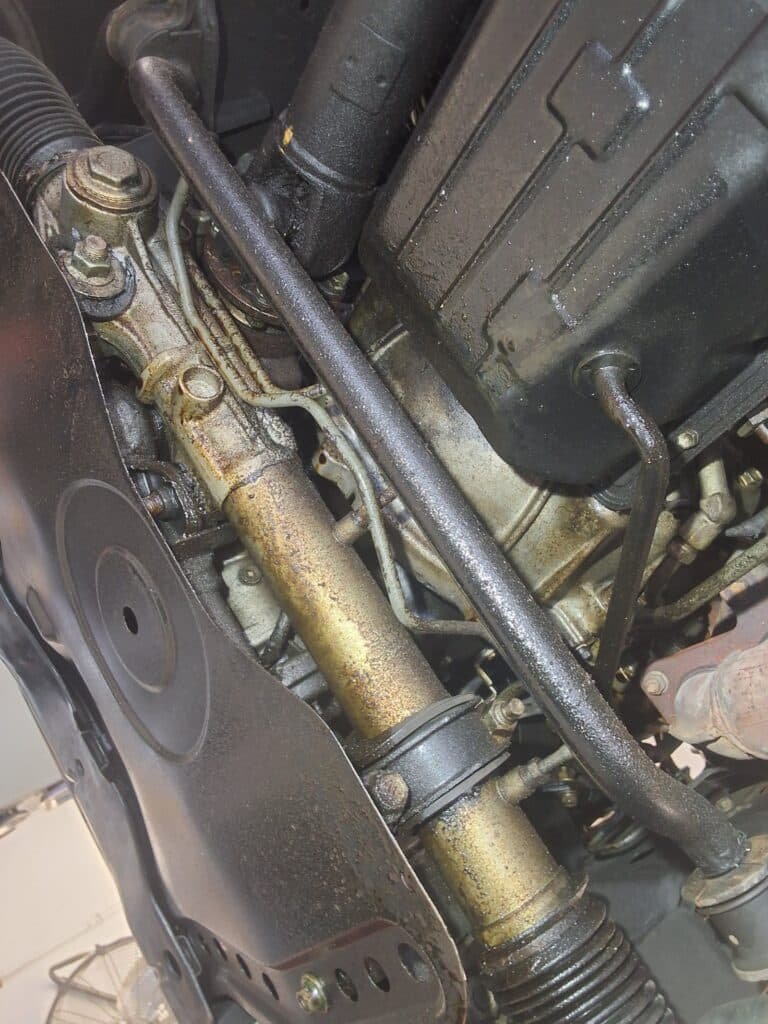
On this Tacoma, the inspection gave us a detailed picture instead of leaving the owner to make the decision based only on the truck’s age.
The Headlight Problem Turned Into an Electrical Repair
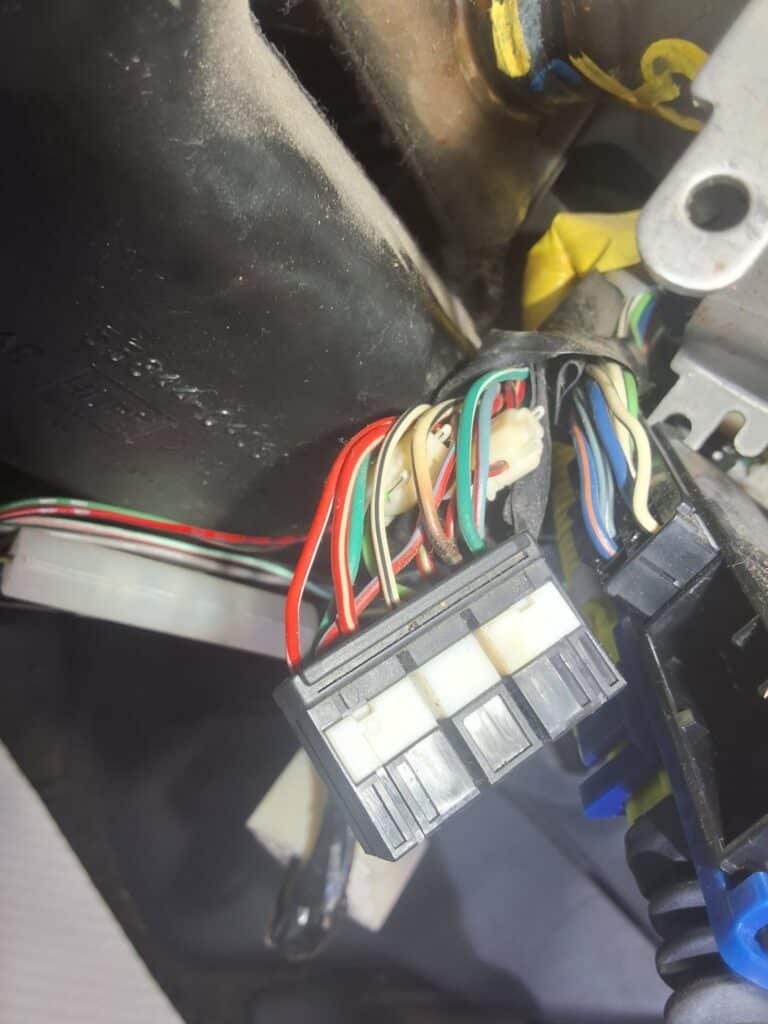
One problem involved the headlights.
They would sometimes remain stuck on high beam, and hitting the underside of the steering column could affect what they were doing.
Testing traced the problem to damaged wiring underneath the steering column.
One wire had melted and several others showed corrosion and damage.
Replacement parts were not readily available for the original harness, so the damaged wiring had to be repaired.
After the electrical work was completed, the headlights were tested and operating properly.
Some Repairs Protected Other Systems Too
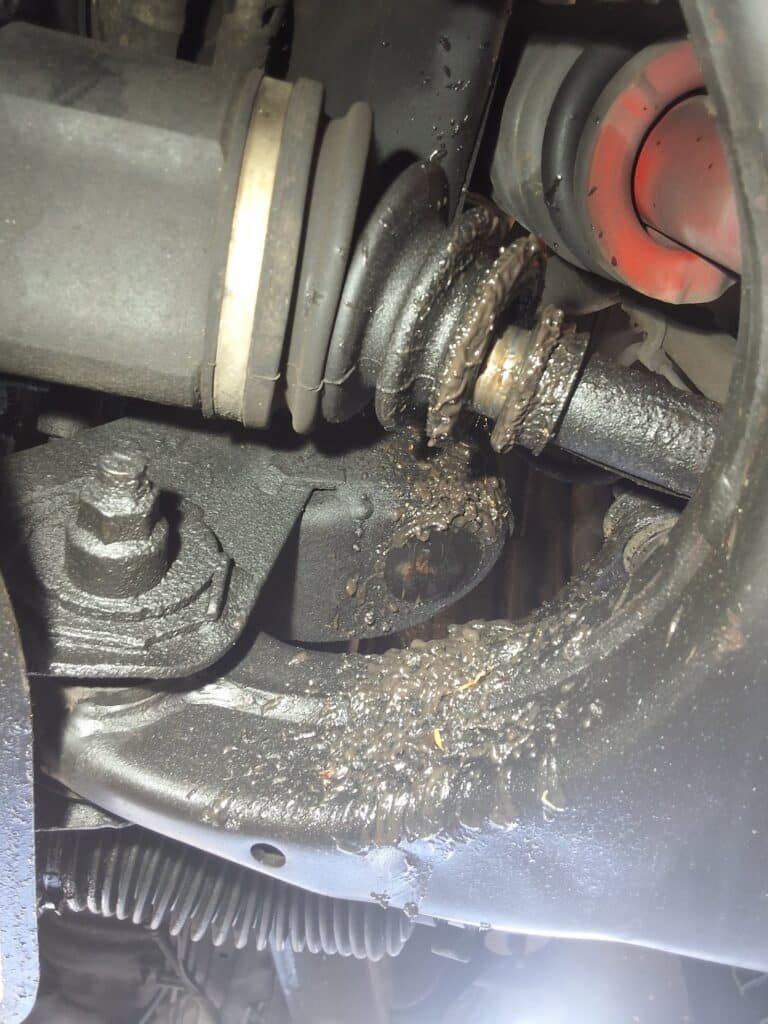
Another significant finding was at the left rear axle.
Differential oil was leaking from the axle area and had contaminated the rear brake shoes.
That meant the problem was no longer limited to an oil leak.
The repair involved the rear axle bearing and seals as well as the affected rear brakes.
This is an important part of deciding whether an older vehicle is worth repairing.
Sometimes one repair addresses several connected problems.
Ignoring the axle leak would also mean leaving contaminated brake components in place.
The Engine Needed a Starting Point, Not a Promise That Every Leak Was Solved
The engine was heavily covered in oil.
When an engine has accumulated that much oil over time, it can be difficult to tell exactly how many different leaks are present.
The repair approach started with the obvious upper engine leaks.
The valve cover area and cam plugs were addressed, along with the PCV valve.
Then the engine could be cleaned and checked again.
That is a much more realistic approach to an older high mileage vehicle than pretending one repair automatically makes every trace of oil disappear.
You address what can be confirmed.
Clean the area.
Then see what remains.
This Was More Than One Big Repair
The completed work touched several areas of the truck.
The damaged headlight wiring was repaired.
The rear axle bearing and seals were addressed.
The contaminated rear brakes were repaired.
The upper engine oil leaks were addressed and cleaned.
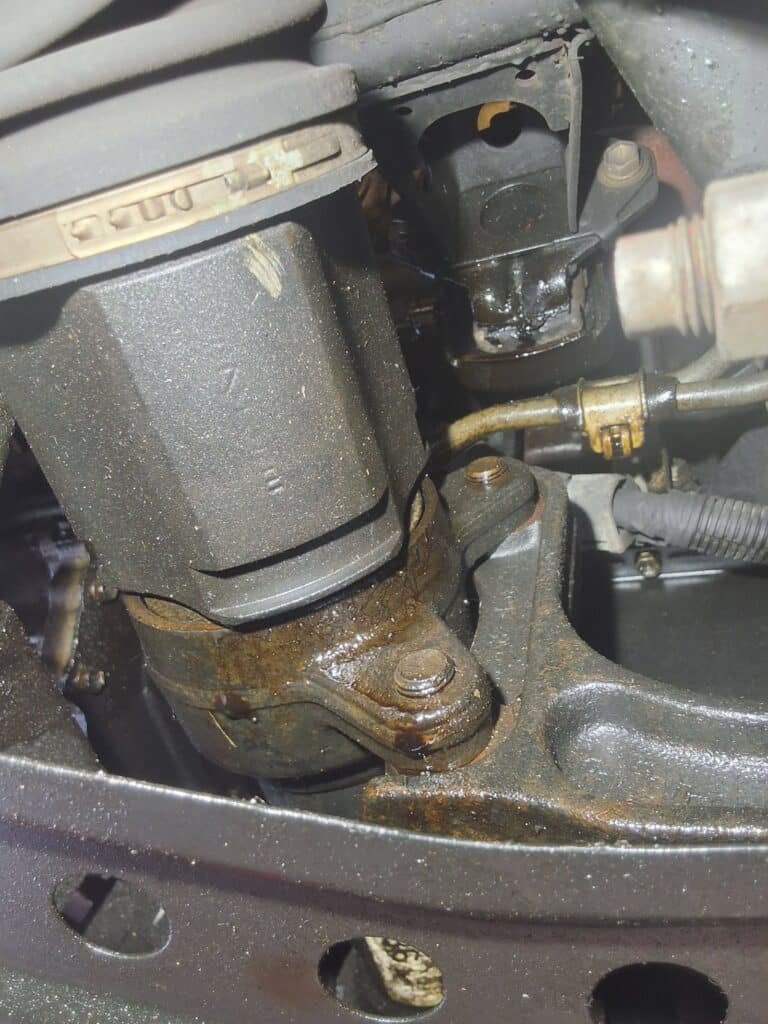
The steering rack mounting bushings were repaired.
A torn and leaking front CV axle was replaced.
The worn accessory belts were replaced.
Several fluid services were also completed, including transmission, cooling system, brake, differential, power steering and transfer case service.
An alignment followed the steering work.
That is why looking only at the total repair bill can be misleading.
The owner was not paying to fix one small thing on a worn out truck.
The work addressed a list of mechanical, electrical, maintenance and safety related needs across the vehicle.
A Big Repair Does Not Make an Old Vehicle New
There is an equally important side to this discussion.
Spending serious money on an older vehicle does not reset the odometer.
It does not make a 1997 truck brand new.
Other components still have age and mileage on them.
Something else may need attention next month or next year.
That has to be part of the decision too.
The question should never be:
“If I spend this money, will I never have another repair?”
That is not realistic.
A better question is:
“After these repairs, do I still have a vehicle that makes sense for me to own?”
When Fixing an Older Vehicle Can Make Sense
There are situations where continuing to invest in an older vehicle may be reasonable.
You know the vehicle’s history.
The major structure and drivetrain are worth continuing with.
The repairs solve real problems instead of masking them.
The vehicle fits what you need it to do.
You understand that future repairs may still happen.
And the alternative means spending considerably more to replace it.
That decision becomes especially interesting when the current vehicle is already owned outright.
No monthly car payment does not mean the vehicle is free to operate.
Maintenance and repairs still cost money.
But repairs also do not automatically mean the vehicle should be replaced.
The right comparison is the total cost and risk of both choices.
When Replacing the Vehicle May Make More Sense
There is also a point where continued repair stops making sense.
That may happen when structural condition is poor, major systems are failing at the same time, the vehicle no longer fits the owner’s needs, reliability has become unacceptable, or the expected repair path becomes larger than the owner is comfortable taking on.
Every vehicle is different.
Every owner’s situation is different.
That is why a good inspection is so useful.
It gives you something concrete to evaluate instead of making the decision from mileage alone.
The Odometer Doesn’t Make the Decision
This Tacoma had more than 264,000 miles.
That is a lot of miles.
It also does not automatically tell us that the truck belongs in a scrapyard.
The inspection told us what was wrong.
The repair plan showed what could be addressed.
The owner could then decide whether that investment made sense compared with replacing the truck.
That is the real question when you own an older vehicle:
What condition is the vehicle in, what will the repairs accomplish, and what is your realistic alternative?
Sometimes replacement is the right call.
Sometimes putting money into the vehicle you already know can make more sense.
Mileage is part of the decision.
It should not make the decision by itself.
REPAIR OR REPLACE FAQ
Is it worth repairing a vehicle with more than 200,000 miles?
Sometimes. Mileage alone does not determine whether a vehicle is worth repairing. Overall condition, repair needs, ownership history, future expectations and replacement cost all matter.
Does a large repair bill mean it is time to buy another vehicle?
Not automatically. A large estimate should be compared with what the repair accomplishes and what replacing the vehicle would actually cost.
Is an older paid off vehicle cheaper than financing something newer?
It can be, but that depends on repair frequency, condition, insurance, purchase price, financing and the specific replacement vehicle. There is no universal answer.
Does repairing an old vehicle make it reliable again?
A major repair can address known problems, but it cannot make an older vehicle new. Age, mileage and future repair needs still need to be considered.
Why is a complete inspection important before making the decision?
An inspection can show which repairs are urgent, which are maintenance items, what may be connected and what condition the rest of the vehicle is in. That gives the owner much better information for deciding whether to repair or replace.
OLDER VEHICLE INSPECTION AND REPAIR IN NORTH SEATTLE
If you are trying to decide whether an older vehicle is worth repairing, a thorough inspection can help you understand what you actually have before you make the decision.
Chuck’s Auto Repair – North Seattle
9115 Roosevelt Way NE
Seattle, WA 98115
206-526-1069