A flashing check engine light combined with a rough-running engine deserves attention.
This 2002 Buick LeSabre came to Chuck’s Auto Repair – North Seattle with both symptoms. The car had about 163,000 miles, and the first scan showed a P0300 random or multiple cylinder misfire code along with an EVAP system fault.
The codes gave the technician somewhere to start, but they did not tell him which part to replace.
That required testing.
The Misfire Was Concentrated on Two Cylinders
With the engine running, the technician monitored the misfire counters and found that cylinders 1 and 4 were the ones misfiring.
That was an important clue because those two cylinders share the same ignition coil pack on this engine. Testing confirmed there was no spark output from that coil.
Now there was evidence behind the repair recommendation.
A P0300 code by itself does not mean “replace an ignition coil.” It only tells us that the engine computer has detected misfiring.
Watching which cylinders were affected and then testing the shared ignition component is what turned the trouble code into a diagnosis.
The Spark Plugs Added Another Piece of Information
The technician also removed and inspected a spark plug.
The plug gap measured about .043 inch. The specification documented during the inspection was .060 inch.
That did not erase the confirmed no-spark condition at the ignition coil. It was another condition found while evaluating the ignition system and helped shape the repair plan.
This is common on older vehicles.
More than one component can need attention at the same time, which is another reason diagnosis should not stop as soon as the first problem is found.
Then We Found the Mouse Nest
The underhood inspection uncovered something completely different.
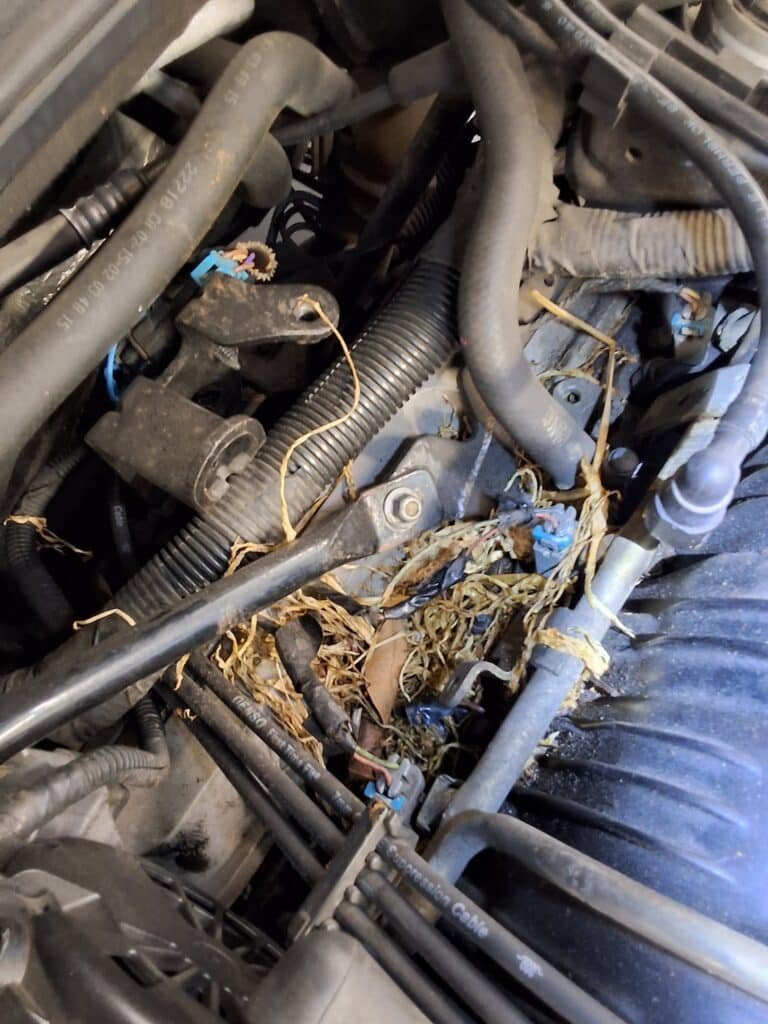
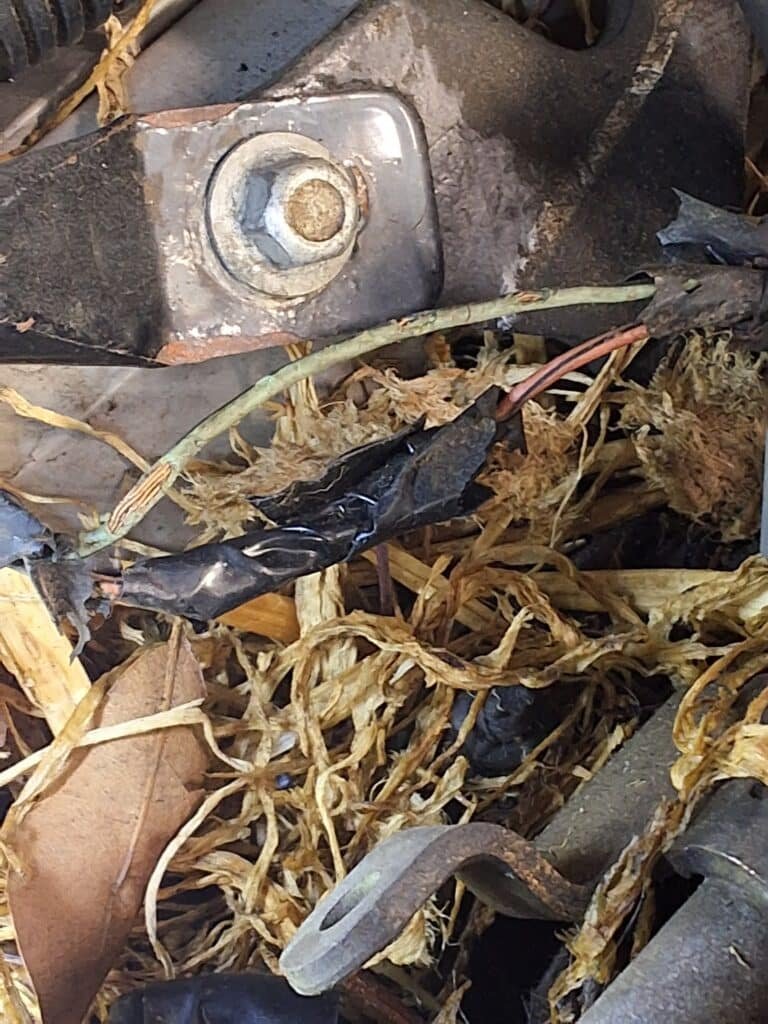
There was a rodent nest on the intake manifold, along with extensive chewed wiring. Much of the visible damage was around the fuel injector harness.
The technician also found a loose intake duct at the air filter housing and tightened the clamp.
The rodent damage mattered because fuel injectors depend on their wiring and connectors to receive the electrical commands that control fuel delivery. Damaged wiring can create its own drivability and electrical problems.
What we did not do was assume the mouse damage explained everything.
The ignition coil had already been tested and confirmed to have no spark output. The injector harness damage was another real problem that also needed repair.
A Scan Code Is Not a Diagnosis
This Buick is a good example of something we talk about often.
A scan tool is extremely useful, but a trouble code is not the same thing as a failed-part diagnosis.
The computer reported a misfire. The technician still had to determine which cylinders were affected, understand what those cylinders had in common and test the ignition system.
The same principle applies to many check engine light problems.
A code may point toward a system, circuit or operating condition. The next step is figuring out why that condition exists.
Replacing parts based only on the description attached to a code can become an expensive guessing game.
Mouse Damage Can Create Its Own Electrical Problems
An engine compartment contains wiring for injectors, ignition components, sensors, emissions equipment and many other systems.
Rodents can chew insulation, connectors and individual wires. Depending on the circuit involved, that damage can create intermittent problems, warning lights, rough running, starting problems or complete electrical failures.
Sometimes the damage is obvious.
Other times the outside of the harness looks relatively normal while individual wires underneath have been damaged.
Finding nesting material is therefore a reason to look carefully at the surrounding wiring rather than simply removing the nest and closing the hood.
The Repair Addressed Both Confirmed Problems
The owner approved the ignition repair package along with repair of the damaged fuel injector harness and connectors.
The idea was straightforward.
Correct the confirmed ignition problem, repair the wiring that was visibly damaged and then reevaluate how the engine operated.
That step-by-step process becomes especially important when several problems are found on the same vehicle.
Repairing one confirmed failure does not automatically mean every other code or symptom has been explained.
The EVAP Code Was a Separate Issue
The initial scan also showed an EVAP system fault.
That concern was not fully diagnosed during the time spent on the misfire, so we do not want to pretend it was solved by the ignition or wiring repairs.
Additional diagnostic time would be needed if the owner wanted to continue investigating that system.
This distinction matters.
One check engine light can have multiple codes stored behind it, and those codes do not always share the same cause.
Good diagnosis means keeping the confirmed findings separate from the items that still need testing.
The Inspection Found a Very Loose Front Wheel Bearing
The engine problems were not the only important findings during the visit.
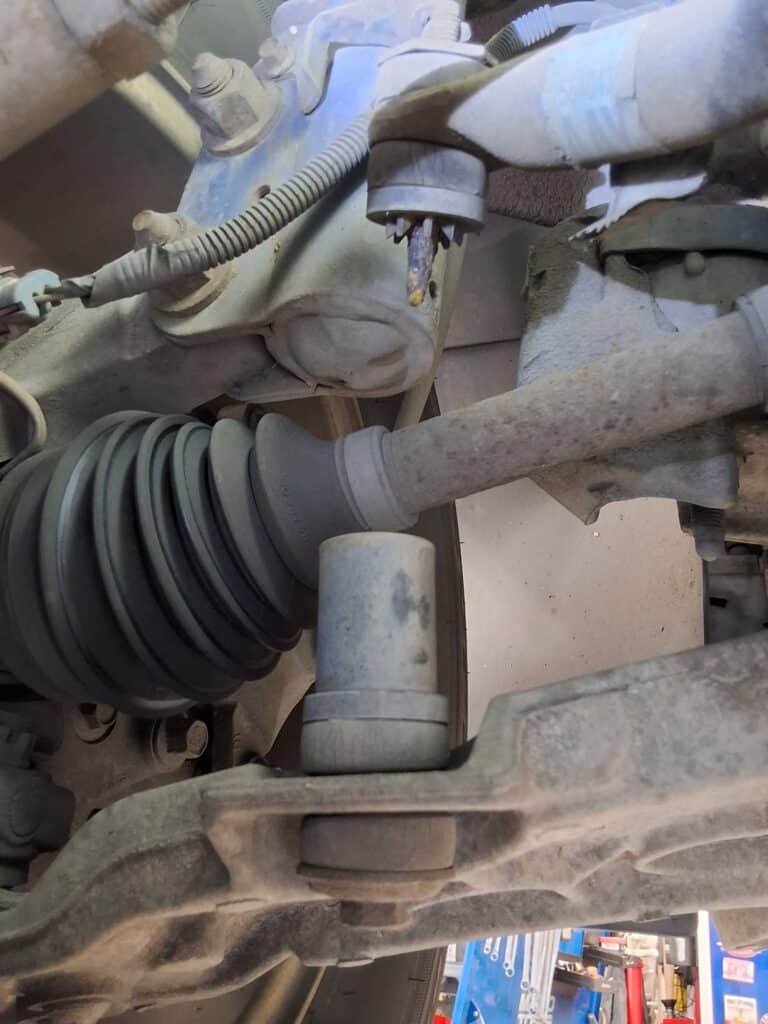
The technician found substantial play in the left front wheel bearing. It was described as very loose and noisy, and the condition was significant enough that the initial road test was limited.
The owner approved replacement of the left front hub and bearing assembly.
That had nothing to do with the flashing check engine light, but it was still an important mechanical problem found while evaluating the vehicle.
A car can arrive with one obvious complaint and still have another problem developing somewhere completely different.
Why a Complete Inspection Still Matters
The inspection found other maintenance and wear items in addition to the misfire and wheel bearing.
The engine oil was low and due for service. The brake fluid was dark, the transmission fluid was brown, the coolant appeared old, the serpentine belt was cracked and fraying, both front sway bar links were broken and several fluid leaks were documented.
Not all of those items were repaired during this visit.
That is okay.
An inspection should help separate what needs to be addressed now from what can be planned or monitored. It should not turn every observation into an emergency.
The important thing is that the owner knows what condition the vehicle is actually in.
Not Every Finding Was Fixed That Day
The Buick also had several items that were documented but not completed during this visit.
That is worth pointing out because a professional inspection should give the owner information and priorities, not create the impression that every finding has to be repaired immediately.
Some concerns are directly related to why the vehicle came in.
Others may involve maintenance, developing wear or something that can be scheduled later.
Knowing the difference helps the owner make better decisions about an older vehicle.
What Should You Do With a Flashing Check Engine Light?
A flashing check engine light should be taken more seriously than a light that simply appears and stays steady, particularly when the engine is also shaking, misfiring or losing power.
The safest next step is to have the vehicle diagnosed rather than continuing to drive it indefinitely.
That does not mean the most expensive part under the hood has failed.
It means the vehicle needs testing so the cause of the misfire can be identified before additional problems develop.
If the engine is running extremely poorly or the vehicle does not feel safe to drive, towing can be the better choice.
What Should You Look for if Rodents Have Been Under the Hood?
A visible nest is an obvious clue, but it is not the only sign.
Chewed wire insulation, damaged connectors, food or nesting material and unexplained electrical problems may all indicate rodent activity.
If you discover signs that animals have been inside the engine compartment, look beyond the nest itself.
The more important question is whether the wiring, hoses or connectors around it have also been damaged.
Diagnosis Means Following the Evidence
This Buick arrived with a flashing check engine light and a rough-running engine.
The computer reported a misfire, but the diagnosis did not stop there. Live information identified the cylinders involved, the ignition layout showed what those cylinders shared and testing confirmed the coil pack had no spark output.
Then the inspection uncovered mouse-damaged injector wiring that needed its own repair.
That is the important part of this story.
The scan code told us where to start. Testing told us what actually failed.
And once the immediate problem was understood, the rest of the inspection helped the owner understand what else on the vehicle needed attention.
BUICK LESABRE CHECK ENGINE LIGHT FAQ
Why would a check engine light flash?
A flashing check engine light can occur when the engine is actively misfiring or another significant engine-management problem is happening. If the vehicle is also shaking or running rough, it should be diagnosed promptly.
What does a P0300 trouble code mean?
P0300 means the engine computer detected random or multiple cylinder misfires. It describes the condition that was detected but does not identify which component caused it.
Did P0300 prove that this Buick needed an ignition coil?
No. Testing showed that cylinders 1 and 4 were misfiring, those cylinders shared one coil pack and that coil had no spark output. The testing confirmed the failure.
Can mice cause check engine light problems?
They can. Rodents may chew wiring and connectors used by injectors, sensors, ignition components and other electrical systems. The effect depends on which circuits are damaged.
Did the mouse damage cause this entire misfire?
The repair record does not establish that. The ignition coil serving cylinders 1 and 4 independently tested with no spark output, while the damaged injector wiring was another confirmed problem.
Was the EVAP problem repaired during this visit?
No. An EVAP-related fault was stored, but additional diagnostic time would have been needed to fully investigate that issue.
Why was the wheel bearing replaced?
The left front wheel bearing had substantial play and was described as very loose and noisy. The hub and bearing assembly was replaced during the visit.
CHECK ENGINE LIGHT DIAGNOSIS IN NORTH SEATTLE
If your check engine light is flashing, your engine is running rough or you have signs of rodent damage under the hood, we can inspect the vehicle and explain what testing shows before recommending repairs.
Chuck’s Auto Repair – North Seattle
9115 Roosevelt Way NE
Seattle, WA 98115
206-526-1069
Book Online HERE.