
North Seattle Stop-and-Go Traffic: What Crawling Traffic Does to Your Car
A five-mile drive through North Seattle can take a very different toll on your car than five miles of steady highway driving.
The odometer sees the same distance.
The vehicle does not.
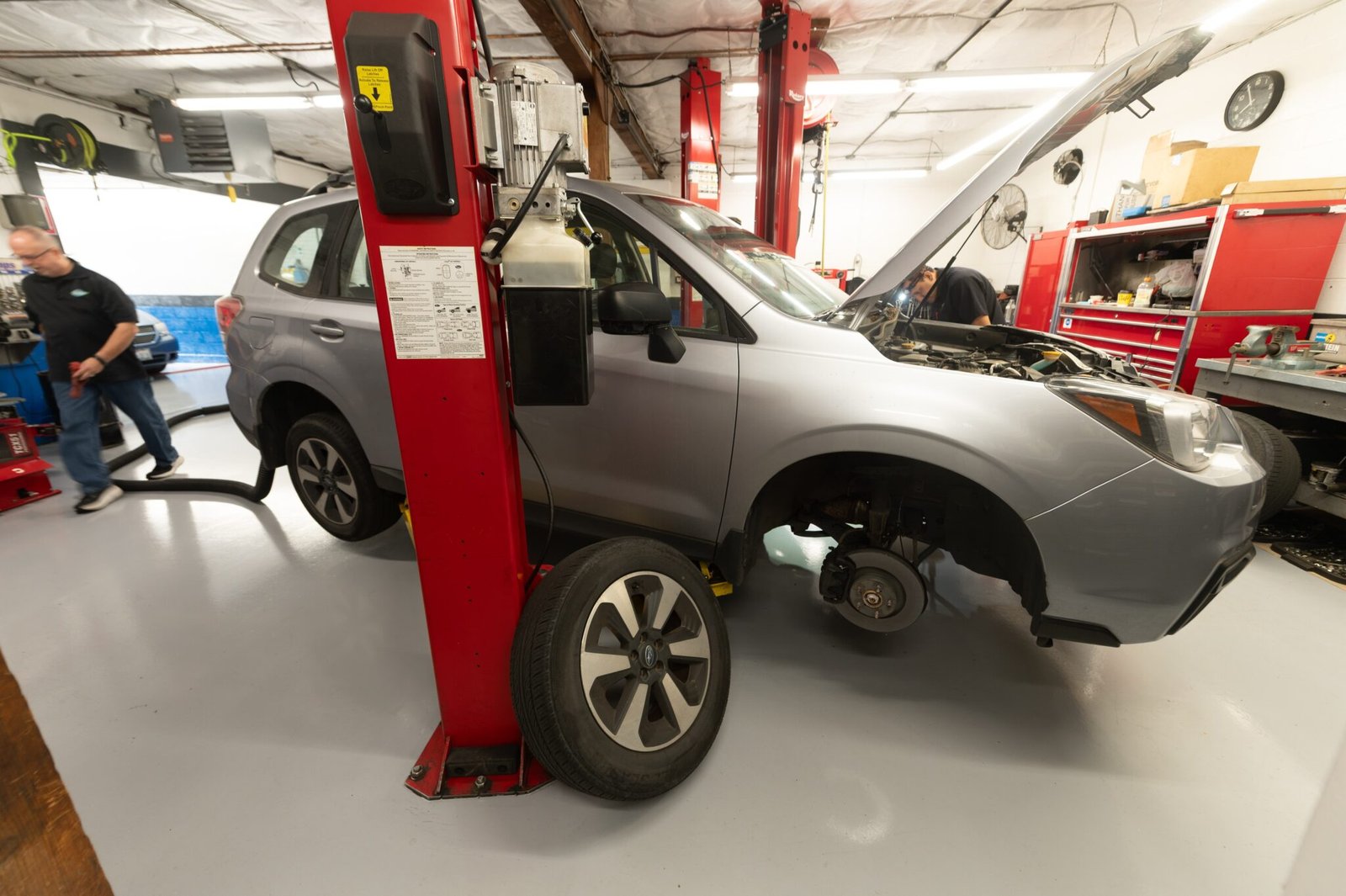
Crawling along Roosevelt Way, working through traffic near Northgate, or spending long stretches moving from one light to the next means more idling, repeated acceleration, repeated braking, low-speed cooling airflow, and very little steady cruising.
None of those things automatically damages a healthy car.
But when stop-and-go traffic is your everyday routine, it changes how the vehicle accumulates wear and how we think about maintenance.
Five miles in traffic is not the same as five highway miles
At highway speed, a vehicle can settle into relatively steady operation.
The engine is warm. Air is moving through the radiator. The transmission spends more time in a stable operating range. Brakes may go miles without being touched.
Stop-and-go traffic is almost the opposite.
The vehicle repeatedly:
- Idles
- Accelerates
- Slows down
- Brakes
- Sits again
- Repeats the cycle
That can happen dozens of times during a relatively short trip.
This is one reason mileage alone doesn’t always describe how demanding a vehicle’s use has been.
Honda maintenance documentation has specifically identified extensive idling or long periods of stop-and-go driving as a severe operating condition on applicable vehicles. That does not mean every modern vehicle follows the same severe-service schedule, but it demonstrates why driving pattern matters when maintenance requirements are evaluated.
Your cooling system works differently at crawling speed
When you’re cruising down the highway, a large amount of air naturally moves through the radiator.
In slow traffic, that airflow drops dramatically.
That’s when the cooling fans and the rest of the cooling system become especially important.
The system has to manage heat using components that can include:
- Radiator
- Cooling fans
- Coolant
- Water pump
- Thermostat
- Hoses
- Sensors and controls
A properly functioning cooling system is designed to handle low-speed driving.
But crawling traffic can make a marginal problem easier to expose.
A weak cooling fan, low coolant level, restricted radiator, aging component, or developing leak may not make itself obvious during a cool highway drive and then become much more noticeable while the vehicle is sitting in traffic.
If the temperature gauge begins moving higher than normal or you see a temperature warning, that deserves attention.
Air conditioning puts another load on the system
North Seattle traffic can be particularly frustrating on a warm day because the vehicle may spend long stretches barely moving while the air conditioning is running.
The A/C system doesn’t just cool the cabin.
Operating the compressor adds load, while heat from the A/C condenser also has to be managed at the front of the vehicle.
Again, a healthy vehicle is designed for this.
But low road speed means the vehicle depends more heavily on electric cooling fans and proper system operation.
If your A/C cools well while moving but becomes noticeably warmer while sitting in traffic, that’s useful diagnostic information.
Tell your technician exactly when the problem occurs.
Stop-and-go driving means repeated brake cycles
Think about how often you touch the brake pedal during a normal North Seattle traffic crawl.
Move 100 feet.
Brake.
Wait.
Move again.
Brake again.
The brake pads and rotors repeatedly convert the vehicle’s motion into heat.
One trip through traffic is not a problem.
But over thousands of trips, driving pattern affects how brakes wear.
The exact wear depends on things such as:
- Vehicle weight
- Driving style
- Traffic conditions
- Brake design
- Hills
- Hybrid or EV regenerative braking
- Previous brake work
- Component condition
This is why we don’t estimate brake life based only on mileage.
Two vehicles with 40,000 miles can have completely different brake histories.
Automatic transmissions and CVTs spend more time changing operating conditions
Crawling traffic also gives the transmission a different job than steady cruising.
Instead of settling into a stable speed, the vehicle repeatedly moves from a stop, slows, and accelerates again.
Depending on the vehicle, that may involve:
- Automatic transmission shifting
- Torque-converter operation
- CVT ratio changes
- Start-stop system operation
- Hybrid powertrain transitions
That does not mean stop-and-go traffic automatically damages a transmission.
Modern transmissions are designed to operate in traffic.
But heat, fluid condition, vehicle configuration, towing history, and maintenance history still matter.
This is another reason we avoid universal transmission-fluid recommendations. The correct service depends on the exact transmission, manufacturer requirements, and history.
Idling adds operating time without adding mileage
Here’s something the odometer doesn’t show very well.
If you spend 20 minutes sitting or crawling in traffic, the engine may be operating that entire time while the mileage barely changes.
So a vehicle with relatively low annual mileage can still accumulate substantial engine operating time.
That matters when we’re trying to understand how the vehicle is actually used.
Oil ages through more than distance alone. Time, temperature, operating conditions, engine design, driving pattern, and manufacturer requirements all play a role.
That’s why Chuck’s Auto Repair – North Seattle bases maintenance decisions on the vehicle and its history rather than assuming every car needs the same service at the same mileage.
Short traffic-heavy trips can compound the effect
Stop-and-go traffic becomes even more relevant when the trip itself is short.
For example:
Start the vehicle cold.
Drive a few miles through traffic.
Spend part of that trip idling.
Park before the vehicle has experienced much sustained cruising.
Then repeat the same pattern later.
Some manufacturer maintenance guidance has historically treated short-trip operation as a severe condition as well. Subaru’s maintenance documentation, for example, identifies repeated short-distance driving among examples of severe driving conditions for applicable maintenance items.
Again, the exact maintenance requirements depend on the particular vehicle.
The useful takeaway is simply:
A low-mileage North Seattle car may not actually live an easy life.
Batteries can notice the traffic pattern too
Modern vehicles have a lot of electrical demand.
Depending on the vehicle and conditions, you may be running:
- Climate control
- Headlights
- Wipers
- Heated seats
- Rear defroster
- Phone charging
- Infotainment
- Safety and driver-assistance systems
The charging system is designed to handle normal vehicle loads.
But repeated short trips, long periods at low engine speed, frequent restarts, and an aging battery can make marginal battery condition more noticeable.
Vehicles equipped with automatic stop-start systems add another wrinkle because those systems rely on the battery and charging strategy being in appropriate condition.
If the engine starts more slowly than usual, electrical behavior changes, or the stop-start system suddenly behaves differently, battery condition can be one of several things worth checking.
Your tires and suspension are still working while traffic crawls
Stop-and-go traffic doesn’t create potholes, but North Seattle traffic routes often combine low-speed congestion with patched pavement, utility cuts, driveway transitions, curbs, and ordinary city-road impacts.
Suspension and steering components absorb those impacts regardless of how fast the odometer is climbing.
Over time we may find wear involving:
- Shocks and struts
- Control-arm bushings
- Sway-bar links
- Ball joints
- Tie-rod ends
- Wheel bearings
- Tires
The important point is not that traffic causes all of those parts to fail.
It’s that low average speed does not mean the vehicle is experiencing low mechanical use.
Hybrids experience stop-and-go differently
Hybrid vehicles can be extremely well suited to crawling traffic.
They can use the electric motor at low speeds, shut the gasoline engine off under some conditions, and recover energy through regenerative braking.
That can reduce fuel use and friction-brake wear.
But hybrid operation doesn’t eliminate maintenance.
The gasoline engine still has its own oil, cooling, ignition, and maintenance requirements. The vehicle still has conventional friction brakes. It still uses a 12-volt electrical system. Depending on design, there may also be separate cooling or drivetrain service considerations.
So a Prius, RAV4 Hybrid, CR-V Hybrid, or similar vehicle may handle stop-and-go traffic differently from a conventional gasoline car, but it still needs maintenance based on its actual configuration and history.
What should you pay attention to if most of your driving is in traffic?
If your daily routine is mostly North Seattle stop-and-go driving, watch for changes rather than waiting for one specific mileage number.
Useful things to notice include:
- Temperature gauge moving differently than usual
- Cooling fans running unusually often or loudly
- A/C getting warmer while stopped
- Brake noise or vibration
- Changes in transmission behavior
- Slow engine cranking
- Warning lights
- Fluid leaks
- New steering or suspension noises
- Uneven tire wear
Those symptoms don’t automatically identify the failed part.
They tell us where inspection or diagnosis should begin.
What we want to know when you bring the car in
One of the easiest ways to help us understand a vehicle is to tell us how you actually drive it.
For example:
“Most of my commute is Roosevelt Way traffic.”
“I only drive five miles, but it takes 30 minutes.”
“The A/C gets warm only when I’m stopped.”
“The temperature gauge moved higher while I was sitting in traffic.”
“The vibration only happens after a lot of braking.”
Those details matter.
A symptom that appears at highway speed can point us in a different direction from the same symptom that appears only after 20 minutes of crawling traffic.
Stop-and-go traffic isn’t something to fear — it’s something to account for
Your car was built to handle traffic.
You don’t need to avoid North Seattle because sitting at lights is secretly destroying the vehicle.
But stop-and-go driving is not mechanically identical to steady highway cruising.
It can mean:
More operating time per mile.
More brake applications.
More low-speed cooling demand.
More acceleration cycles.
Less sustained cruising.
When that pattern makes up most of your driving, it is useful information for deciding what maintenance is appropriate and for diagnosing problems when they appear.
Mostly driving in North Seattle traffic?
Call Chuck’s Auto Repair – North Seattle at 206-526-1069 or schedule an appointment online.
We’re at 9115 Roosevelt Way NE, Seattle, WA 98115. Tell us what your normal driving looks like and what you’ve noticed. We can inspect the vehicle, explain what we find, and help you understand what needs attention now and what can be planned.